
“Her negotiating ability will be tested,” says Carlos Martín Graña, who points out flaws in her support for sectors outside the renewable energy field and the industry.



“Her negotiating ability will be tested,” says Carlos Martín Graña, who points out flaws in her support for sectors outside the renewable energy field and the industry.
The United Kingdom has committed to investing over £200 million in its offshore wind industry, funding the development of 7 to 8 gigawatts of new capacity. This investment will also boost thousands of green jobs in sectors such as engineering and manufacturing, while aiming for clean energy generation capable of powering millions of homes by 2030.
Contributions must be socially equitable: the polluter must pay. The EU needs to strengthen its green diplomacy, promote global emissions trading, and advance carbon pricing initiatives.
In the first 12 days of the month, the government approved photovoltaic projects led by Iberdrola, Acciona, and Iron Power, as well as a storage project by Roldwin. However, it rejected wind initiatives proposed by Forestalia.
With more than 560 companies in the market—a 40% increase compared to four years ago—differentiation and retention have become challenging. According to industry insiders, price remains the main factor influencing customer choices. In this context, the growing share of renewables in the energy mix and greater awareness of various contracting options are seen as positive signals.
The UK’s 2024 autumn budget allocates substantial resources for renewable energy, yet questions remain on its capacity to attract stable private investment and overcome regulatory barriers. Joshua Edward Green, Recruitment Consultant at EVEREC, shares his insights on the reach and limitations of current policies.

The following month, Poland would drive its energy transformation with auctions for wind, solar, and hydro projects, aiming to accelerate the transition to a cleaner energy mix and reduce its carbon footprint. A total of 44.588 TWh of renewable energy is planned to be awarded, with an estimated value of 17.003 billion zlotys.
The community actively participated, raising questions and concerns, while the company reaffirmed its commitment to sustainability and transparency in every phase of the project.
With an investment of over 1 GW in renewables across Europe, RIVE Private Investment focuses on small and medium-sized companies, specialized in solar, wind, biomass, biogas, and hydroelectric energy. Additionally, Pierre du Passage, a Partner in the firm, notes a growing interest in storage solutions, especially in Germany, one of the company’s core markets.
The Law 2/2024 in Galicia imposes a fee on wind energy infrastructure and allows for the installation of wind farms outside the designated areas, provided they meet specific conditions. However, the wind energy sector questions certain restrictions imposed by the Xunta.

It is an auction for 1,000 MW of wind and 500 MW of photovoltaic projects under a Contracts for Difference (CfD) scheme. “Through the CfD mechanism, these investments will be in place within 36 months after the signing of the contracts,” stated the Ministry of Energy of Romania in an interview with *Energía Estratégica España*. Investors can submit their applications until November 18, and the price thresholds range from 78 EUR/MWh for photovoltaic projects to 82 EUR/MWh for wind energy.
At COP29, the IRENA Outlook calls for ambitious updates to Nationally Determined Contributions (NDCs) that reflect the global commitment to tripling renewable energy capacity and doubling energy efficiency by 2030.
The FER X Decree, currently under discussion, aims to accelerate Italy’s energy transition toward decarbonization by 2030, promoting financial incentives and administrative simplification in the renewable sector. Francesco Passafiume, Product Manager of PowerSolutions EMEA, points out that the regulation will reduce project processing times, but he warns that the success of the decree depends on its effective implementation and alignment with other regulatory frameworks, such as the Decree on Suitable Areas and the Environmental Law Decree.
The French government has published its offshore wind energy planning and a map outlining the priority areas for development over the coming years, alongside the announcement of a 10 GW auction. This move has been welcomed by the Syndicat des Énergies Renouvelables (SER) in dialogue with Energía Estratégica España.
Donald Trump’s victory in the U.S. elections raises concerns in the European renewable energy sector, where the pressure to protect the domestic industry could trigger a chain reaction. Experts consulted highlight the potential effects on energy markets and the progress of clean technologies, with implications for the region’s competitiveness in an uncertain context.
Factors such as Trump’s return, the removal of energy taxes in Europe, and the advancement of new technologies are shaping a new landscape that drives companies to adjust their investment strategies and explore new areas of sustainable growth.
The North Sea Energy Cooperation agreement, which promotes the development of the offshore electricity grid and renewable energy potential in the region, aims to consolidate a strong European wind industry. “We want to maintain a true industry in Europe,” emphasizes Jérémy Simon, Deputy General Delegate at the Renewable Energy Union, in the face of competitive pressure from Asia.
Italy is on track to break its record, reaching 7 GW of new renewable energy installations in 2024 despite the uncertainty generated by the government’s support scheme, according to Francesco Marghella, an energy systems specialist. Additionally, he notes that the MACSE will play a crucial role in the market but expresses concerns over the competitiveness of the initial auction.
Los contratos de compra de energía a largo plazo, o PPAs, incorporan nuevas cláusulas de revalorización ante cambios regulatorios y de mercado. Se destaca la tendencia creciente hacia la sofisticación de estos acuerdos, que hoy en día incluyen condiciones específicas para ajustar ingresos adicionales y la posibilidad de hibridación de plantas.
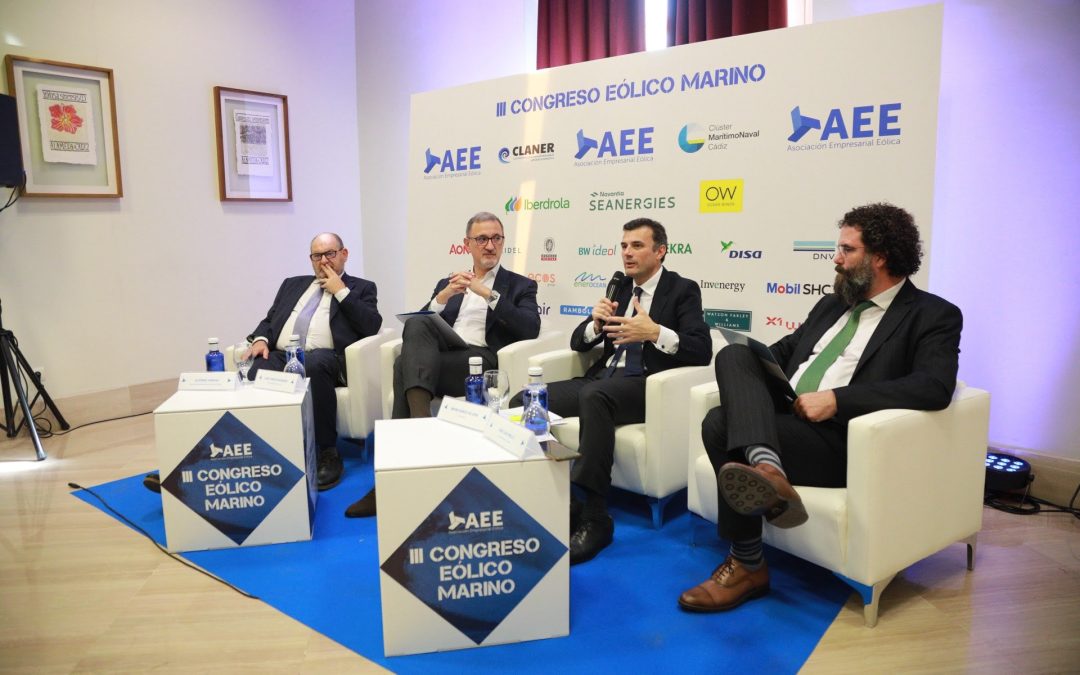
The third edition of the Offshore Wind Congress, held in Cádiz from November 6 to 8, brings together over 400 national and international attendees to discuss future challenges for the deployment of floating offshore wind in Spain. The primary goal is to install 3 GW of offshore wind capacity by 2030, as outlined in the National Integrated Energy and Climate Plan (PNIEC).
The growing uncertainty in the European energy market is severely affecting the planning and viability of renewable energy investments, and Carlos Martín Graña, Operations Manager at ENERJOIN and an energy market specialist, believes that there is a slowdown.
“Her negotiating ability will be tested,” says Carlos Martín Graña, who points out flaws in her support for sectors outside the renewable energy field and the industry.
The United Kingdom has committed to investing over £200 million in its offshore wind industry, funding the development of 7 to 8 gigawatts of new capacity. This investment will also boost thousands of green jobs in sectors such as engineering and manufacturing, while aiming for clean energy generation capable of powering millions of homes by 2030.
Contributions must be socially equitable: the polluter must pay. The EU needs to strengthen its green diplomacy, promote global emissions trading, and advance carbon pricing initiatives.
In the first 12 days of the month, the government approved photovoltaic projects led by Iberdrola, Acciona, and Iron Power, as well as a storage project by Roldwin. However, it rejected wind initiatives proposed by Forestalia.
With more than 560 companies in the market—a 40% increase compared to four years ago—differentiation and retention have become challenging. According to industry insiders, price remains the main factor influencing customer choices. In this context, the growing share of renewables in the energy mix and greater awareness of various contracting options are seen as positive signals.
The UK’s 2024 autumn budget allocates substantial resources for renewable energy, yet questions remain on its capacity to attract stable private investment and overcome regulatory barriers. Joshua Edward Green, Recruitment Consultant at EVEREC, shares his insights on the reach and limitations of current policies.
The following month, Poland would drive its energy transformation with auctions for wind, solar, and hydro projects, aiming to accelerate the transition to a cleaner energy mix and reduce its carbon footprint. A total of 44.588 TWh of renewable energy is planned to be awarded, with an estimated value of 17.003 billion zlotys.
The community actively participated, raising questions and concerns, while the company reaffirmed its commitment to sustainability and transparency in every phase of the project.
With an investment of over 1 GW in renewables across Europe, RIVE Private Investment focuses on small and medium-sized companies, specialized in solar, wind, biomass, biogas, and hydroelectric energy. Additionally, Pierre du Passage, a Partner in the firm, notes a growing interest in storage solutions, especially in Germany, one of the company’s core markets.
The Law 2/2024 in Galicia imposes a fee on wind energy infrastructure and allows for the installation of wind farms outside the designated areas, provided they meet specific conditions. However, the wind energy sector questions certain restrictions imposed by the Xunta.
It is an auction for 1,000 MW of wind and 500 MW of photovoltaic projects under a Contracts for Difference (CfD) scheme. “Through the CfD mechanism, these investments will be in place within 36 months after the signing of the contracts,” stated the Ministry of Energy of Romania in an interview with *Energía Estratégica España*. Investors can submit their applications until November 18, and the price thresholds range from 78 EUR/MWh for photovoltaic projects to 82 EUR/MWh for wind energy.
At COP29, the IRENA Outlook calls for ambitious updates to Nationally Determined Contributions (NDCs) that reflect the global commitment to tripling renewable energy capacity and doubling energy efficiency by 2030.
The FER X Decree, currently under discussion, aims to accelerate Italy’s energy transition toward decarbonization by 2030, promoting financial incentives and administrative simplification in the renewable sector. Francesco Passafiume, Product Manager of PowerSolutions EMEA, points out that the regulation will reduce project processing times, but he warns that the success of the decree depends on its effective implementation and alignment with other regulatory frameworks, such as the Decree on Suitable Areas and the Environmental Law Decree.
The French government has published its offshore wind energy planning and a map outlining the priority areas for development over the coming years, alongside the announcement of a 10 GW auction. This move has been welcomed by the Syndicat des Énergies Renouvelables (SER) in dialogue with Energía Estratégica España.
Donald Trump’s victory in the U.S. elections raises concerns in the European renewable energy sector, where the pressure to protect the domestic industry could trigger a chain reaction. Experts consulted highlight the potential effects on energy markets and the progress of clean technologies, with implications for the region’s competitiveness in an uncertain context.
Factors such as Trump’s return, the removal of energy taxes in Europe, and the advancement of new technologies are shaping a new landscape that drives companies to adjust their investment strategies and explore new areas of sustainable growth.
The North Sea Energy Cooperation agreement, which promotes the development of the offshore electricity grid and renewable energy potential in the region, aims to consolidate a strong European wind industry. “We want to maintain a true industry in Europe,” emphasizes Jérémy Simon, Deputy General Delegate at the Renewable Energy Union, in the face of competitive pressure from Asia.
Italy is on track to break its record, reaching 7 GW of new renewable energy installations in 2024 despite the uncertainty generated by the government’s support scheme, according to Francesco Marghella, an energy systems specialist. Additionally, he notes that the MACSE will play a crucial role in the market but expresses concerns over the competitiveness of the initial auction.
Los contratos de compra de energía a largo plazo, o PPAs, incorporan nuevas cláusulas de revalorización ante cambios regulatorios y de mercado. Se destaca la tendencia creciente hacia la sofisticación de estos acuerdos, que hoy en día incluyen condiciones específicas para ajustar ingresos adicionales y la posibilidad de hibridación de plantas.
The third edition of the Offshore Wind Congress, held in Cádiz from November 6 to 8, brings together over 400 national and international attendees to discuss future challenges for the deployment of floating offshore wind in Spain. The primary goal is to install 3 GW of offshore wind capacity by 2030, as outlined in the National Integrated Energy and Climate Plan (PNIEC).
The growing uncertainty in the European energy market is severely affecting the planning and viability of renewable energy investments, and Carlos Martín Graña, Operations Manager at ENERJOIN and an energy market specialist, believes that there is a slowdown.

Select the sector you
want to know more about
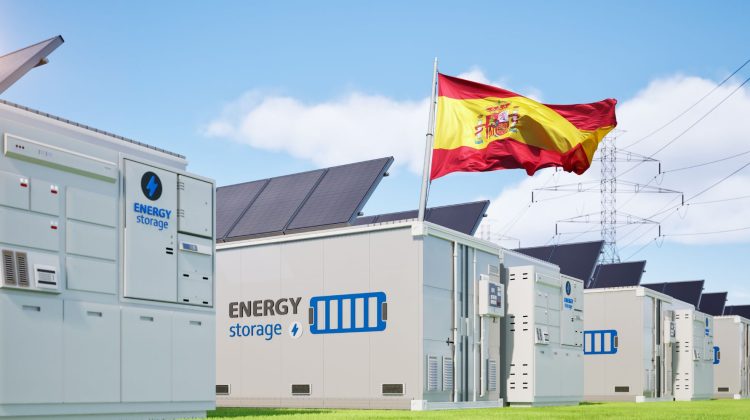
Grid access applications for energy storage reached 37.37 GW in December, positioning the technology as a cornerstone of Spain’s energy transition. The figures, published by APPA Renovables, also show renewables supplying nearly half of electricity generation and a 4.2% year-on-year rise in national power demand.
According to the Peruvian Renewable Energy Association, delays in implementing Law 32249 are stalling 58 renewable projects totalling 12.5 GW—enough to meet all projected electricity demand growth through 2030.
With the backing of ETESA and the national regulator ASEP, Panama will roll out four power tenders between 2026 and 2028. The strategy prioritises renewable energy, thermal plant retrofits and nationwide supply under the National Energy Plan 2025–2050.