
With the commissioning of Numancia, Plenitude reaches 440 MW of installed capacity in Spain with plants located in Castilla y León, Galicia, La Rioja, Catalonia, Castilla-La Mancha, and Murcia.


With the commissioning of Numancia, Plenitude reaches 440 MW of installed capacity in Spain with plants located in Castilla y León, Galicia, La Rioja, Catalonia, Castilla-La Mancha, and Murcia.
Initiatives in the processing of renewable energy projects from companies such as Saeta Yield and Solaria have been approved. However, some ventures were rejected. The list.
“We want to be a reference in how to do things from the perspective of communities, landowners, and local organizations, which have not been a priority in other occasions,” says Alberto García Feijoo, CEO and founder of Fe Energy, in Entrevistas con Líderes as part of the Future Energy Summit Iberia.
Tesla, Greening Investments, and Eleia Energía are leading the search for professionals in the renewable sector in Spain. The most sought-after profiles include project engineers, waste managers, public policy specialists, and sales representatives in cities such as Madrid, Seville, and Barcelona.
Alejandro Labanda destaca las políticas del Gobierno gallego señalando su iniciativa de instalar un modelo propio de transición energética y resalta la necesidad de la participación ciudadana en los proyectos.
The Port Authority, in collaboration with the PortCastelló Foundation, organized the “II Conference on Economy and Sustainability: The Value Chain of the Offshore Wind Industry,” which will take place next Tuesday at the Moll de Costa hall in the Port of Castellón. The event will delve into the development of the offshore wind industry’s value chain and will address the current landscape of the sector in Spain.
Carlos Martín Graña, COO of ENERJOIN, states that “the goal of the PNIEC is impossible” and increasing 90 TWh “would be a huge success,” which could slow down the deployment of renewables.
Companies such as ERTEC and INTELCIA in Portugal, and ACCIONA, Greenenergy, and CEPSA in Spain, stand out for seeking professionals in in-person modalities, focused on the implementation and monitoring of sustainable solutions.
Ocean Winds, ACCIONA, ABEI Energy, and IberBlue Wind celebrate progress but emphasize the need to expedite the processing of pending regulations, such as the Coastal Law and the Renewable Energy Economic Regime.
It would start operating in 2025 and would be the first public-private partnership in Spain. It will offer energy at reduced prices, with a 50% discount for residents near renewable energy projects. Experts question its viability in the competitive liberalized electricity market.
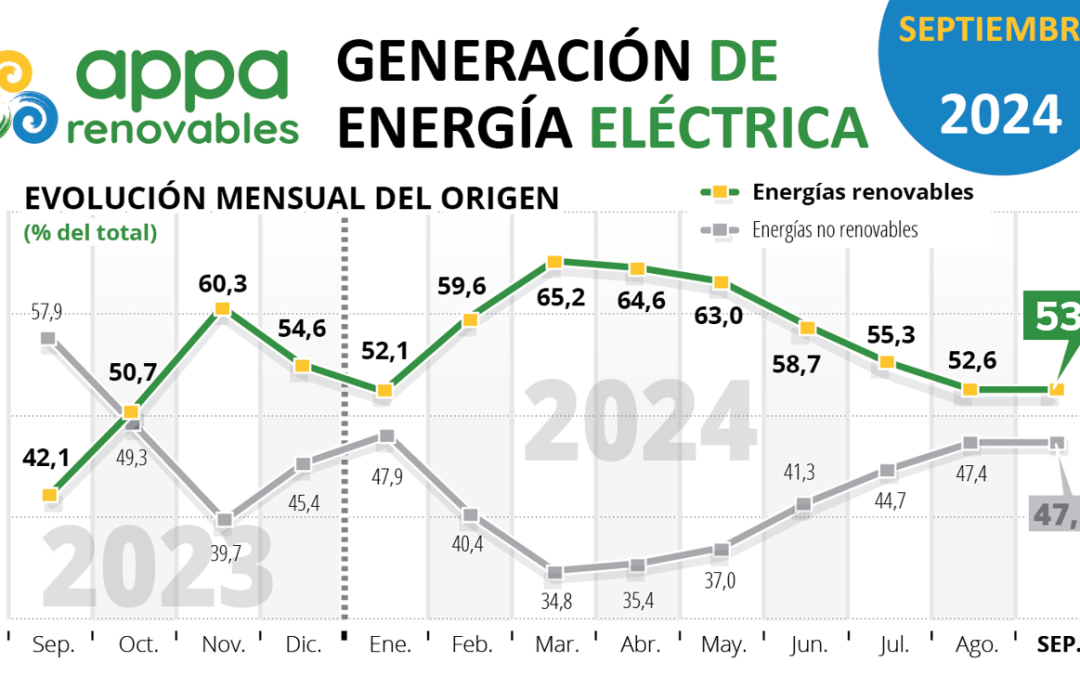
During this month of September, renewables generated 33% more than in the same period of the previous year, accounting for 53% of the monthly mix.
Alberto Rocha points out that having access to updated and dynamic information about grid saturation ensures greater competitiveness for the final price and for investors. He also mentions that this week, the CNMC is expected to publish a document on how to request demand, “obliging distributors to provide information on how much capacity there is at the nodes.”
In the last 12-month period, nearly 57% of electricity in Spain has been renewable, surpassing 50% in each of the months. The strong performance of hydroelectric (+67%) and photovoltaic (+22%) generation has driven renewable electricity production. Wind generation has consolidated itself as the largest producer of electricity (23.8%), while photovoltaics has surpassed 16%.
“It’s not enough to set ambitious targets,” says José Luis Bernal Albendín from ITERH, highlighting the need for policies that facilitate renewable energy installation, incentives to promote electric vehicles, and long-term planning to ensure investments arrive on time.
Actualmente hay 12,5 GW instalados de potencia eólica y buscan alcanzar los 28 GW al 2030, de los cuales 2 GW son de eólica offshore. Desde la Associazione Nazionale Energia del Vento (ANEV) habría que instalar mucha potencia, pero que tienen expectativas favorables al respecto.
With the commissioning of Numancia, Plenitude reaches 440 MW of installed capacity in Spain with plants located in Castilla y León, Galicia, La Rioja, Catalonia, Castilla-La Mancha, and Murcia.
Initiatives in the processing of renewable energy projects from companies such as Saeta Yield and Solaria have been approved. However, some ventures were rejected. The list.
“We want to be a reference in how to do things from the perspective of communities, landowners, and local organizations, which have not been a priority in other occasions,” says Alberto García Feijoo, CEO and founder of Fe Energy, in Entrevistas con Líderes as part of the Future Energy Summit Iberia.
Tesla, Greening Investments, and Eleia Energía are leading the search for professionals in the renewable sector in Spain. The most sought-after profiles include project engineers, waste managers, public policy specialists, and sales representatives in cities such as Madrid, Seville, and Barcelona.
Alejandro Labanda destaca las políticas del Gobierno gallego señalando su iniciativa de instalar un modelo propio de transición energética y resalta la necesidad de la participación ciudadana en los proyectos.
The Port Authority, in collaboration with the PortCastelló Foundation, organized the “II Conference on Economy and Sustainability: The Value Chain of the Offshore Wind Industry,” which will take place next Tuesday at the Moll de Costa hall in the Port of Castellón. The event will delve into the development of the offshore wind industry’s value chain and will address the current landscape of the sector in Spain.
Carlos Martín Graña, COO of ENERJOIN, states that “the goal of the PNIEC is impossible” and increasing 90 TWh “would be a huge success,” which could slow down the deployment of renewables.
Companies such as ERTEC and INTELCIA in Portugal, and ACCIONA, Greenenergy, and CEPSA in Spain, stand out for seeking professionals in in-person modalities, focused on the implementation and monitoring of sustainable solutions.
Ocean Winds, ACCIONA, ABEI Energy, and IberBlue Wind celebrate progress but emphasize the need to expedite the processing of pending regulations, such as the Coastal Law and the Renewable Energy Economic Regime.
It would start operating in 2025 and would be the first public-private partnership in Spain. It will offer energy at reduced prices, with a 50% discount for residents near renewable energy projects. Experts question its viability in the competitive liberalized electricity market.
During this month of September, renewables generated 33% more than in the same period of the previous year, accounting for 53% of the monthly mix.
Alberto Rocha points out that having access to updated and dynamic information about grid saturation ensures greater competitiveness for the final price and for investors. He also mentions that this week, the CNMC is expected to publish a document on how to request demand, “obliging distributors to provide information on how much capacity there is at the nodes.”
In the last 12-month period, nearly 57% of electricity in Spain has been renewable, surpassing 50% in each of the months. The strong performance of hydroelectric (+67%) and photovoltaic (+22%) generation has driven renewable electricity production. Wind generation has consolidated itself as the largest producer of electricity (23.8%), while photovoltaics has surpassed 16%.
“It’s not enough to set ambitious targets,” says José Luis Bernal Albendín from ITERH, highlighting the need for policies that facilitate renewable energy installation, incentives to promote electric vehicles, and long-term planning to ensure investments arrive on time.
Actualmente hay 12,5 GW instalados de potencia eólica y buscan alcanzar los 28 GW al 2030, de los cuales 2 GW son de eólica offshore. Desde la Associazione Nazionale Energia del Vento (ANEV) habría que instalar mucha potencia, pero que tienen expectativas favorables al respecto.

Select the sector you
want to know more about
The reform to Chile’s Environmental Impact Assessment System (SEIA) aims to focus scrutiny on projects with significant environmental impacts, while maintaining regulatory safeguards and modernising criteria in place since the 1990s.
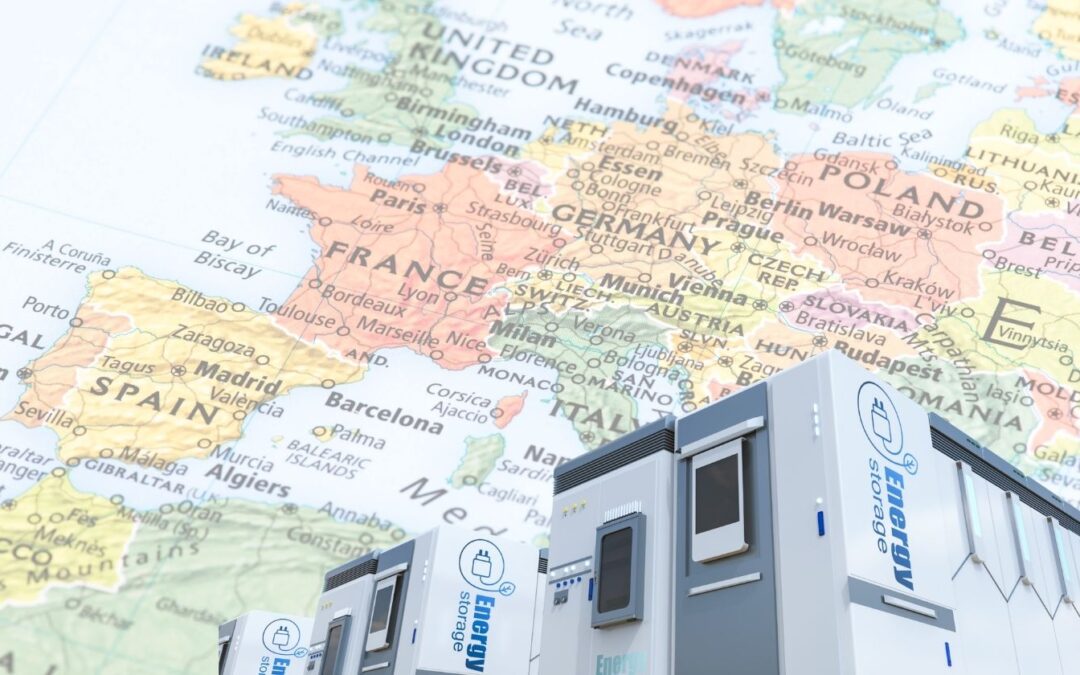
In just one year, more than 80,000 MWh were tendered through public schemes in at least ten European countries, ranging from capacity markets to RRF funds. Poland led with 20 GWh, followed by the United Kingdom, Italy and Spain. Several projects are required to enter operation before 2030.
Honduras has surpassed 1 GW of operational installed capacity, with private capital playing a dominant role, particularly in hydropower. A 1.5 GW international tender is now drawing global interest and could reshape the country’s electricity market.