
The framework guides the approval process for Member State Aid applications, which are subject to approval from the European Commission. The new rules are in force from today until 31 December 2030.
During his participation at FES Iberia 2025, the CEO Renewables Spain of TotalEnergies, highlighted that the capacity auction scheduled for this year will be key to ensuring system stability. The company operates 3 GW under development and has consolidated one of the largest solar parks in Europe.
The regulatory text contains structural changes that are detailed in this analysis in six thematic sections: storage, plant operation, procedures, demand participation, electro-intensive industries, and grids. The article organizes the main new features of Royal Decree-Law 7/2025 point by point, incorporating technical data and the opinions of industry experts.
During FES Iberia 2025, Wattkraft highlighted the growing interest in industrial self-consumption with batteries following the April 28 blackout. According to Jesús Heras, Technical Director for Southwest Europe, storage has emerged as a key solution to provide inertia, firmness and resilience to the grid.
During FES Iberia 2025, Jaime Leirado, General Manager Spain at Recurrent Energy, outlined how storage has become the structural core of the company’s renewable strategy. The firm is advancing in hybrid models, bankable solutions and new revenue frameworks that place batteries at the centre of the solar business.
The Ministry of Environment and Energy Security revised the agrivoltaics framework under the NRRP, aiming to install at least 900 MW of capacity by mid-2026. The update introduces extended timelines, new operational definitions, and broader eligibility conditions to streamline project execution.
During the event organised by Future Energy Summit (FES), regional energy officials evaluated the Spanish Government’s recent decree aimed at strengthening the oversight of electricity operators, highlighting both its support and areas requiring improvement.
The Government will increase the resilience of the system with a list of specific actions that will be incorporated into the current Planning. The electrification of the economy, storage and flexibility are being promoted, which will contribute to the sustainability and resilience of the system.
Photovoltaic technology now contributes to voltage control, rationalises energy storage, facilitates battery hybridisation, and promotes electrification, enhancing system stability, flexibility, security, and energy independence.
The reform promoted by the Government will speed up the deployment of hybrid storage in renewable plants, a necessary measure for the sector to be competitive and safe.
The cost of balancing services has soared and the CNMC has prohibited suppliers from passing it on to customers with fixed-price contracts. The president of ACENEL, Javier Colón Cortegoso, warns of the risk to competitive market dynamics if the current rules are not revised.
The technical analyses carried out by Red Eléctrica (REE), AELEC–Compass Lexecon and INESC TEC, and the Government’s 28-A Committee reveal discrepancies regarding the causes of the blackout.
The Green and Connected Spain Alliance is entering a key phase of institutional dialogue with a ten-point technical proposal to transform the electricity system and position renewables as the industrial foundation of the country.
The top energy officials from four key Spanish regions will take part in the panel “Solar and Wind: Drivers of Regional Transformation”, where they will discuss regulatory challenges, social conflicts, electrification, and strategies to accelerate renewable energy deployment.
The BOE resolved 655 MW of energy projects: the declaration of public utility for Verbund AG stood out, while Forestalia faced the rejection of more than 238 MW in wind power.
The Energy Technology Centre (ITE) has presented its annual accounts with a 21% increase in turnover and has brought together 150 business leaders from the sector.
With over 1.5 GW of solar capacity in operation across the Iberian Peninsula and a pioneering BESS system in Portugal, the Portuguese firm will take part in FES Iberia 2025 as a benchmark in renewable integration. Its strategy for dealing with low prices and market volatility will be one of the central themes of the solar leaders’ panel.
Both reports agree on the insufficiency of voltage control, but differ on the critical sequence, the weight of operational errors and the interpretation of events preceding the collapse. Technical and regulatory responsibilities remain under open debate.
Wind power leads the energy mix with 23% coverage, 32 GW installed, and 276 manufacturing facilities, yet the sector calls for a faster rollout of new projects, repowering, and offshore wind to avoid economic deterioration and ensure system security and stability.
Brussels has issued a reasoned opinion for non-compliance with Directive (EU) 2023/2413, which mandates the simplification and acceleration of permitting procedures for renewable energy projects. Both countries have two months to amend their legal frameworks.
GE Vernova will provide 12 turbines to Çalık Renewables for the developer’s first project in Kosovo. Project will use GE Vernova’s 6.1 MW-158m workhorse turbines. Deal reinforces strong presence of GE Vernova in Kosovo, adding to its 36 onshore wind turbines already in operation there.
The framework guides the approval process for Member State Aid applications, which are subject to approval from the European Commission. The new rules are in force from today until 31 December 2030.
During his participation at FES Iberia 2025, the CEO Renewables Spain of TotalEnergies, highlighted that the capacity auction scheduled for this year will be key to ensuring system stability. The company operates 3 GW under development and has consolidated one of the largest solar parks in Europe.
The regulatory text contains structural changes that are detailed in this analysis in six thematic sections: storage, plant operation, procedures, demand participation, electro-intensive industries, and grids. The article organizes the main new features of Royal Decree-Law 7/2025 point by point, incorporating technical data and the opinions of industry experts.
During FES Iberia 2025, Wattkraft highlighted the growing interest in industrial self-consumption with batteries following the April 28 blackout. According to Jesús Heras, Technical Director for Southwest Europe, storage has emerged as a key solution to provide inertia, firmness and resilience to the grid.
During FES Iberia 2025, Jaime Leirado, General Manager Spain at Recurrent Energy, outlined how storage has become the structural core of the company’s renewable strategy. The firm is advancing in hybrid models, bankable solutions and new revenue frameworks that place batteries at the centre of the solar business.
The Ministry of Environment and Energy Security revised the agrivoltaics framework under the NRRP, aiming to install at least 900 MW of capacity by mid-2026. The update introduces extended timelines, new operational definitions, and broader eligibility conditions to streamline project execution.
During the event organised by Future Energy Summit (FES), regional energy officials evaluated the Spanish Government’s recent decree aimed at strengthening the oversight of electricity operators, highlighting both its support and areas requiring improvement.
The Government will increase the resilience of the system with a list of specific actions that will be incorporated into the current Planning. The electrification of the economy, storage and flexibility are being promoted, which will contribute to the sustainability and resilience of the system.
Photovoltaic technology now contributes to voltage control, rationalises energy storage, facilitates battery hybridisation, and promotes electrification, enhancing system stability, flexibility, security, and energy independence.
The reform promoted by the Government will speed up the deployment of hybrid storage in renewable plants, a necessary measure for the sector to be competitive and safe.
The cost of balancing services has soared and the CNMC has prohibited suppliers from passing it on to customers with fixed-price contracts. The president of ACENEL, Javier Colón Cortegoso, warns of the risk to competitive market dynamics if the current rules are not revised.
The technical analyses carried out by Red Eléctrica (REE), AELEC–Compass Lexecon and INESC TEC, and the Government’s 28-A Committee reveal discrepancies regarding the causes of the blackout.
The Green and Connected Spain Alliance is entering a key phase of institutional dialogue with a ten-point technical proposal to transform the electricity system and position renewables as the industrial foundation of the country.
The top energy officials from four key Spanish regions will take part in the panel “Solar and Wind: Drivers of Regional Transformation”, where they will discuss regulatory challenges, social conflicts, electrification, and strategies to accelerate renewable energy deployment.
The BOE resolved 655 MW of energy projects: the declaration of public utility for Verbund AG stood out, while Forestalia faced the rejection of more than 238 MW in wind power.
The Energy Technology Centre (ITE) has presented its annual accounts with a 21% increase in turnover and has brought together 150 business leaders from the sector.
With over 1.5 GW of solar capacity in operation across the Iberian Peninsula and a pioneering BESS system in Portugal, the Portuguese firm will take part in FES Iberia 2025 as a benchmark in renewable integration. Its strategy for dealing with low prices and market volatility will be one of the central themes of the solar leaders’ panel.
Both reports agree on the insufficiency of voltage control, but differ on the critical sequence, the weight of operational errors and the interpretation of events preceding the collapse. Technical and regulatory responsibilities remain under open debate.
Wind power leads the energy mix with 23% coverage, 32 GW installed, and 276 manufacturing facilities, yet the sector calls for a faster rollout of new projects, repowering, and offshore wind to avoid economic deterioration and ensure system security and stability.
Brussels has issued a reasoned opinion for non-compliance with Directive (EU) 2023/2413, which mandates the simplification and acceleration of permitting procedures for renewable energy projects. Both countries have two months to amend their legal frameworks.
GE Vernova will provide 12 turbines to Çalık Renewables for the developer’s first project in Kosovo. Project will use GE Vernova’s 6.1 MW-158m workhorse turbines. Deal reinforces strong presence of GE Vernova in Kosovo, adding to its 36 onshore wind turbines already in operation there.
The renewable energy developer will hybridise its solar PV assets and roll out standalone BESS projects totalling 1.2 GW / 5 GWh, with all schemes expected to reach Ready-to-Build status between 2026 and 2027.
Heads of Agreement with German eFuel One underpins Uruguay project’s bankability, linking over 2 GW of solar and wind capacity to certified RFNBO-compliant e-methanol exports to Europe.
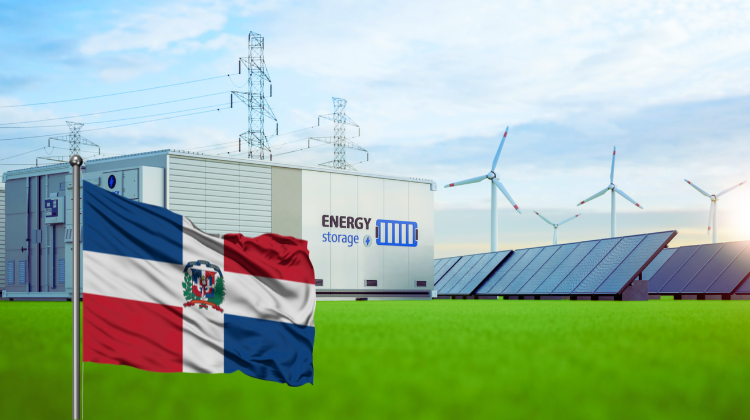
Technical offers are unveiled in Santo Domingo as nearly 3 GW of solar and wind projects compete for long-term contracts, with market sources anticipating solar prices between USD 60–80/MWh.