











Mexico’s state-owned utility, Federal Electricity Commission (CFE), has revised the timetable for its mixed renewable energy tender and confirmed that the competitive process will conclude on 8 June with contract awards, amid intense competition and growing financial requirements.
Under the updated schedule, the deadline for expressions of interest is 28 April, bids will be submitted between 21 April and 11 May, verification and bid opening will take place on 12 May, evaluations will run from 13 to 19 May, subsequent bid rounds are scheduled for 20–21 May, the award decision is due on 25 May, and bid security guarantees must be delivered by 5 June.
The latter has emerged as one of the most sensitive milestones in the process, as developers will be required to lock up capital just days before contract execution, raising the bar for participants with weaker balance sheets. At the same time, the availability of official information — including site visit records and question-and-answer rounds — introduces a critical factor for the market: transparency as a source of certainty for investment decisions.
Through the tender’s official portal, participants can access key documentation such as site visit minutes, clarification rounds and procedural updates, improving visibility and reducing risks for bidders.

The scale of competition underlines the importance of these conditions. The tender has attracted 222 proposals totalling 37.749 GW, representing an oversubscription of more than 580% against the 7.5 GW sought.
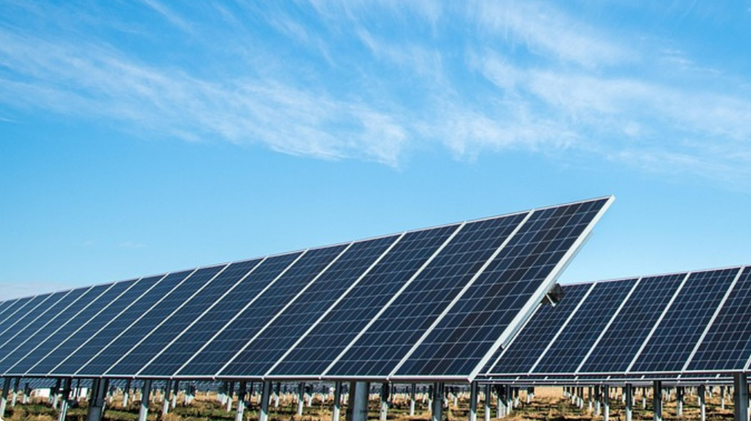
Solar PV dominates the pipeline, with 26.494 GW across 178 projects, followed by 34 wind projects totalling 9.324 GW, in addition to hybrid schemes and standalone energy storage proposals.
The process has also highlighted the developers with the largest pipelines, including GTE Energy, Thermion, Cubico Sustainable Investments, Fisterra Energy, Proyener, AES México, Terralia, Grupo Cobra and Cox Energy, many of which have offered portfolios exceeding 1 GW, reinforcing a competitive landscape dominated by large-scale players.
On pricing, the market is beginning to converge around a range significantly above levels seen in previous auctions.
“Most participants expect prices to be above USD 35,” said Alejandro Robles Hue, Director of Moctezuma Recursos Sustentables, who added that bid strategies will depend on project location, nodal marginal price expectations and the degree of aggressiveness bidders can assume.
The shift in financing conditions is proving decisive in shaping this new pricing structure.
“We cannot expect the prices achieved in past auctions. Interest rates were substantially lower then; today they are much higher and financing is one of the project’s main costs,” Robles said.
He also pointed to the impact of new technical requirements, notably the obligation to include battery energy storage equivalent to 30% of capacity for three hours, adding: “That is CAPEX — and it has to be recovered.”
Market expectations currently place bid prices within a USD 35–70/MWh range, depending on location, transmission value and risk appetite.
The design of the mixed procurement model introduces commercial dynamics that could prove decisive for awards.
“Seventy per cent is already contracted by CFE, while the remaining 30% allows developers to take merchant risk,” Robles explained.
According to him, some regions may support higher market revenues, enabling bidders to submit lower prices to CFE and outcompete rivals, while in other locations developers may opt to assume more exposure to market prices and raise offers to the utility.
Project maturity is emerging as another critical differentiator in an oversupplied market.
Arturo Carranza, Energy Projects Director at Akza Advisors, said projects with advanced permitting, grid access and stronger financing structures are likely to have an advantage, placing companies such as AES México, Atlas Renewable Energy, Invenergy and Cubico among the strongest-positioned contenders.
The revised timetable also fits within a broader Mexican government strategy to accelerate renewable energy deployment.
Authorities recently announced preparations for a second private-sector tender, following the round launched last December, in which 3.3 GW of clean generation capacity and 1.2 GW of battery storage were awarded.
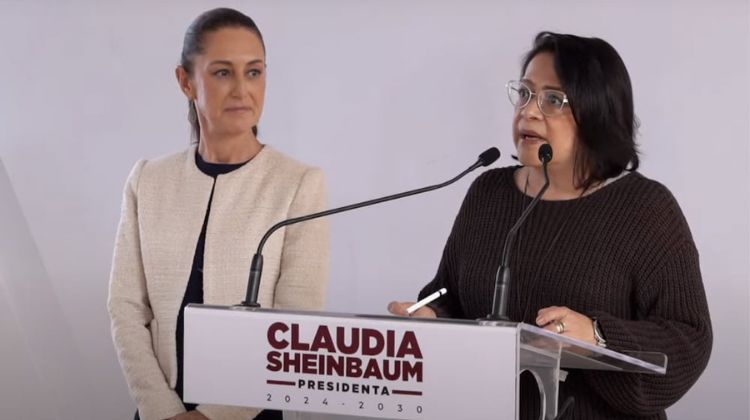
“We are just one tender away from covering nearly 16.5 GW of renewable energy needed during this administration,” said Deputy Energy Minister Jorge Marcial Islas Samperio.
With the updated schedule now in place, the process enters its most decisive phase, where not only energy prices but also the real execution capability of projects will be tested.
The combination of high guarantee requirements, massive competition, mandatory storage, and stronger institutional transparency is set to shape the outcome of a tender that could redefine the rules of Mexico’s renewable energy market.