
The CNMC must determine how to allocate the restart costs, while OMIE prepares the settlement of the affected operations and ACIE calls for clarity and fairness in tariff design.


The CNMC must determine how to allocate the restart costs, while OMIE prepares the settlement of the affected operations and ACIE calls for clarity and fairness in tariff design.
In May, Spain’s spot electricity market recorded a minimum of €16.93/MWh, the lowest value since 2008. This depressed price environment is forcing a redefinition of renewable investment strategies.
Chema Zabala, Managing Director of Alantra Energy Transition, highlights to Strategic Energy Europe the urgent need to establish a capacity mechanism in Spain to ensure the firmness of the electricity system. He warns that, as indicated by the system operator in its analysis, without such regulation, technologies like combined cycle plants could shut down due to lack of profitability, jeopardising security of supply.
TECHnPower will now encompass the Galician company’s technology division, which includes a wide range of disruptive products for the generation, management, and storage of renewable energy.
Global energy investment is set to hit a record USD 3.3 trillion in 2025, with China topping the world’s energy spending and solar emerging as the most funded technology. The IEA report warns that despite the renewables boom, power grids and Africa are falling behind in the energy transition.
Michelle del Valle, Founder of FinSat Inc. and board member of the GSC, warns that the Net Zero Industry Act requires global efforts across three key areas: supply chain, grid infrastructure, and standardised transparent frameworks to saturate the pan-european market with the cheapest energy source to date: solar. She points out that “tariffs, limited grid infrastructure, data centres, and emerging technologies will shape the solar market in 2025.”
Decree Law 4/2025 grants overriding public interest status to battery projects and unlocks 94 ongoing applications. It is regarded as a turning point for unblocking energy storage development in the country.

The company will invest €3.5 billion to strengthen its leadership in energy storage across Europe and Latin America through the rollout of its “Greenbox” platform, targeting 13.8 GWh of battery capacity by 2027. Two key projects are already underway in Spain, and Executive Chairman David Ruiz will share exclusive updates at FES Iberia on June 24.
Through Order No. 20/2025, Romania’s energy regulator ANRE has formalized a sweeping reform of its grid connection framework. Starting in June 2025, project developers will face new technical, financial, and procedural requirements aimed at discouraging speculative development and prioritizing mature projects.
On June 24, leaders from Guatemala and the Dominican Republic will take part in a Latin America-focused panel during the event organized by Future Energy Summit, where they will reveal key details about upcoming tenders for generation and storage.
Karol Nawrocki won Poland’s presidential election in a run-off on 1 June with 50.89% of the vote. His critical stance on the European Green Deal and his defence of coal as a strategic resource raise concerns in the renewable energy sector. Krzysztof Jaworski, political and energy analyst, warns Strategic Energy Europe: “Renewables will face a new institutional veto”.
During the Storage, Renewable, and EV Integration Forum, Cristina Caballero, senior regulator at AELEC, warned about the technical challenges facing the Spanish electricity grid following the Iberian blackout. She called for investments in infrastructure, capacity markets, and agile planning to ensure a robust system in the face of high renewable penetration.
Manuel de Castro Zurita, Executive Partner of the firm, warns that the market could contract this year, and therefore calls on the Government to expand the connection radius and release grid capacity at distribution level to enable new industrial installations.
The Commission has presented a Guidance document on anticipatory investments for developing forward-looking electricity networks. With an estimated €730 billion for distribution and €477 billion for transmission grid developments needed by 2040, the document addresses EU countries, national regulatory authorities, as well as transmission and distribution system operators.
Luis Alvargonzález (Zelestra), Enrique De Ramón (Zelestra), Gonzalo Barba (TotalEnergies) and Gonzalo Feito (Sungrow) will be among the key figures speaking at FES Iberia on June 24, where over 400 executives will discuss the recent blackout, grid modernization, energy storage, PPAs, regulation and energy security.
Jacopo Tosoni, Head of Policy at the European Association for Storage of Energy (EASE), warns that the energy storage industry will experience a qualitative leap in 2026, with an expansion that will triple current levels. He made this statement at the Storage, Renewable and EV Integration Forum, organized by Strategic Energy Europe. He also highlighted regulatory, fiscal and technical bottlenecks that are still hindering the sector’s growth.
With barely a year in the European market, CLOU has already secured contracts for 240 MWh in Poland and 96 MWh in Greece. Its strategy centers on storage solutions for Utility Scale and the Commercial & Industrial (C&I) markets, with special focus on four key regions: the United Kingdom, Germany, Poland, and Spain. “The recent blackout was the missing signal to fully commit to energy storage,” emphasizes Hayat Kebir Tio, General Manager for the EU and UK.
As of April 2025, the National Energy Regulatory Authority (ANRE) reports that 1,228 projects with a capacity equal to or greater than 1 MW have valid connection permits. Only 11% of them are fully authorized, and only 35 incorporate storage, with a total capacity of 1,519 MW.
Order TED/542/2025, published today in the Official State Gazette (BOE), regulates the grants of the Renocicla Programme, funded by the Next Generation EU initiative and aimed at companies promoting the circular economy in renewable energy equipment.
According to the latest report from international consultancy Wood Mackenzie, “Horizons – May 2025,” escalating trade tensions may significantly disrupt supply chains, increase project costs, and delay the energy transition just as the sector reaches a critical phase of expansion.
The rollout of new solar plants, offshore wind farms, and hybrid projects across Europe—along with recent milestones such as Spain’s first industrial microgrid—solidifies Iberdrola’s position at the heart of the energy transition. This strategy will be central to the presentation by Julio Castro, CEO of Iberdrola Spain, at FES Iberia 2025, taking place on June 24 in Madrid, with over 400 leaders from the energy sector in attendance.
The CNMC must determine how to allocate the restart costs, while OMIE prepares the settlement of the affected operations and ACIE calls for clarity and fairness in tariff design.
In May, Spain’s spot electricity market recorded a minimum of €16.93/MWh, the lowest value since 2008. This depressed price environment is forcing a redefinition of renewable investment strategies.
Chema Zabala, Managing Director of Alantra Energy Transition, highlights to Strategic Energy Europe the urgent need to establish a capacity mechanism in Spain to ensure the firmness of the electricity system. He warns that, as indicated by the system operator in its analysis, without such regulation, technologies like combined cycle plants could shut down due to lack of profitability, jeopardising security of supply.
TECHnPower will now encompass the Galician company’s technology division, which includes a wide range of disruptive products for the generation, management, and storage of renewable energy.
Global energy investment is set to hit a record USD 3.3 trillion in 2025, with China topping the world’s energy spending and solar emerging as the most funded technology. The IEA report warns that despite the renewables boom, power grids and Africa are falling behind in the energy transition.
Michelle del Valle, Founder of FinSat Inc. and board member of the GSC, warns that the Net Zero Industry Act requires global efforts across three key areas: supply chain, grid infrastructure, and standardised transparent frameworks to saturate the pan-european market with the cheapest energy source to date: solar. She points out that “tariffs, limited grid infrastructure, data centres, and emerging technologies will shape the solar market in 2025.”
Decree Law 4/2025 grants overriding public interest status to battery projects and unlocks 94 ongoing applications. It is regarded as a turning point for unblocking energy storage development in the country.
The company will invest €3.5 billion to strengthen its leadership in energy storage across Europe and Latin America through the rollout of its “Greenbox” platform, targeting 13.8 GWh of battery capacity by 2027. Two key projects are already underway in Spain, and Executive Chairman David Ruiz will share exclusive updates at FES Iberia on June 24.
Through Order No. 20/2025, Romania’s energy regulator ANRE has formalized a sweeping reform of its grid connection framework. Starting in June 2025, project developers will face new technical, financial, and procedural requirements aimed at discouraging speculative development and prioritizing mature projects.
On June 24, leaders from Guatemala and the Dominican Republic will take part in a Latin America-focused panel during the event organized by Future Energy Summit, where they will reveal key details about upcoming tenders for generation and storage.
Karol Nawrocki won Poland’s presidential election in a run-off on 1 June with 50.89% of the vote. His critical stance on the European Green Deal and his defence of coal as a strategic resource raise concerns in the renewable energy sector. Krzysztof Jaworski, political and energy analyst, warns Strategic Energy Europe: “Renewables will face a new institutional veto”.
During the Storage, Renewable, and EV Integration Forum, Cristina Caballero, senior regulator at AELEC, warned about the technical challenges facing the Spanish electricity grid following the Iberian blackout. She called for investments in infrastructure, capacity markets, and agile planning to ensure a robust system in the face of high renewable penetration.
Manuel de Castro Zurita, Executive Partner of the firm, warns that the market could contract this year, and therefore calls on the Government to expand the connection radius and release grid capacity at distribution level to enable new industrial installations.
The Commission has presented a Guidance document on anticipatory investments for developing forward-looking electricity networks. With an estimated €730 billion for distribution and €477 billion for transmission grid developments needed by 2040, the document addresses EU countries, national regulatory authorities, as well as transmission and distribution system operators.
Luis Alvargonzález (Zelestra), Enrique De Ramón (Zelestra), Gonzalo Barba (TotalEnergies) and Gonzalo Feito (Sungrow) will be among the key figures speaking at FES Iberia on June 24, where over 400 executives will discuss the recent blackout, grid modernization, energy storage, PPAs, regulation and energy security.
Jacopo Tosoni, Head of Policy at the European Association for Storage of Energy (EASE), warns that the energy storage industry will experience a qualitative leap in 2026, with an expansion that will triple current levels. He made this statement at the Storage, Renewable and EV Integration Forum, organized by Strategic Energy Europe. He also highlighted regulatory, fiscal and technical bottlenecks that are still hindering the sector’s growth.
With barely a year in the European market, CLOU has already secured contracts for 240 MWh in Poland and 96 MWh in Greece. Its strategy centers on storage solutions for Utility Scale and the Commercial & Industrial (C&I) markets, with special focus on four key regions: the United Kingdom, Germany, Poland, and Spain. “The recent blackout was the missing signal to fully commit to energy storage,” emphasizes Hayat Kebir Tio, General Manager for the EU and UK.
As of April 2025, the National Energy Regulatory Authority (ANRE) reports that 1,228 projects with a capacity equal to or greater than 1 MW have valid connection permits. Only 11% of them are fully authorized, and only 35 incorporate storage, with a total capacity of 1,519 MW.
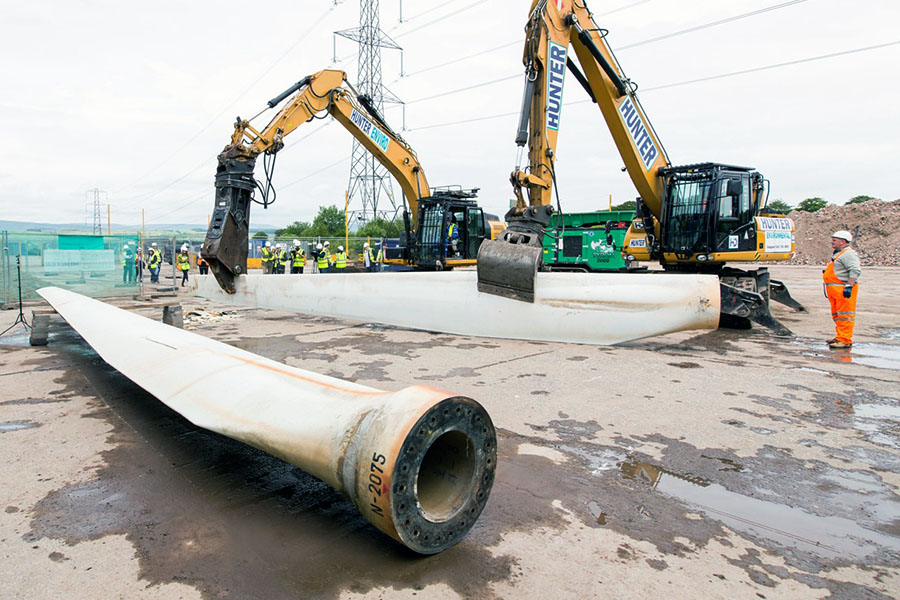
Order TED/542/2025, published today in the Official State Gazette (BOE), regulates the grants of the Renocicla Programme, funded by the Next Generation EU initiative and aimed at companies promoting the circular economy in renewable energy equipment.
According to the latest report from international consultancy Wood Mackenzie, “Horizons – May 2025,” escalating trade tensions may significantly disrupt supply chains, increase project costs, and delay the energy transition just as the sector reaches a critical phase of expansion.
The rollout of new solar plants, offshore wind farms, and hybrid projects across Europe—along with recent milestones such as Spain’s first industrial microgrid—solidifies Iberdrola’s position at the heart of the energy transition. This strategy will be central to the presentation by Julio Castro, CEO of Iberdrola Spain, at FES Iberia 2025, taking place on June 24 in Madrid, with over 400 leaders from the energy sector in attendance.

Select the sector you
want to know more about
Engineer Eduardo Oviedo has taken over the Energy Ministry and the state utility ENEE amid an institutional reset. His technical profile aims to stabilise the power system and move forward with a flagship tender that has already attracted more than ten companies.
With more than 25 years of experience in the power sector, Pereira takes office at a critical juncture, with over 10 GW of renewable projects under development, USD 12 billion in investments awaiting regulation, and presidential elections scheduled for 2026.
The president met with Mexico’s leading banks to request tailored financing schemes for renewable generation and power transmission projects to be announced shortly. One day later, the state-owned utility CFE formalised a new regulatory framework allowing mixed contracts with private companies, sharing investment, risk and operations under profitability and sustainability rules.