









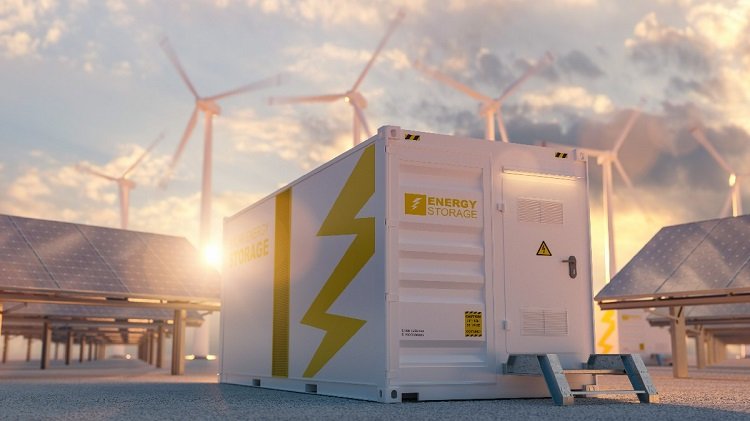
The Government of Mexico is advancing a structural overhaul of the electricity sector with the publication of three regulatory instruments that directly impact the development of renewable energy and energy storage. These include new provisions for energy storage systems, cogeneration, and guidelines for the migration of legacy permits, published on 16 April 2026 in the Official Gazette of the Federation.
The regulatory package not only redefines technical rules but also establishes the operational and economic foundations under which new technologies will be integrated into the national power system. In particular, the instruments set mandatory conditions for storage participation, define generation capacity based on industrial needs, and organise the transition of legacy contracts into the new electricity market framework.
At the same time, this regulatory shift aligns with a new phase of sector expansion. The government is preparing a new renewable energy tender after awarding 3.3 GW of clean capacity alongside 1.2 GW of storage, while also planning the development of an additional 2,000 MW in battery systems—representing an unprecedented scale for the country.
One of the central pillars is the regulation of Electricity Energy Storage Systems (SAEE), which for the first time has a specific regulatory framework defining their integration, operation and services within the power system. The provisions establish that these systems may participate either in association with power plants or as standalone assets, and can even be integrated into transmission and distribution networks, significantly expanding their business models.
The rules also define the services storage can provide, including backup, frequency regulation and system reliability support, under schemes coordinated by the system operator. The aim is for storage to directly contribute to the quality, continuity, security and efficiency of the national electricity system, consolidating it as a strategic asset rather than a complementary one.
It is worth noting that the government had already anticipated a specific tender for standalone storage, separating its development from generation for the first time, thereby opening new opportunities for investors specialising in battery technologies.
The new framework not only defines storage integration but also introduces technical and economic conditions that directly affect project bankability. Industry stakeholders warn that these provisions require revisiting key assumptions in financial models, particularly regarding revenue streams, system sizing and operational strategies.
One of the most relevant aspects is the minimum three-hour duration threshold for storage systems to participate in certain market schemes. This means that projects designed below this standard could be excluded from expected revenue sources, directly affecting their economic viability.
Additionally, the new rules establish that capacity allocated to offset variability from power plants must remain available throughout the entire duration of the permit and be subject to system operator dispatch instructions. In practice, this means that a portion of storage capacity is no longer fully merchantable, as it is primarily committed to ensuring system reliability.
Another critical issue is the treatment of battery degradation, which is now explicitly assigned as a risk to the developer. If system capacity falls below required levels and the operator determines that reliability is affected, the permit holder must replace or upgrade the infrastructure. This introduces a contingent obligation with direct implications for long-term technical and financial planning.
Moreover, the framework introduces short-term regulatory uncertainty. The system operator has a 90-day period to define the variability assessment methodology that will determine the minimum sizing requirements for storage systems. As a result, projects currently under development may need adjustments once these criteria are published, affecting their technical configuration.
Taken together, these elements reflect a paradigm shift: storage is no longer a flexible complement but becomes a regulated component with strict technical obligations and a central role in system operations. For developers, this brings greater operational predictability, but also higher requirements in project design and structuring.
In parallel, the permit migration scheme reinforces the role of the Federal Electricity Commission (CFE), Mexico’s state-owned utility, as a key market anchor, establishing modalities under which it may purchase a significant share—or even the entirety—of the generated electricity. This reshapes commercial conditions for existing projects seeking continuity under the new framework.
Finally, although less prominent within the package, the cogeneration provisions introduce adjustments aimed at improving system efficiency by more closely linking electricity generation capacity to the thermal demand of industrial processes, limiting overcapacity and optimising fuel use.
In this context of regulatory transformation, the sector will have a key forum for discussion on 19 May at the Future Energy Summit (FES) Mexico, where around 500 public and private sector executives are expected to participate. The event is shaping up as a strategic platform to analyse upcoming tenders, regulatory challenges and investment opportunities arising from this new framework for renewables and energy storage.DOF - Diario Oficial de la Federación