











The Government of Mexico has enacted the Law for the Promotion of Investment in Strategic Infrastructure for Development with Wellbeing, a regulation aimed at unlocking key projects through new financing mechanisms and increased private sector participation.
The initiative seeks to organise and scale up infrastructure investment under a model that combines public, private and social capital, aligned with economic growth targets and inequality reduction.
The law establishes a comprehensive framework for developing strategic projects, incorporating tools such as hybrid participation schemes and Special Purpose Vehicles (SPVs), with the goal of improving the economic and financial conditions of investments.
The decree states that it aims to “regulate investment mechanisms that promote the development and execution of strategic public infrastructure projects”.
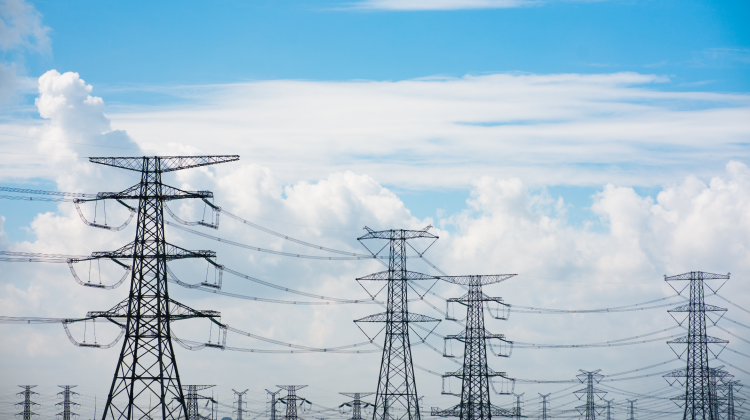
The regulation comes alongside a broader push for large-scale infrastructure works in the country, including the expansion plan led by the Federal Electricity Commission (CFE). This plan includes 138 transmission lines and 249 substations, financed through a mix of public works and instruments such as Fibra E (a Mexican infrastructure and energy investment trust), with tenders expected between the remainder of 2026 and the first half of 2027.
In this context, the new law introduces mechanisms to facilitate coordination between the State and private capital. Among the key tools are hybrid participation schemes, which allow different stakeholders to engage in the financing, development and operation of projects.
According to the decree, these stakeholders may “participate directly or indirectly alongside the private or social sectors”, sharing risks, costs and benefits.
At the same time, the law promotes the creation of Special Purpose Vehicles as key instruments to channel investment, enabling more efficient financing structures. The Mexican government notes that these mechanisms aim to “generate effective coordination between public, private and social sectors”.
These vehicles will also be able to access capital markets through listed instruments, expanding financing alternatives available for strategic projects.
Another key aspect is the definition of strategic infrastructure, which includes sectors critical to economic development such as energy, transport, water and social services. The decree highlights that such projects are essential to “ensure energy and water security and strengthen the country’s productive resilience”.
The regulation also raises the bar for project evaluation. Initiatives must demonstrate technical, economic, financial, environmental and social viability before approval, ensuring that investments are not only feasible but also sustainable over the long term.
Under this framework, projects must meet “technical, economic, financial, environmental and social viability” criteria, incorporating more rigorous standards in project selection.
The law also clarifies that these mechanisms do not automatically create fiscal commitments for the State, reinforcing the principle of financial discipline. In this regard, it specifies that the regulation “cannot be interpreted as an autonomous source of budget allocation”.
Mexico’s power system expansion already has a defined roadmap, underscoring the urgency of strengthening both infrastructure and financing schemes.
According to the Power Sector Development Plan 2025–2039, the country will add 19,954 MW of renewable energy capacity and 5,000 MW of energy storage by 2030, with a mix of 58% solar PV, 22% wind power and 20% battery storage. The CFE is expected to execute 69.2% of the total capacity.
The law is also framed within a development model focused on shared prosperity, where infrastructure acts as a driver of economic growth and social inclusion. In this sense, the Mexican government states that projects must “unlock economic growth and shared prosperity”.
Against this backdrop, the debate on the future of infrastructure and its financing will take centre stage in the sector’s agenda. These issues will be at the core of discussions during the Future Energy Summit Mexico 2026, to be held on 19 May in Mexico City, where key public and private sector stakeholders will address challenges and opportunities related to energy system expansion, new investment frameworks and the execution of strategic projects.