











The international public tender EDES-LP-NGR-01-2025 in the Dominican Republic, aimed at procuring 600 MW, has delivered clear signals of market maturity. Participation far exceeded the contracted volume, with more than 1.5 GWp and around 1.3 GWh offered. This level of competition confirms strong investor appetite and consolidates the country as an attractive destination for investment in renewables.
In this context, the process not only enabled new capacity additions but also advanced the integration of energy storage systems (BESS) as a tool to manage renewable variability. “Steps are being taken to integrate dispatchable renewables, and that is a significant shift in the model,” said senior consultant Rafael Velazco in conversation with Energía Estratégica. According to him, this is key to addressing one of the system’s main weaknesses: the lack of flexibility in renewable expansion.
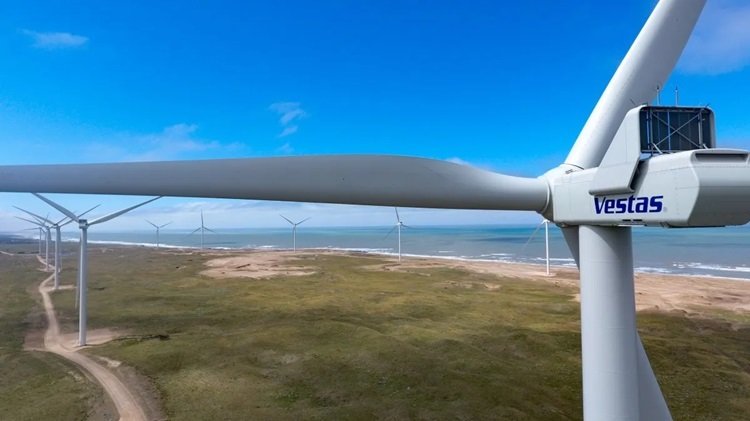
Preliminary results include the award of eight projects totalling 605.1 MW, with a clear predominance of solar PV and a single wind power initiative. The process therefore demonstrates both market maturity and the sector’s ability to respond to competitive procurement mechanisms.
At a structural level, the tender also reflects a shift in how the sector is being developed. The incorporation of dispatchable solutions marks a turning point compared to the previous model based solely on intermittent generation. This approach aligns with practices in more mature markets with higher levels of renewable energy penetration.
From an economic standpoint, prices around USD 0.108/kWh confirm a competitive — albeit demanding — environment for developers. These levels reflect tight financial structures and strong market pressure, reducing room for manoeuvre during project execution.
Velazco warned that the sustainability of these prices is not uniform. While well-structured projects may be able to deliver, margins for error are minimal, increasing execution risk. This reinforces a key point: tenders are not won by the lowest prices alone, but by the most robust projects.
Competitiveness was therefore not defined solely by bid prices. Factors such as resource quality, project location and ease of grid integration proved decisive, alongside BESS design and overall project maturity.
The high level of oversubscription highlighted both market dynamism and structural limitations in the power system, particularly in transmission infrastructure. While the initial 600 MW volume was appropriate as a first call to validate the tender scheme, the level of interest underscores the need to expand grid capacity.
“Investment in transmission is essential to enable further renewable integration. Without transmission, there is no energy transition,” Velazco stressed, identifying it as the main bottleneck for sector growth.
This constraint also explains why a larger-scale tender could have created operational tensions. The current system would struggle to absorb significantly higher volumes without compromising stability, making phased development a necessity.
At the same time, project execution emerges as a critical factor. The estimated 24-month timeline from power purchase agreement (PPA) signing to commercial operation is feasible in theory, but depends on variables not entirely under control, such as financial close, permitting and interconnection capacity.
The technical complexity of BESS adds further challenges in design, integration and supply. In a global context of high demand for these technologies, supply chain constraints cannot be ruled out, potentially affecting project timelines.
Looking ahead, final awards are expected between 27 April and 5 May, with contract signing scheduled for 22 May.
The tender leaves a clear conclusion: the market is ready, but the system is not keeping pace. The Dominican Republic has positioned itself as a competitive and attractive market, yet the next step lies not in launching new tenders, but in addressing the structural bottlenecks currently constraining the energy transition.
Key figures from the tender
| Indicator | Value |
|---|---|
| Tendered capacity | 600 MW |
| Capacity offered | >1,500 MWp |
| Storage offered | ~1,300 MWh |
| Projects awarded | 8 |
| Total awarded capacity | 605.1 MW |
| Average price | ~USD 0.108/kWh |
Future Energy Summit returns to the Dominican Republic
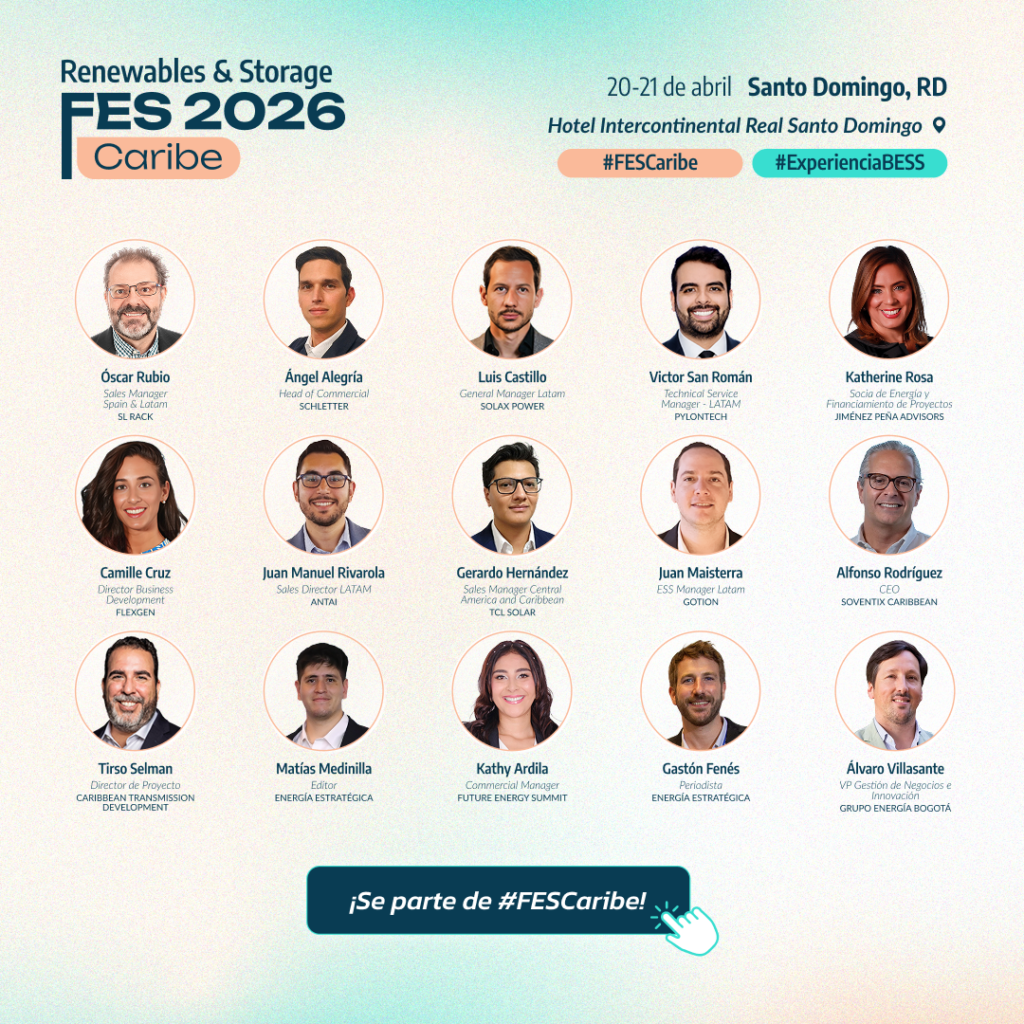
Over today and tomorrow, Future Energy Summit (FES) Caribe 2026 will once again establish itself as one of Latin America’s leading energy forums, at a time when the Dominican Republic faces structural decisions that will directly shape its power system.
The fifth edition of the event, taking place on 20–21 April in Santo Domingo, will bring together developers, utilities, financiers, technology providers and government officials amid strong sector activity.
The importance of FES Caribe is reflected in the calibre of confirmed participants, including senior public sector representatives such as Vice-Minister for Energy and Energy Transition Betty Soto and the Executive Director of the National Energy Commission (CNE), Edward Veras, alongside private-sector leaders and hundreds of expected attendees.
Watch the live broadcast: https://www.youtube.com/watch?v=OfB3DaSHJSM