











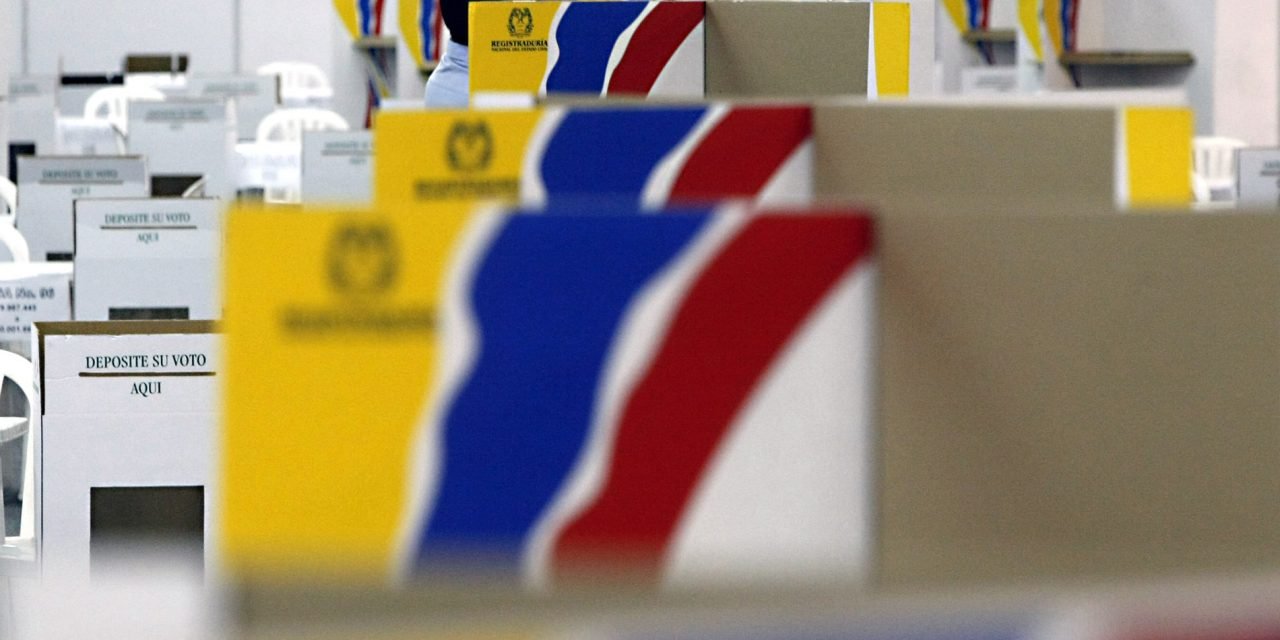
With Colombia’s presidential election scheduled for 31 May 2026, the race is unfolding alongside two structural decisions that will shape the country’s power system for the next decade: a long-term energy auction incorporating energy storage, and the reliability charge auction, the cornerstone mechanism to ensure firm capacity and system adequacy.
Both processes will define the future generation mix and influence Colombia’s country risk perception among international investors. In this context, industry stakeholders consulted by Energía Estratégica argue that the debate should focus on technical design rather than ideological positioning.
Among the most visible candidates are Iván Cepeda, Abelardo de la Espriella and Paloma Valencia. Other figures frequently mentioned include Mauricio Cárdenas, David Luna, Juan Daniel Oviedo, Sergio Fajardo and Claudia López, although market attention remains centred on the first three.
Market participants note that none of the leading contenders has yet presented a detailed roadmap outlining how to coordinate renewable energy expansion, battery energy storage systems (BESS), capacity remuneration mechanisms and the role of natural gas in the energy transition.
Public proposals remain focused on broad concepts — energy transition, emissions reduction and “fair” electricity tariffs — without addressing regulatory instruments, price signals or market design. For investors active in solar PV, wind power and energy storage, this lack of specificity increases uncertainty at a pivotal moment for grid integration and system planning.
The next administration will take office amid projections of potential system stress between 2027 and 2028. Solar PV capacity is expanding rapidly, yet firm capacity additions are lagging behind.
Without large-scale storage deployment or clear long-term capacity signals, night-time security of supply will continue to depend heavily on hydropower and thermal generation. This dynamic underscores the need for coherent market incentives that align renewable energy growth with dispatchable backup and flexibility resources.
The redesign of the reliability charge will be critical in determining which technologies receive long-term revenue certainty. The mechanism defines capacity payments, recognised firm energy and the financial sustainability of new generation projects.
Industry representatives stress that the debate is not merely technical. The structure of the reliability scheme will directly affect project bankability, the cost of capital and ultimately electricity tariffs for end users.
Stakeholders emphasise that safeguarding the independence of the Energy and Gas Regulatory Commission (CREG) will be essential to maintain technically grounded decisions insulated from electoral cycles.
Clear rules on capacity remuneration, grid expansion, distributed generation, taxation and long-term power purchase agreements (PPAs) are central to maintaining Colombia’s attractiveness for investment in renewables.
For international capital, institutional predictability often outweighs political orientation. Investment in renewables tends to flow towards jurisdictions with consistent regulatory frameworks and stable economic signals.
At stake is the balance of the energy trilemma: environmental sustainability, security of supply and tariff affordability. Short-term policy shifts that disturb this equilibrium could undermine both investment flows and system reliability.
As Colombia simultaneously defines its long-term contracting framework and its firm capacity scheme, the presidential debate extends well beyond environmental rhetoric. The next head of state will inherit not only an energy transition agenda, but also the responsibility to ensure that regulatory signals enable generation expansion without compromising stability, competitiveness or investor confidence.