Luis Marquina, president of the entity, highlights the willingness of the new Deputy Director General for Storage, Fátima García Señán, to coordinate efforts in the development of storage in a dialogue with Energía Estratégica España.
Alberto Rocha points out that having access to updated and dynamic information about grid saturation ensures greater competitiveness for the final price and for investors. He also mentions that this week, the CNMC is expected to publish a document on how to request demand, “obliging distributors to provide information on how much capacity there is at the nodes.”
The renewable hydrogen production company has a presence in 11 key European markets with a project portfolio of 9.5 GW and aims to achieve the goal of 3 GW of operational capacity by 2030. Additionally, it is committed to diversifying offshore green hydrogen projects.
With a strong presence in Asturias, Masnorte Renovables is employing various strategies for its clients, from rooftop connections to canopies, where it has begun expanding its reach into electromobility.
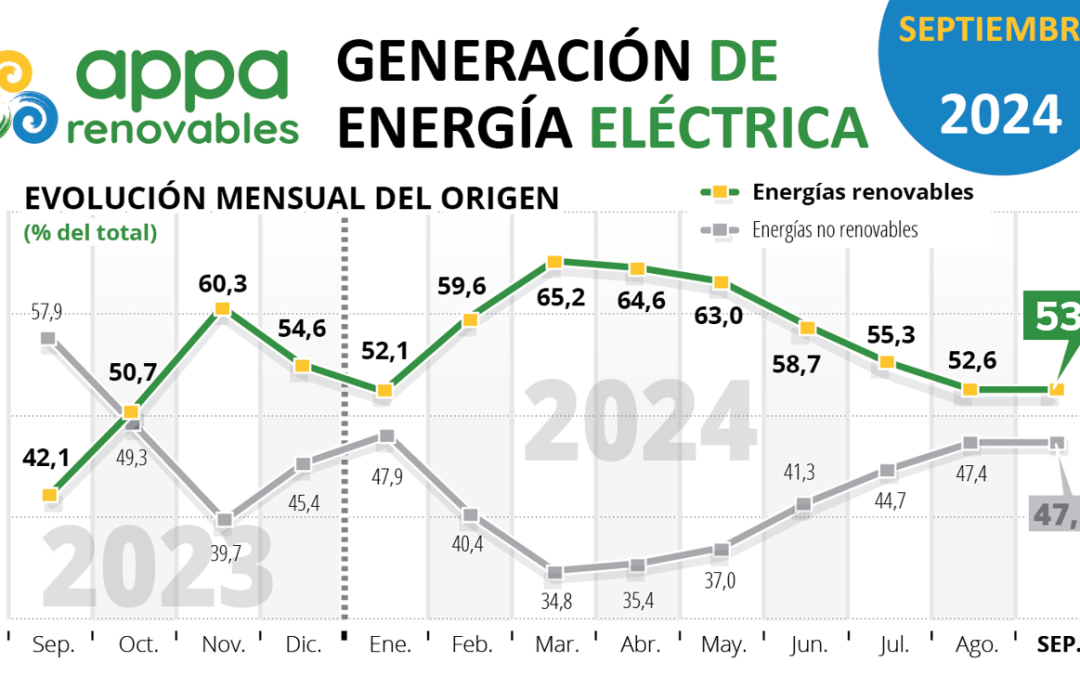
In the last 12-month period, nearly 57% of electricity in Spain has been renewable, surpassing 50% in each of the months. The strong performance of hydroelectric (+67%) and photovoltaic (+22%) generation has driven renewable electricity production. Wind generation has consolidated itself as the largest producer of electricity (23.8%), while photovoltaics has surpassed 16%.
Ángel Gómez Vallejo analyzes the sector and states: “For large-scale batteries to be built, a market model with long-term contracts ensuring a minimum income is necessary. I believe we are entering a dynamic where the market’s own competitiveness will likely make CfDs unnecessary for public funding, requiring only state support as a long-term offtaker.”
“It’s not enough to set ambitious targets,” says José Luis Bernal Albendín from ITERH, highlighting the need for policies that facilitate renewable energy installation, incentives to promote electric vehicles, and long-term planning to ensure investments arrive on time.
Actualmente hay 12,5 GW instalados de potencia eólica y buscan alcanzar los 28 GW al 2030, de los cuales 2 GW son de eólica offshore. Desde la Associazione Nazionale Energia del Vento (ANEV) habría que instalar mucha potencia, pero que tienen expectativas favorables al respecto.
The project has the support of the local government, pig farmers, and oil mills. It would provide a sustainable solution for managing the olive pomace and manure produced in the Condado region. It would produce more than 84 GWh/year of biomethane.
Luis Marquina, president of the entity, highlights the willingness of the new Deputy Director General for Storage, Fátima García Señán, to coordinate efforts in the development of storage in a dialogue with Energía Estratégica España.
Alberto Rocha points out that having access to updated and dynamic information about grid saturation ensures greater competitiveness for the final price and for investors. He also mentions that this week, the CNMC is expected to publish a document on how to request demand, “obliging distributors to provide information on how much capacity there is at the nodes.”
The renewable hydrogen production company has a presence in 11 key European markets with a project portfolio of 9.5 GW and aims to achieve the goal of 3 GW of operational capacity by 2030. Additionally, it is committed to diversifying offshore green hydrogen projects.
With a strong presence in Asturias, Masnorte Renovables is employing various strategies for its clients, from rooftop connections to canopies, where it has begun expanding its reach into electromobility.
In the last 12-month period, nearly 57% of electricity in Spain has been renewable, surpassing 50% in each of the months. The strong performance of hydroelectric (+67%) and photovoltaic (+22%) generation has driven renewable electricity production. Wind generation has consolidated itself as the largest producer of electricity (23.8%), while photovoltaics has surpassed 16%.
Ángel Gómez Vallejo analyzes the sector and states: “For large-scale batteries to be built, a market model with long-term contracts ensuring a minimum income is necessary. I believe we are entering a dynamic where the market’s own competitiveness will likely make CfDs unnecessary for public funding, requiring only state support as a long-term offtaker.”
“It’s not enough to set ambitious targets,” says José Luis Bernal Albendín from ITERH, highlighting the need for policies that facilitate renewable energy installation, incentives to promote electric vehicles, and long-term planning to ensure investments arrive on time.
Actualmente hay 12,5 GW instalados de potencia eólica y buscan alcanzar los 28 GW al 2030, de los cuales 2 GW son de eólica offshore. Desde la Associazione Nazionale Energia del Vento (ANEV) habría que instalar mucha potencia, pero que tienen expectativas favorables al respecto.
The project has the support of the local government, pig farmers, and oil mills. It would provide a sustainable solution for managing the olive pomace and manure produced in the Condado region. It would produce more than 84 GWh/year of biomethane.
With 7.8 GW of renewables installed, 5.5 GW in the pipeline and 713 MW awarded in energy storage, Argentina is shifting toward an open market model that expands private contracting, strengthens the term market and introduces privately financed transmission concessions as a new structural pillar.
The country installed 339 MWh of behind-the-meter storage and 1,214 MW of new self-consumption capacity over the past year, signalling sector maturity. However, the current pace risks undermining Spain’s 2030 energy targets.
ANEEL’s Technical Note No. 03/2026 sets key definitions for battery energy storage systems (BESS), confirms dual network tariffs and assigns capacity reserve costs to generators, shielding end-user electricity tariffs.