
Renercycle is advancing with technologies to recover complex materials such as blades and a strategy for expansion in Europe and Asia, while the sector seeks to accelerate projects amid regulatory barriers.
The report by Quinto Armónico reveals that this trend sets a favourable scenario for investments in BESS systems, driven by the high volatility of the electricity market.
The Spanish Wind Energy Association (AEE) presented a new initiative at the Congress of Deputies aimed at giving a voice to residents of municipalities with wind farms. The forum includes a book featuring over 50 testimonies and aspires to become a permanent dialogue platform.
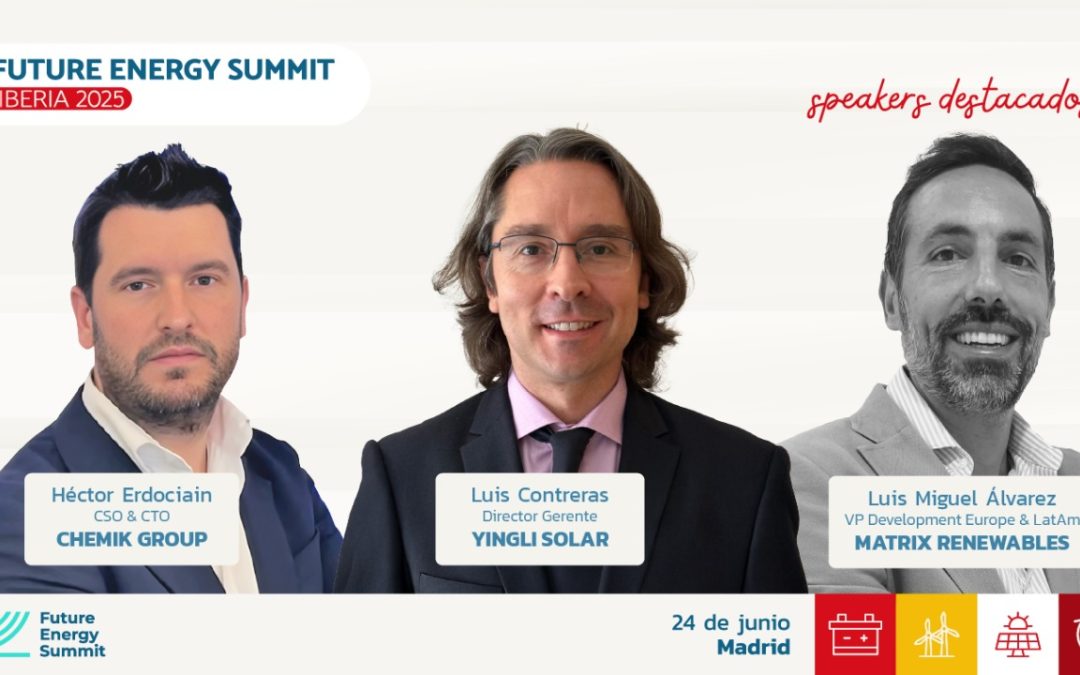
Future Energy Summit (FES) Iberia 2025 will bring together more than 400 executives from the public and private sectors on June 24 at the Colegio de Caminos, Betancourt Auditorium, in Madrid. They will share the space with industry leaders such as Repsol, Galp, and Sonnedix, at an event that will bring together more than 400 executives to discuss key trends in the energy market.
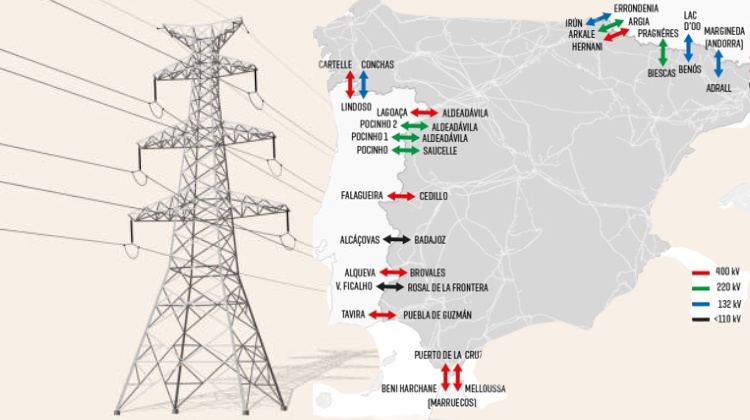
REN reinstates the energy flow from Spain with a 1,000 MW cap following the 28 April blackout, in place until 12 May.
The 28 April’s power outage exposed the fragility of Spain’s power system. Fundación Renovables proposes five concrete measures—from strengthening storage to demand-side flexibility—to prevent setbacks in the transition towards a decarbonised and 100% renewable model.
Electrical engineer Nayeem Hossain analyzes the progress of marine renewable energy, from offshore wind to tidal power and hybrid solutions. He asserts that, although the market is still developing, the potential is “immense” and could transform the European electricity system.
The 28 April event is estimated to have cost Spain around €3 billion. Experts from OMIE, AFRY, Alantra and Hesstec agreed that preventing future blackouts depends on the deployment of distributed storage, grid forming inverters, and an operational redesign of the system.
Following the blackout, Ancillary Services exceeded €35/MWh and suppliers are applying adjustment clauses, creating tension with industrial clients.
With more than 30,000 installed projects, Otovo is consolidating its presence in ten countries and accelerating the adoption of technologies such as energy storage and electric mobility, supported by its subscription model that facilitates access to solar systems with no initial investment, according to Manuel Pina in an interview with Strategic Energy Europe.
The Campania Welfare Foundation launches a public tender for the design, construction, and management of solar systems on its properties, through a public-private partnership scheme valued at 13.4 million euros and fully financed by the private sector. The initiative also includes the establishment of a Renewable Energy Community.
FES Iberia 2025 will explore how to strengthen energy security in the aftermath of the blackout, analysing the role of storage, grids and regional integration in systems with high renewable penetration and increasing operational complexity.
The company will present its products and celebrate its 20th anniversary at Intersolar Europe 2025. In an exclusive interview, Solis outlines its next steps.
Following losses of up to €1.3 billion, companies and households seek energy independence as enquiries soar by more than 450% in just eight hours — and the trend continues.
Electrical engineer Nayeem Hossain analyzes the causes behind the blackout that affected Europe and highlights the urgent need to strengthen energy storage, diversify renewable sources, and optimize grid interconnection. “We still rely on fossil fuels as a backup,” he tells Strategic Energy Europe.
The discussions concerned the objectives and values of the European Climate Adaptation Plan, the role of technology in accelerating eco-innovation and the need to involve the private sector in climate action, inter alia.
Despite project cancellations and delays totaling more than $100 billion, the offshore wind industry expects to add nearly 20 GW of energy to operations in the coming months, driving the global energy transition.
Union Española Fotovoltaica provides a technical and responsible perspective on the electrical incident and the photovoltaic sector’s commitment to stability and sustainability.
What are the technical details behind these systems that enable households, industries, and communities to manage their renewable energy, optimise costs, and achieve operational independence, leveraging available resources without relying solely on centralised systems?
Founded in 2005, Solis has grown from modest beginnings in Ningbo, China, to become an industry leader, maintaining its leadership today under its founder, Jimmy Wang. With over 100 GW of inverters shipped globally and a presence in over 100 countries and regions, the company celebrates two decades of innovation by boldly looking toward the future.
AEGE members are gradually restarting operations at their facilities following yesterday’s power outage on the peninsula. No significant incidents were reported during the power outage. The industry will assess the operational and financial impacts once full normality returns.
Renercycle is advancing with technologies to recover complex materials such as blades and a strategy for expansion in Europe and Asia, while the sector seeks to accelerate projects amid regulatory barriers.
The report by Quinto Armónico reveals that this trend sets a favourable scenario for investments in BESS systems, driven by the high volatility of the electricity market.
The Spanish Wind Energy Association (AEE) presented a new initiative at the Congress of Deputies aimed at giving a voice to residents of municipalities with wind farms. The forum includes a book featuring over 50 testimonies and aspires to become a permanent dialogue platform.
Future Energy Summit (FES) Iberia 2025 will bring together more than 400 executives from the public and private sectors on June 24 at the Colegio de Caminos, Betancourt Auditorium, in Madrid. They will share the space with industry leaders such as Repsol, Galp, and Sonnedix, at an event that will bring together more than 400 executives to discuss key trends in the energy market.
REN reinstates the energy flow from Spain with a 1,000 MW cap following the 28 April blackout, in place until 12 May.
The 28 April’s power outage exposed the fragility of Spain’s power system. Fundación Renovables proposes five concrete measures—from strengthening storage to demand-side flexibility—to prevent setbacks in the transition towards a decarbonised and 100% renewable model.
Electrical engineer Nayeem Hossain analyzes the progress of marine renewable energy, from offshore wind to tidal power and hybrid solutions. He asserts that, although the market is still developing, the potential is “immense” and could transform the European electricity system.
The 28 April event is estimated to have cost Spain around €3 billion. Experts from OMIE, AFRY, Alantra and Hesstec agreed that preventing future blackouts depends on the deployment of distributed storage, grid forming inverters, and an operational redesign of the system.
Following the blackout, Ancillary Services exceeded €35/MWh and suppliers are applying adjustment clauses, creating tension with industrial clients.
With more than 30,000 installed projects, Otovo is consolidating its presence in ten countries and accelerating the adoption of technologies such as energy storage and electric mobility, supported by its subscription model that facilitates access to solar systems with no initial investment, according to Manuel Pina in an interview with Strategic Energy Europe.
The Campania Welfare Foundation launches a public tender for the design, construction, and management of solar systems on its properties, through a public-private partnership scheme valued at 13.4 million euros and fully financed by the private sector. The initiative also includes the establishment of a Renewable Energy Community.
FES Iberia 2025 will explore how to strengthen energy security in the aftermath of the blackout, analysing the role of storage, grids and regional integration in systems with high renewable penetration and increasing operational complexity.
The company will present its products and celebrate its 20th anniversary at Intersolar Europe 2025. In an exclusive interview, Solis outlines its next steps.
Following losses of up to €1.3 billion, companies and households seek energy independence as enquiries soar by more than 450% in just eight hours — and the trend continues.
Electrical engineer Nayeem Hossain analyzes the causes behind the blackout that affected Europe and highlights the urgent need to strengthen energy storage, diversify renewable sources, and optimize grid interconnection. “We still rely on fossil fuels as a backup,” he tells Strategic Energy Europe.
The discussions concerned the objectives and values of the European Climate Adaptation Plan, the role of technology in accelerating eco-innovation and the need to involve the private sector in climate action, inter alia.
Despite project cancellations and delays totaling more than $100 billion, the offshore wind industry expects to add nearly 20 GW of energy to operations in the coming months, driving the global energy transition.
Union Española Fotovoltaica provides a technical and responsible perspective on the electrical incident and the photovoltaic sector’s commitment to stability and sustainability.
What are the technical details behind these systems that enable households, industries, and communities to manage their renewable energy, optimise costs, and achieve operational independence, leveraging available resources without relying solely on centralised systems?
Founded in 2005, Solis has grown from modest beginnings in Ningbo, China, to become an industry leader, maintaining its leadership today under its founder, Jimmy Wang. With over 100 GW of inverters shipped globally and a presence in over 100 countries and regions, the company celebrates two decades of innovation by boldly looking toward the future.
AEGE members are gradually restarting operations at their facilities following yesterday’s power outage on the peninsula. No significant incidents were reported during the power outage. The industry will assess the operational and financial impacts once full normality returns.
CAMMESA received eight applications in a new round of the Renewable Energy Term Market, although only 50 MW have full, unrestricted evacuation capacity. Five of the eight projects are solar and are competing for space in corridors with technical limitations.
The new mechanism introduces technology-specific products, extends commissioning deadlines to 2035, and formally recognises energy storage as a core asset for power system reliability. The revised rules aim to correct past design flaws and attract new players to the Colombian electricity market.
Selected projects may gain access to funding through IRENA-backed platforms such as the Climate Investment Platform (CIP) and the Energy Transition Accelerator Financing (ETAF), with proposals submitted before 1 March 2026 receiving priority consideration.