
Major energy consumers are shifting from industry to data centres. What impact does this have on the renewables market? Carlos Martín Graña, Head of Operations at ENERJOIN, analyzes the current situation.



Major energy consumers are shifting from industry to data centres. What impact does this have on the renewables market? Carlos Martín Graña, Head of Operations at ENERJOIN, analyzes the current situation.
Germany’s Federal Network Agency confirmed it will uphold the full 3.443-MW volume in the onshore wind tender scheduled for 2 May 2025, despite regulatory provisions allowing for reductions in case of low participation. The maximum bid value will remain at 7.35 euro cents per kilowatt hour.
In March, Ireland’s electricity grid hit a new solar power record, with a peak of 750 MW connected to the system. The figure marks a key milestone towards the country’s 80% renewable electricity target, according to provisional data from EirGrid.
The project, funded by the European Union through the Erasmus+ programme, officially kicked off with a vibrant and collaborative meeting among project partners.
The Belgian company, the only solar panel manufacturer certified as a B Corp in Europe, is moving forward with an international expansion strategy and is committed to European industrialization in the face of “unfair competition” from Asian products.
The volatility of the European electricity market, intensified by renewable overcapacity and trade tensions between China and the United States, is prompting developers and investors to adopt risk hedging strategies to sustain the profitability of their assets.
In March 2025, 1,556 MW of new PPAs were signed in Europe, a 129% increase over the previous month. Spain, Italy, and Poland led the way in terms of volume, with strong private sector participation and a predominance of solar PV.
Renewable sources covered 39% of electricity demand (in March 2024, they accounted for 42.3%). Photovoltaic (+23.8%) and thermal (+18.6%) sources increased. Hydroelectric (-33.6%), geothermal (-2.4%), and wind (-7.2%) sources decreased. For the latter, this is the third consecutive month of decline.
According to a survey by Strategic Energy Europe based on data from the Ministry of Energy and Natural Resources (MASE), 2.4 GW of renewable energy projects were processed in Italy in the first three months of 2025. Wind and agrivoltaic technologies lead the portfolio, with significant growth in projects with storage.
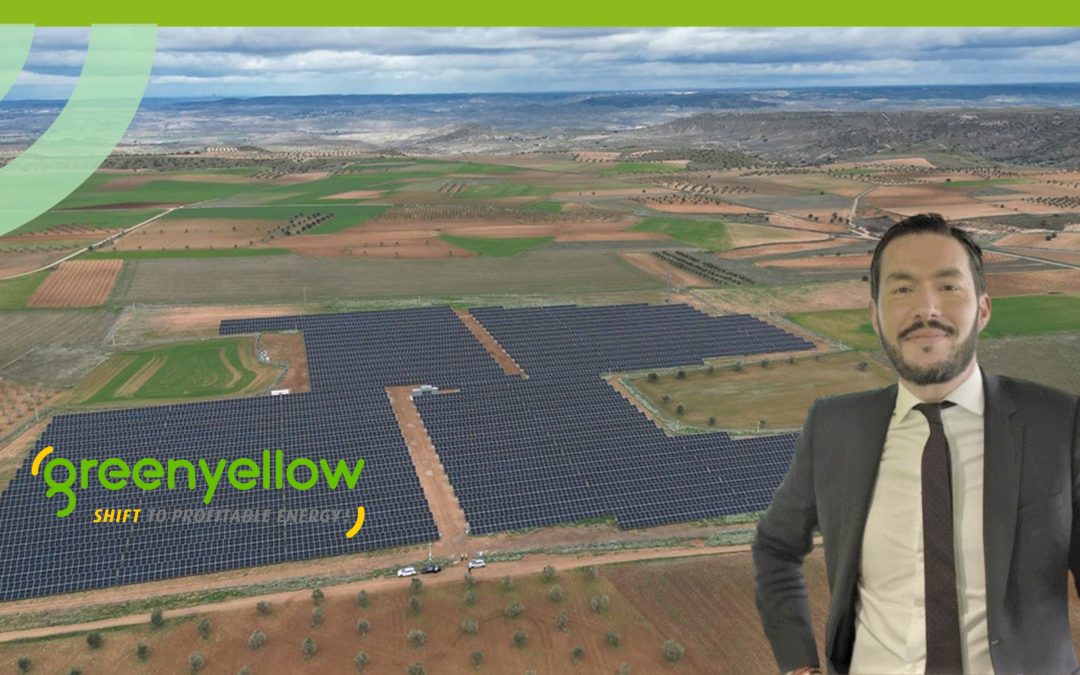
Consolidating 1.7 GWp in decentralized solar and 1.25 TWh in energy savings, GreenYellow closes a record-breaking 2024 and outlines a clear strategy: expand across Europe, invest €10 million in energy storage, deploy 300 MWh by 2027, and position itself as a key partner in decarbonizing the C&I sector.

The CDU, CSU and SPD coalition has unveiled an ambitious energy plan that includes a rapid rollout of hydrogen, incentives for electromobility, competitive energy pricing and carbon capture mechanisms. All aimed at preserving industrial competitiveness and advancing decarbonisation.
“Product selection must be handled carefully, considering price sensitivity and local regulations,” states Bernardo Luis, CEO of DPV Energy, in an interview with Strategic Energy Europe.
In a context of volatile prices and limited energy stability, solar communities are emerging as an increasingly attractive self-consumption solution for businesses. However, regulatory constraints and a penetration rate below 1% are limiting their deployment across Spain.
The 49.9 MW project, owned and led by Low Carbon, is Trinasolar’s first to combine modules, mounting structures, and energy storage on a single site.
As part of preparations for Easter, the Greek Ministry of Environment and Energy brought together key stakeholders in the electricity system to monitor the implementation of production limitation measures at renewable and cogeneration plants. According to preliminary data, producer compliance reached 89%.
The second edition of the “Forum on the Integration of Storage, Renewables, and Electric Vehicles”, organized by Mobility Portal Europe and Strategic Energy Europe, will be held virtually on May 20 and 21. Leaders and experts will analyze the challenges and opportunities for accelerating the integration of renewable energy in Europe.
According to Wood Mackenzie’s latest report, the European renewable energy PPA market closed 2024 with nearly 19 GW of newly contracted capacity, led by Spain and Germany. Hybrid agreements and strong corporate demand are reshaping the outlook for 2025.
The UK Government and Ofgem have launched a reform prioritising strategic projects to fast-track the energy transition. The plan is expected to unlock £40 billion in annual private investment, following £43.7 billion already announced since July in the clean energy sector.
According to official data from Polskie Sieci Elektroenergetyczne, by March and April 2025, installed photovoltaic capacity reached 22,074 MW, while wind farms totalled 10,868 MW, marking a new national milestone. However, the rapid growth also reveals persistent imbalances in the power system, with deviations exceeding 2,000 MW at times.
The initiative seeks to flexibilize requirements, expand eligible sectors such as agriculture and agri-food, and facilitate access to grants of up to 20 million euros per project. The public consultation process will be open for 10 days.
The latest report from the Directorate-General for Energy of the European Commission reveals that renewable electricity generation increased by 93 TWh in 2024, reaching a record 47% share of the EU’s energy mix. Total renewable energy production reached 1300 TWh in 2024.

Major energy consumers are shifting from industry to data centres. What impact does this have on the renewables market? Carlos Martín Graña, Head of Operations at ENERJOIN, analyzes the current situation.
Germany’s Federal Network Agency confirmed it will uphold the full 3.443-MW volume in the onshore wind tender scheduled for 2 May 2025, despite regulatory provisions allowing for reductions in case of low participation. The maximum bid value will remain at 7.35 euro cents per kilowatt hour.

In March, Ireland’s electricity grid hit a new solar power record, with a peak of 750 MW connected to the system. The figure marks a key milestone towards the country’s 80% renewable electricity target, according to provisional data from EirGrid.
The project, funded by the European Union through the Erasmus+ programme, officially kicked off with a vibrant and collaborative meeting among project partners.
The Belgian company, the only solar panel manufacturer certified as a B Corp in Europe, is moving forward with an international expansion strategy and is committed to European industrialization in the face of “unfair competition” from Asian products.
The volatility of the European electricity market, intensified by renewable overcapacity and trade tensions between China and the United States, is prompting developers and investors to adopt risk hedging strategies to sustain the profitability of their assets.
In March 2025, 1,556 MW of new PPAs were signed in Europe, a 129% increase over the previous month. Spain, Italy, and Poland led the way in terms of volume, with strong private sector participation and a predominance of solar PV.
Renewable sources covered 39% of electricity demand (in March 2024, they accounted for 42.3%). Photovoltaic (+23.8%) and thermal (+18.6%) sources increased. Hydroelectric (-33.6%), geothermal (-2.4%), and wind (-7.2%) sources decreased. For the latter, this is the third consecutive month of decline.
According to a survey by Strategic Energy Europe based on data from the Ministry of Energy and Natural Resources (MASE), 2.4 GW of renewable energy projects were processed in Italy in the first three months of 2025. Wind and agrivoltaic technologies lead the portfolio, with significant growth in projects with storage.
Consolidating 1.7 GWp in decentralized solar and 1.25 TWh in energy savings, GreenYellow closes a record-breaking 2024 and outlines a clear strategy: expand across Europe, invest €10 million in energy storage, deploy 300 MWh by 2027, and position itself as a key partner in decarbonizing the C&I sector.
The CDU, CSU and SPD coalition has unveiled an ambitious energy plan that includes a rapid rollout of hydrogen, incentives for electromobility, competitive energy pricing and carbon capture mechanisms. All aimed at preserving industrial competitiveness and advancing decarbonisation.
“Product selection must be handled carefully, considering price sensitivity and local regulations,” states Bernardo Luis, CEO of DPV Energy, in an interview with Strategic Energy Europe.
In a context of volatile prices and limited energy stability, solar communities are emerging as an increasingly attractive self-consumption solution for businesses. However, regulatory constraints and a penetration rate below 1% are limiting their deployment across Spain.
The 49.9 MW project, owned and led by Low Carbon, is Trinasolar’s first to combine modules, mounting structures, and energy storage on a single site.
As part of preparations for Easter, the Greek Ministry of Environment and Energy brought together key stakeholders in the electricity system to monitor the implementation of production limitation measures at renewable and cogeneration plants. According to preliminary data, producer compliance reached 89%.
The second edition of the “Forum on the Integration of Storage, Renewables, and Electric Vehicles”, organized by Mobility Portal Europe and Strategic Energy Europe, will be held virtually on May 20 and 21. Leaders and experts will analyze the challenges and opportunities for accelerating the integration of renewable energy in Europe.
According to Wood Mackenzie’s latest report, the European renewable energy PPA market closed 2024 with nearly 19 GW of newly contracted capacity, led by Spain and Germany. Hybrid agreements and strong corporate demand are reshaping the outlook for 2025.
The UK Government and Ofgem have launched a reform prioritising strategic projects to fast-track the energy transition. The plan is expected to unlock £40 billion in annual private investment, following £43.7 billion already announced since July in the clean energy sector.
According to official data from Polskie Sieci Elektroenergetyczne, by March and April 2025, installed photovoltaic capacity reached 22,074 MW, while wind farms totalled 10,868 MW, marking a new national milestone. However, the rapid growth also reveals persistent imbalances in the power system, with deviations exceeding 2,000 MW at times.
The initiative seeks to flexibilize requirements, expand eligible sectors such as agriculture and agri-food, and facilitate access to grants of up to 20 million euros per project. The public consultation process will be open for 10 days.
The latest report from the Directorate-General for Energy of the European Commission reveals that renewable electricity generation increased by 93 TWh in 2024, reaching a record 47% share of the EU’s energy mix. Total renewable energy production reached 1300 TWh in 2024.
Select the sector you
want to know more about
The country formalises distributed generation with a regulation that strengthens technical standards, mandates digital traceability and guarantees full remuneration for renewable energy exports. Distribution utilities must comply within 30 days.
After more than a decade of setbacks, large-scale solar and energy storage projects set to come online in 2026 could finally push Puerto Rico beyond 20% renewable generation. Meanwhile, over 10% of electricity customers already produce their own power, largely backed by batteries.
The Spanish power system has earmarked 386 grid connection nodes for competitive access tenders and Just Transition zones, blocking more than 165 GW for new generation and energy storage projects. Catalonia, Andalusia and Castile and León lead in reserved capacity, while 1.7 GW has been allocated to self-consumption.