










Future Energy Summit (FES) Argentina will bring together the chief executives of the companies currently leading the transformation of the country’s electricity market, at a time of deep regulatory reconfiguration and a new framework for project development.
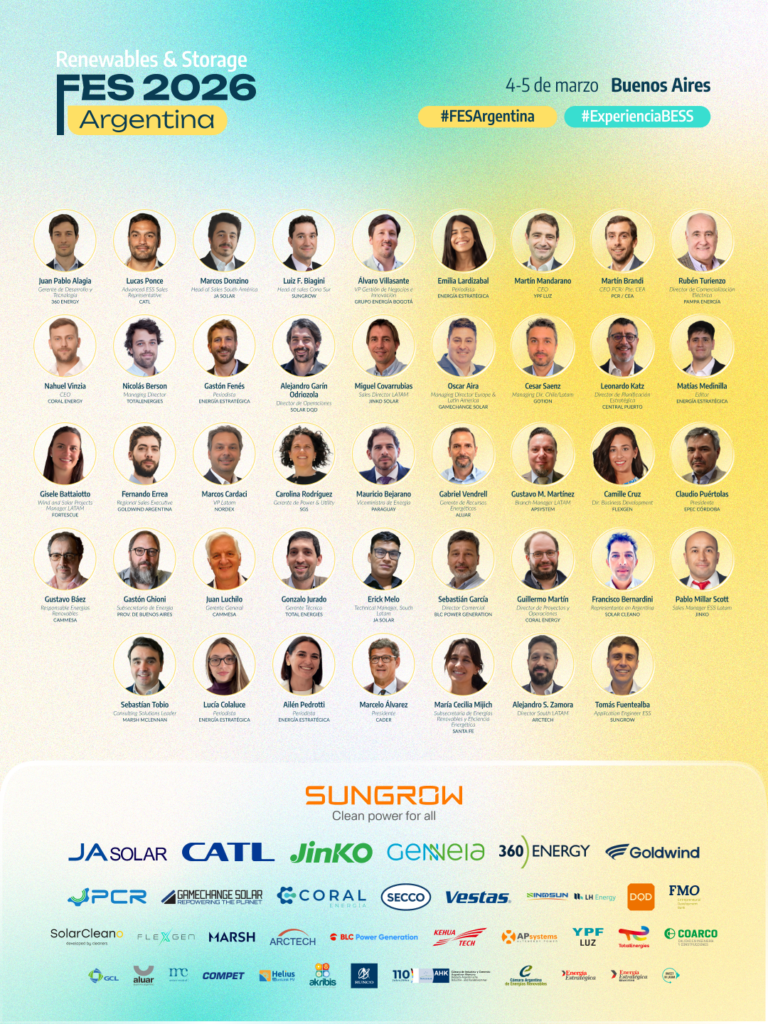
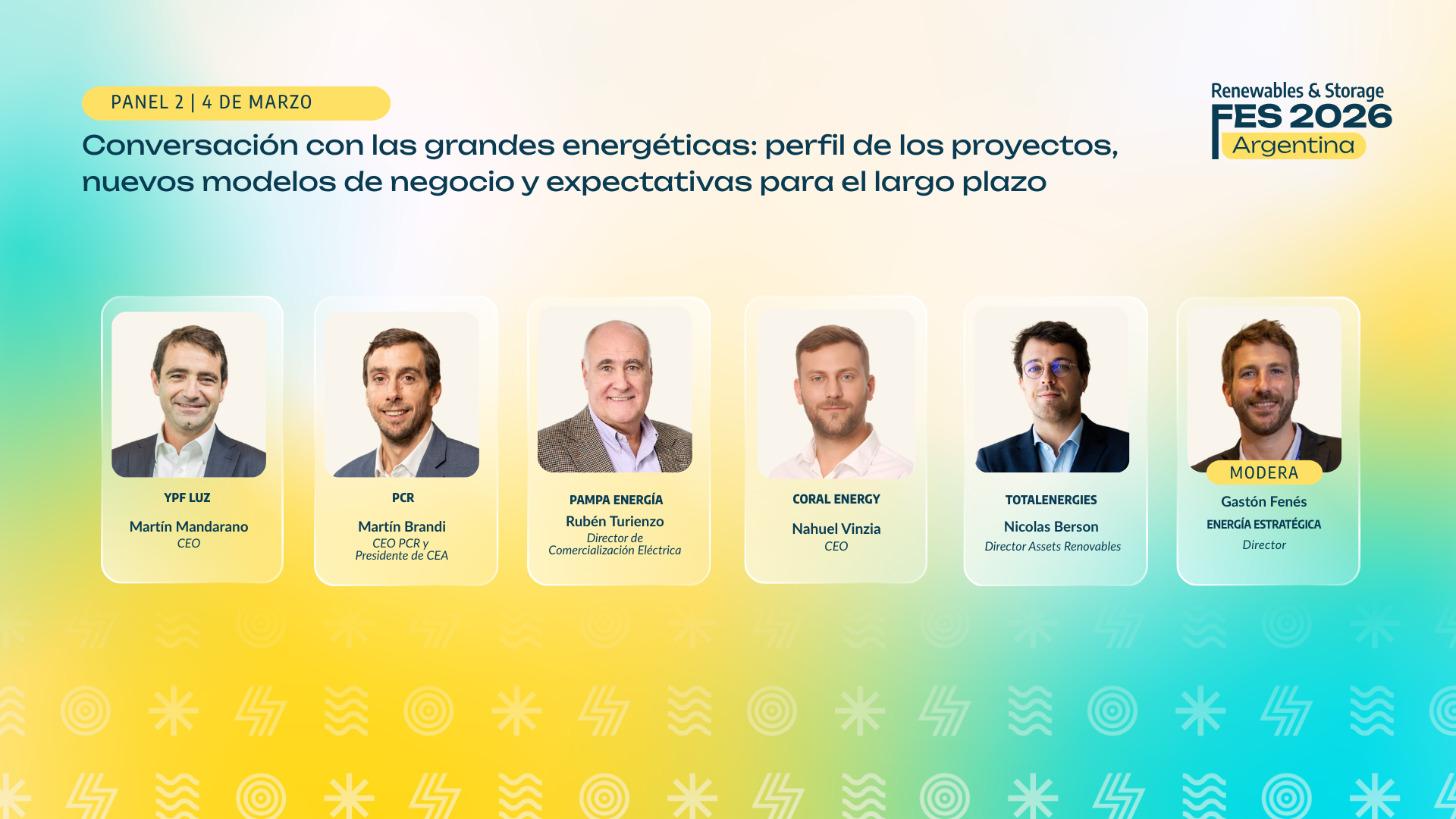
Martín Mandarano, CEO of the Argentine state-backed generator YPF Luz; Bernardo Andrews, CEO of Genneia; Martín Brandi, CEO of PCR; Rubén Turienzo, Head of Power Commercialisation at Pampa Energía; Nahuel Vinzia, CEO of Coral Energía; and Nicolas Berson, Renewables Assets Director at TotalEnergies Argentina, will take part in the panel “Conversation with Major Energy Companies: Project Profiles, New Business Models and Long-Term Expectations”.
The session will focus on how major players are redesigning their investment, contracting and expansion strategies. These companies account for a substantial share of installed renewable energy capacity and project pipeline in Argentina, currently shaped by the dynamics of the forward market (Mercado a Término, MAT), battery energy storage systems (BESS) and new financing structures.
It will also analyse how the shift towards bilateral power purchase agreements (PPAs), the MAT’s new role as the central supply mechanism, and the expansion of BESS are redefining long-term investment decision-making in Argentina.
The panel will gather companies leading the rankings in operational capacity and the development pipeline. For example, Genneia has around 1.4 GW of installed renewable capacity and expects to close 2026 with 1.7 GW, of which nearly 800 MW will be located in the Cuyo region following the commissioning of the Anchoris solar PV plant.
The company also revealed details of the Mendoza Sur–Diamante project (over 360 MW), scheduled for 2029 and expected to become Argentina’s largest solar park.
YPF Luz, for its part, operates 756 MW of renewable capacity and aims to reach 1 GW in the short term. It is developing an additional 200 MW of solar PV alongside 90 MW of BESS. The company also secured the first approval under the Incentive Regime for Large Investments (RIGI) with the 305 MW El Quemado project — currently the largest photovoltaic plant under construction in the country.
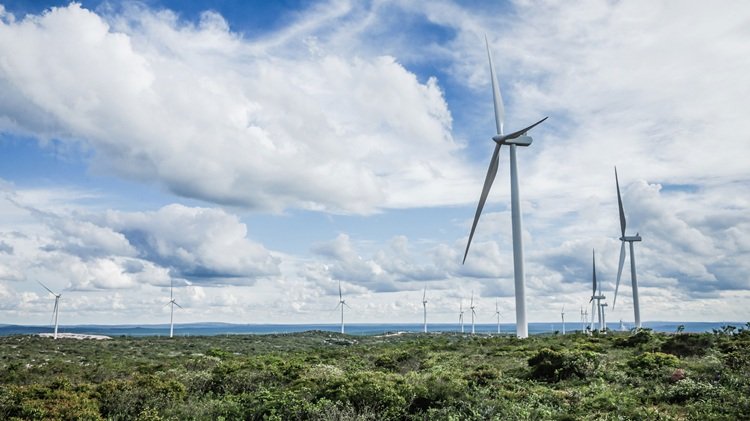
Meanwhile, PCR, with 545 MW of installed renewable capacity, is advancing strategic wind power and solar PV projects. It obtained RIGI approval for its 180 MW Olavarría wind farm, which also includes reinforcement works at the Olavarría and Ezeiza substations. These upgrades will increase evacuation capacity on the 500 kV transmission line connecting Bahía Blanca and Abasto, strengthening grid integration.
Pampa Energía has 427 MW of operational wind capacity and, last year, during FES, announced that it has more than 200 MW ready to move forward, maintaining an active pipeline pending competitive contractual conditions.
Coral Energía is also consolidating its expansion with 400 MW of contracted and under-construction solar PV capacity, 100 MW of awarded BESS projects, and USD 60 million in secured financing for new parks, aiming to reach 1 GW under contract by 2030.
At the same time, TotalEnergies Argentina, backed by the global energy major, is preparing new projects for the forward market and participating in large-scale wind initiatives, including the southernmost wind farm in the world in Tierra del Fuego, developed alongside international technology partners.
All this information and more is detailed in the special report “Argentina Redefines Its Energy Market: Companies, Projects and Opportunities under the Milei Administration”, prepared by Energía Estratégica. The document reviews the leading renewable energy companies in the country, analyses a pipeline exceeding 10 GW across operational, awarded and early-stage projects, and outlines how corporate leadership is being redistributed under the new bilateral contract-oriented framework.
The report also identifies the business groups with the greatest expansion capacity and the entry of new international players, evaluating investment in power generation and energy storage under the redesign of the Wholesale Electricity Market.
The national market context
Argentina’s energy market is undergoing a structural transformation following the update of the Wholesale Electricity Market (Mercado Eléctrico Mayorista, MEM) through Energy Secretariat Resolution No. 400/2025, which promotes the transition towards private bilateral contracts as the primary supply mechanism. This shift reduces the historic role of the state as a central offtaker and transfers energy purchasing and sales decisions to market participants, consolidating the MAT as the key vehicle for new developments.
Argentina currently has 7,843 MW of installed renewable capacity within the MEM — excluding large hydroelectric plants — with strong wind power and solar PV participation, while energy storage is beginning to gain prominence. The renewable forward market (MATER) has already registered 85 applications totalling 3,646.5 MW with dispatch priority, along with 51 awarded projects exceeding 2,300 MW pending commercial operation, demonstrating private-sector dynamism in a more competitive environment.
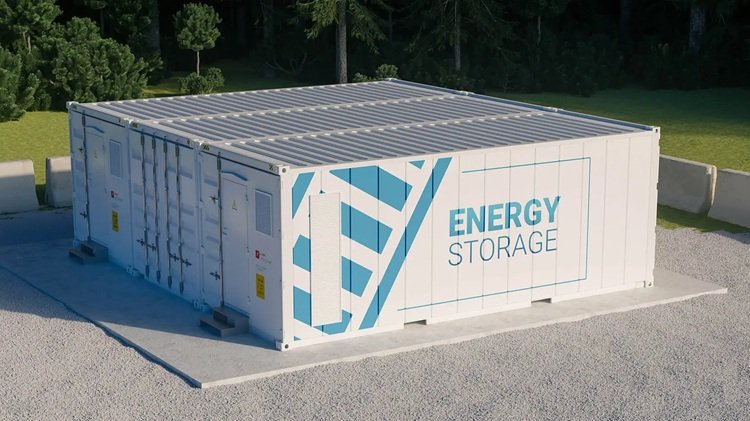
Energy storage has also consolidated as an emerging market following the AlmaGBA tender, which awarded 713 MW of BESS capacity, established price benchmarks for 15-year contracts and became the starting point for a future nationwide storage auction, known as AlmaSADI, expected to tender between 600 MW and 700 MW.
As a result, FES Argentina is consolidating its position as the forum where the most relevant companies in the sector and senior government officials debate trends, risks and investment opportunities in a market redefining its institutional architecture.
In addition to technical sessions, the event stands out for its networking spaces, where hundreds of corporate representatives advance negotiations and partnerships that will drive the energy transition in Argentina and across the region.
Do not miss the opportunity to be part of FES Argentina 2026.