












Chile’s electricity sector is facing renewed debate over the need to modernize its regulatory framework, as industry players warn that current policies are limiting the development of a competitive energy commercialization market.
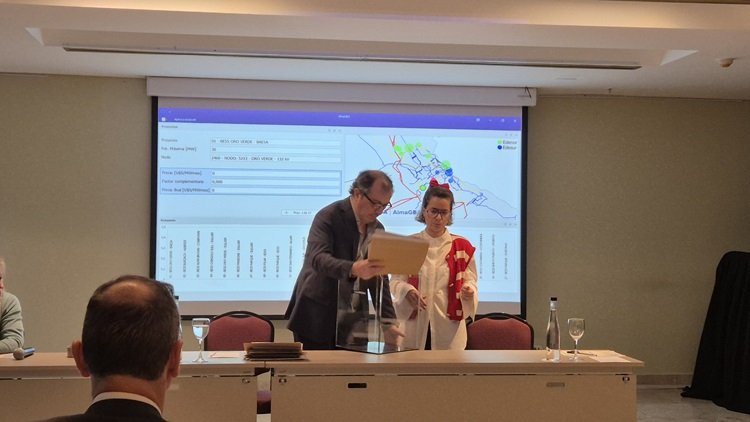
During a webinar hosted by the Chilean Association of Energy Retailers (ACEN), experts stressed that regulated power auctions — designed to secure long-term supply for regulated customers — may be unintentionally hindering the growth of independent energy retailers and competitive supply models.
The discussion follows growing concerns that Chile’s distribution regulatory framework has become outdated, prompting the creation of two separate working groups in 2024 to assess how energy commercialization should evolve.
One group, led by the Institute for Complex Engineering Systems (ISCI), recommended:
- Gradual opening of regulated customers to competition
- Introduction of independent energy retailers (“pure retailers”)
- Greater transparency and comparability of supply options
- Stronger consumer empowerment
However, a separate expert panel concluded that legal reforms are not a short-term priority, suggesting instead administrative measures — such as lowering the power demand threshold required to access the free market — to expand supplier choice.
Despite consensus on the need for reform, industry executives argue that current progress remains limited.
Vannia Toro, CEO of Copec Emoac, noted that commercialization is still confined to large, unregulated consumers, preventing broader market adoption.
Miguel Iglesias, CEO of Energyasset, emphasized the need for a more strategic vision:
“The challenge is to advance toward energy independence and electrification. We must bring market-based elements back into regulation.”
Sebastián Novoa, CEO of Evol and vice president of ACEN, highlighted commercialization as a key solution to multiple structural challenges:
- Tariff design and cost reflectivity
- Integration of distributed energy resources (DER)
- Greater pricing granularity
“The solution lies in properly regulating commercialization so it can effectively reach end consumers,” he stated.
A central tension in the debate is the role of regulated power purchase agreements (PPAs) awarded through auctions.
According to Rodrigo Moreno, professor at the University of Chile and director of the ENLACE Energy Center:
“Every time we carry out auctions for regulated contracts, we are effectively ‘killing’ the commercialization business that could otherwise develop.”
He warned that expanding competition requires strong institutional capacity and careful regulatory design to ensure benefits reach end users.
Moreno also pointed to asymmetries between incumbents and new entrants, noting that traditional utilities — which control network infrastructure — hold a structural advantage over independent retailers.
Panelists agreed that lowering the power threshold alone is insufficient to open the market.
Key complementary measures include:
- Transparent and accessible market information
- Comparable pricing and contract conditions
- Consumer protection mechanisms, particularly for vulnerable users
These recommendations align with previous guidance from Chile’s National Economic Prosecutor’s Office (FNE), which has called for improved market transparency and safeguards.
Energy prices: limited short-term impact, but rising volatility
On pricing, experts anticipate moderate impacts despite global geopolitical tensions, including conflicts in the Middle East.
Chile’s diversified energy mix — with strong penetration of renewable energy and access to natural gas imports from Argentina — is expected to cushion price shocks.
Key expectations include:
- Slight increase in daytime marginal costs (currently near zero in some regions)
- Lower nighttime prices due to energy shifting
- More stable, controlled spot price dynamics
However, volatility may increase in tight supply conditions, particularly if expensive diesel generation is required.
In the medium term, prolonged geopolitical tensions could impact global supply chains for critical minerals, potentially raising the cost of renewable technologies and affecting long-term electricity prices.
The debate highlights a broader challenge: aligning Chile’s regulatory framework with the needs of a modern, flexible power system.
As the country advances in renewable energy, distributed generation, and electrification, stakeholders agree that enabling a competitive retail market will be key to:
- Unlocking innovation
- Enhancing efficiency
- Delivering cost benefits to consumers
Without structural reforms, however, the commercialization segment may remain underdeveloped — limiting the full potential of Chile’s energy transition.