







Energy storage is emerging as one of the most compelling opportunities within Spain’s rapidly evolving electricity market. The shift in hourly price patterns—driven by soaring renewable penetration—is creating favourable conditions for storage technologies, according to Carmen Becerril Martínez, President of Operador del Mercado Ibérico de Energía (OMIE).
Speaking at the APPA Renovables Congress, Becerril underlined that the growing gap between low- and high-price hours is materially improving the business case for flexibility solutions.
“The hourly spread has increased by almost 25% between 2024 and 2025,” she said, describing this trend as “a very encouraging signal for the future development of energy storage”.
A steeper duck curve and distorted price signals
Spain’s electricity price formation is undergoing a structural transformation. Massive additions of renewable capacity—particularly solar PV—have significantly altered the traditional peak–off-peak pattern.
According to OMIE data, Spain has integrated around 7 GW of new solar PV and 1.3 GW of wind power year-on-year, fundamentally reshaping supply dynamics.
“The classic structure of peak, shoulder and off-peak prices no longer exists,” Becerril explained. “Midday prices are now around 40% below the daily average, while evening peak hours can be up to 75% above it.”
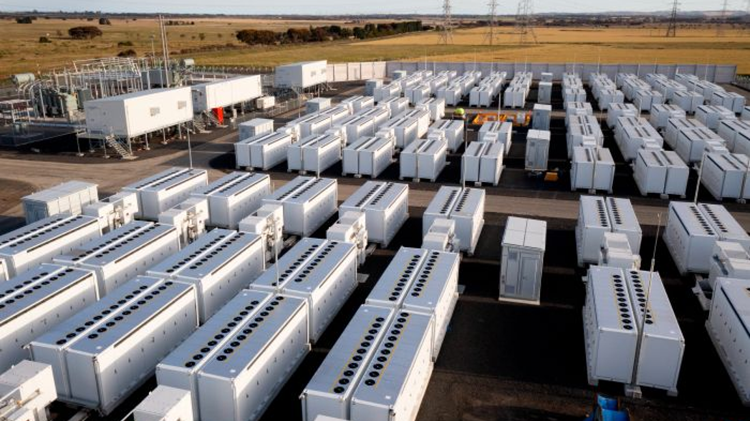
This increasingly pronounced “duck curve” is putting pressure on merchant renewable projects, but at the same time creating arbitrage opportunities for battery energy storage systems (BESS) and other flexibility assets.
Quarter-hourly trading: more precision, more flexibility
To better manage volatility, Spain has introduced one of its most anticipated market innovations: quarter-hourly trading. Since March 2025, this mechanism has been active in the intraday market, and from October it has been extended to the day-ahead market.
By increasing daily scheduling periods from 24 to 96, the system allows generators and flexible assets to respond more accurately to real-time conditions.
“The renewable sector should be the main beneficiary of the flexibility offered by quarter-hourly products,” Becerril noted.
While intraday activity has risen, she clarified that volumes have not quadrupled as initially expected—nor even tripled—suggesting a gradual rather than disruptive transition.
Negative prices and rising curtailment
Flexibility is becoming even more critical as negative prices gain ground. Spain recorded its first negative day-ahead price on 1 April 2024. Since then, such events have intensified, particularly during the second quarter of each year.
In May 2025, the lowest recorded price reached –€15/MWh, a milestone that underscores the growing imbalance between generation and demand.
In both 2024 and 2025, zero or negative prices accounted for nearly 10% of all traded hours, an unprecedented figure for the Spanish market.
This trend has been accompanied by rising economic curtailment, especially for solar and wind generation:
-
21% of solar PV energy offered in May failed to clear the market, despite bids below €5/MWh
-
Wind power faced curtailment of around 20% over the same period
Importantly, these volumes were not constrained by technical grid limitations but by insufficient demand.
Technology capture prices: a widening gap
Market outcomes are increasingly diverging by technology. While wind generation managed to secure an average capture price of €62/MWh, solar PV fell sharply to €34/MWh.
“These figures speak for themselves,” Becerril commented, particularly given that many plants operate without power purchase agreements (PPAs) and rely entirely on spot market revenues.
Demand growth lags behind generation
Spain’s electricity demand remains a key challenge. Although consumption rose by 3% in 2024, growth over the rolling 12-month period has eased to around 2.1%, reinforcing the need to accelerate electrification and demand-side solutions.
Looking ahead, futures markets point to continued pressure on prices. For Q2 2026, forward prices hover around €28–29/MWh in April and May, before recovering towards €58/MWh by year-end.
Storage and electrification take centre stage
Against this backdrop, storage and electrification are emerging as strategic pillars for Spain’s energy transition.
“If you are looking for a place to invest, Spain is probably not a bad option compared with other European markets,” Becerril concluded.
In this context, Future Energy Summit (FES) Iberia – Renewables & Storage 2026, to be held on 12 February in Madrid, is positioning itself as a key platform to consolidate storage opportunities. The event will mark the first stop of the FES international tour for 2026, bringing together senior public- and private-sector stakeholders to discuss business models, regulation, and technology integration focused on system flexibility.
Confirmed speakers include Carmen López Ocón from IDAE, Álvaro Pérez de Lema de la Mata, CEO of Saeta Yield, Rocío Sicre from EDP Renewables, and Raúl García Posada of ASEALEN, among other leaders from Spain’s renewables and storage ecosystem.