







With a projected 1 GW of solar capacity by 2030 and an estimated investment plan of between USD 1 billion and USD 1.5 billion, Zelestra is strengthening its strategy in the Peruvian market. However, the company warns that the development of new projects is at risk unless the government provides clear regulatory signals.
“It is imperative that the Ministry sends the signals the market needs,” said Juan Pedro Aramburu, Zelestra’s Country Manager in Peru and President of the Peruvian Renewable Energy Association (SPR), in an interview with Energía Estratégica.
In his role at the SPR, Aramburu cautions that key regulations are still missing for renewable energy to move forward in the country. In particular, he points to draft regulations for distribution company tenders which, according to him, only allow participation by projects that are already operational or built, limiting the entry of new developments into the system.
“It is essential to enable tenders that consider new projects. That will broaden supply, increase competition and reduce prices for consumers,” he stressed.
Currently, he explained, system marginal prices are below USD 30 per MWh, while regulated node prices exceed USD 65 per MWh, reflecting a disconnect between the real competitiveness of renewable technologies and what consumers actually pay.
“Without clear rules, investors pause, and banks perceive higher risk. That ultimately translates into higher tariffs for all Peruvians,” he warned.
Aramburu also criticised contradictory signals from state bodies such as COES and Osinergmin, which in some cases have issued technical requirements that conflict with existing legislation. “What is happening with the ARPF is serious: there are entities demanding that batteries be added to projects that have already been approved and have power purchase agreements (PPAs) in place. That breaks financing conditions,” he said.
A retroactive regulatory change, he added, implies modifying environmental permits, adding unplanned capital expenditure (CAPEX) and renegotiating debt contracts. “This ends up harming the country’s competitiveness. It is not just a developer issue: if the rules change mid-game, the end user pays more,” he underlined.
Zelestra’s portfolio and positioning in Peru
It is worth recalling that the acquisition of Zelestra’s platform by Promigas was recently announced. The transaction is still pending completion and does not imply changes to the company’s mission or current team. “It is mainly a change of shareholders. The platform and objectives remain intact,” Aramburu confirmed.
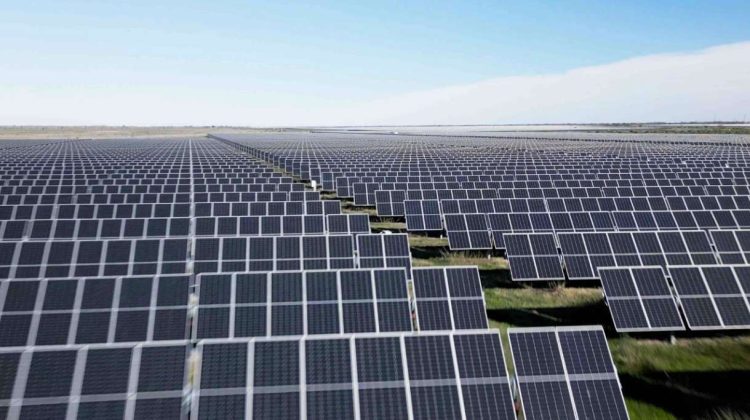
Zelestra has three mature solar projects that it plans to start in 2026. The most advanced is Babilonia, a 140 MW plant scheduled to begin construction in January and enter operation in mid-2027. “All the ingredients are in place to start construction. The project has had a PPA since the first quarter of 2025, and we are very close to financial close,” Aramburu detailed.
This project is complemented by San Joaquín, a 120 MW solar plant set to begin construction in July, and a third project currently under acquisition, also planned for that year. In parallel, the company is developing three additional greenfield projects totalling around 600 MW, with operations expected to start in 2029.
Zelestra is also analysing the integration of energy storage into its solar parks, depending on progress with the regulation of Law 32409, which governs ancillary services. “It is crucial that this regulation preserves the spirit of the law and creates a competitive market. Only then can we make optimal decisions regarding storage,” Aramburu explained.
According to the executive, poor implementation of across-the-board requirements could lead to inefficient overinvestment, ultimately impacting consumers. “If everyone is forced to install batteries equally, the system will be oversized, and costs will rise. Investments must respond to real market signals,” he emphasised.
In addition, the company is keeping the door open to expanding into wind power. While no formal announcements have been made, Aramburu confirmed that Zelestra is “carefully mapping all projects under development” and will move forward when solid commercial opportunities emerge.
“We are a company focused on the end customer. We design our projects based on what the market needs,” he said. Zelestra’s business model is based on what the executive describes as “backward engineering”, prioritising demand rather than developing infrastructure without commercial backing.
Looking ahead to 2026, Zelestra expects to have between two and three projects under construction simultaneously, totalling 360 MW, and to have completed a new acquisition to start works in 2027. “I am not aware of any other company in Peru building three projects in parallel. We want to be a relevant player in solar, wind and energy storage,” Aramburu stated.
But to achieve this, he insists, the state must send firm, coherent and urgent signals.
“Peru has the natural resources and the technology. What is missing is a regulatory framework that builds confidence and allows that competitiveness to translate into investment and better prices for everyone,” he concluded.