










Argentina’s electricity market is entering a new phase in which private power purchase agreements (PPAs) between companies are expected to gain greater prominence, with competition among all generation sources and the Term Market (Mercado a Término – MAT) becoming central to the transition following the implementation of Resolution SE No. 400/2025.
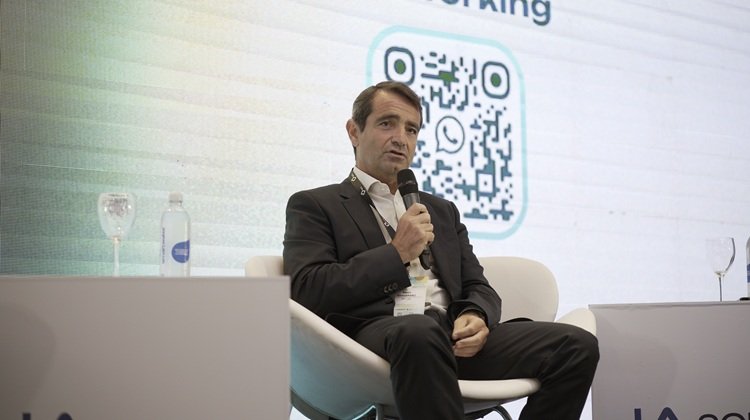
Martín Mandarano, CEO of YPF Luz, analysed the new conditions for electricity commercialisation and warned that they imply returning to market practices that have been largely absent for decades.
“We haven’t really played in the market for more than 20 years. Now we need to dust ourselves off and understand that we must assume risk again — we have to collect payments from customers, manage risk and infrastructure,” he said during the Future Energy Summit (FES) Argentina.
“That’s what we’re here for. Otherwise, long-term contracts with CAMMESA or programmes like Plan Gas indefinitely are not real risk. For 20 years neither gas producers nor power generators have been managing commercial risk,” he added before an audience of more than 600 industry leaders.
Watch FES Argentina 2026 again: https://youtu.be/rIfbzoRGgxU
Beyond the redesign of the electricity business, one of the structural challenges facing Argentina’s power system will be supplying the growing energy demand associated with lithium mining, particularly in the northern regions of the country.
The simultaneous development of multiple mining projects in areas with limited infrastructure raises questions about how to guarantee a continuous and competitive power supply. It also highlights the need for significant investment in transmission networks and firm generation capacity, beyond the expansion of renewable energy.
In response, YPF Luz is moving forward with solutions to anticipate this potential demand, including the development of a 350-kilometre electricity infrastructure project aimed at supplying mining operations.
“However, we haven’t managed to get demand to sign a commitment, so we cannot build a transmission line without contracts in place. Even though we have completed the engineering and launched a tender process, we were unable to award the construction contract because demand was not confirmed,” Mandarano revealed.
“Companies are not signing because they still lack financing, certain studies, or other requirements. Since their projects carry their own risks, they are reluctant to commit to generators. That decision is still missing,” he added.
This situation is also influenced by the international lithium market, which has experienced a significant downturn. Lithium carbonate prices have recently fallen to around USD 9,400–9,600 per tonne, slowing the momentum for new investment decisions.
Meanwhile, as Argentina’s electricity business model evolves, YPF Luz continues to expand its portfolio of renewable energy projects and energy solutions in order to support the growth of electricity demand.
The company currently operates 819 MW of renewable capacity and aims to reach 1 GW in the short term.
Among its flagship initiatives is El Quemado, the solar power plant the company is developing in Mendoza province. The project is also the first energy initiative approved under Argentina’s RIGI framework (Incentive Regime for Large Investments).
The plant will have 305 MW of installed capacity, of which 200 MW have already entered commercial operation, while the remaining capacity is expected to come online soon.
“By April, it will be operating at full capacity and will become the largest solar park in Argentina. In addition, we are building battery storage projects awarded in the 2025 AlmaGBA tender, located at Central Dock Sud. We estimate the project will be operational by November, demonstrating the speed at which energy projects can be developed,” Mandarano said.
Finally, the executive emphasised that the evolution of Argentina’s energy mix will depend on the specific characteristics of each type of demand and on the combination of technologies available.
In that context, each technology plays a different role within the power system:
“If a modular solution with low maintenance is required, solar will be the option. If firm power is needed, it will be thermal generation. And if the project is located in southern Argentina, wind power could be the most suitable alternative,” concluded the CEO.