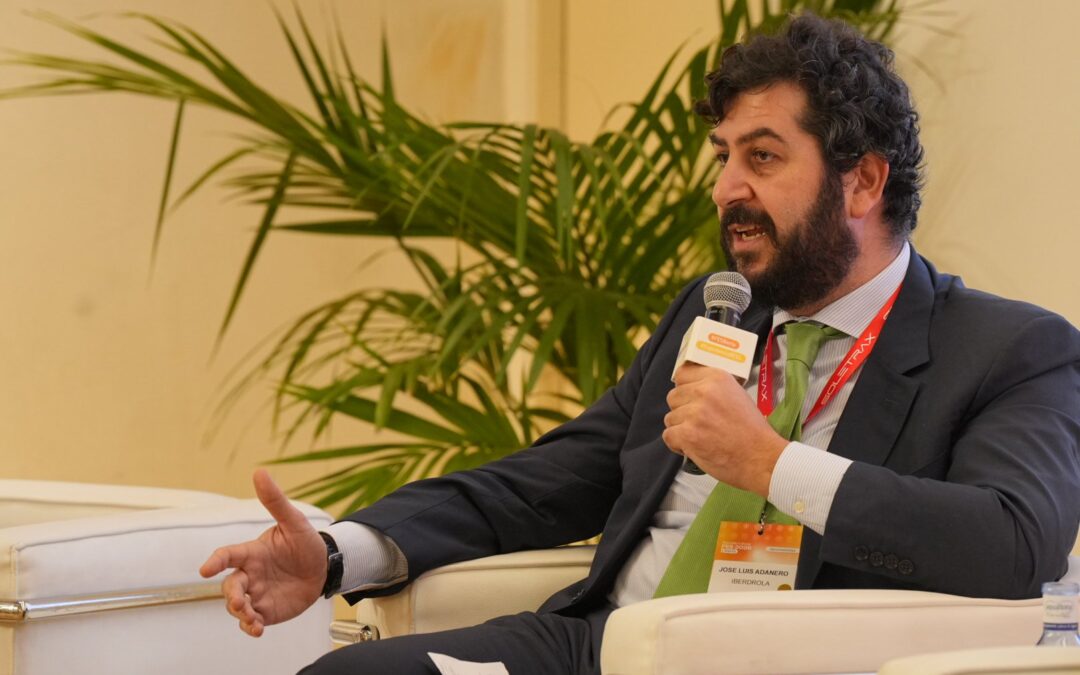












Solar market enters an adjustment phase after several years of rapidly declining panel prices. That was the warning from Luis Contreras, Managing Director of Yingli Solar, who, during his participation at Future Energy Summit (FES) Iberia, said solar module prices could rise by as much as 19%. The outlook reflects adjustments in manufacturing costs, regulatory changes in China and growing challenges for the development of new solar PV projects.
“In the supply chain, polysilicon, wafers and cells are all increasing in price. So far, they have already risen by around 10%. And in April, another 9% will be added,” the executive explained.
“From the perspective of a photovoltaic module manufacturer, we are essentially facing a year of adjustment,” he said when analysing the industry outlook for 2026. According to Contreras, the sector has reached a turning point after a period of extremely low prices that, in many cases, proved difficult for manufacturers to sustain.
One of the main drivers behind this shift is the rising cost of several segments of the solar supply chain, particularly key materials used in panel manufacturing. This increase will be compounded by a new factor coming from the industry’s main manufacturing hub.
The combination of both factors—higher raw material prices and fiscal changes—could reshape the pricing landscape that has characterised the sector in recent years, forcing sponsors, developers and investors to reassess the economics of new renewable energy projects.
This volatility is already being reflected in the market. “Anyone currently designing CAPEX for the coming months is facing major difficulties because either we are not giving prices or we are quoting somewhat inflated prices,” warned the Yingli Solar representative.
At the same time, Contreras highlighted that technological development remains one of the areas with the greatest certainty.
“From a technology standpoint, this is where we have the most clarity. The photovoltaic module will continue adding new attributes and performance improvements to renewable power generation,” he said.
Within this evolution, the executive identifies N-Type cell technology as the main innovation driver for the coming years. According to the company representative, these solutions will deliver higher energy efficiency, greater power output per square metre and improved performance in high temperatures and low irradiation conditions—features increasingly valued in utility-scale solar projects.
The solar industry is also undergoing adjustments in its supply chain, driven by stricter requirements related to traceability and sustainability in manufacturing processes.
“ESG principles have helped bring order to the supply chain across all manufacturers. This means the industry has matured,” he added.
Hybridisation and regulation: new challenges for the market
The sector’s growth will also depend on the development of hybrid renewable projects that combine solar PV generation with energy storage, a model gaining traction among developers.
However, the Managing Director of Yingli Solar stressed that regulatory clarity remains a key barrier. “Developers and project sponsors really want to implement hybridisation and add batteries, but the rules are not yet clear,” he said.
Among the main obstacles, he pointed to the lack of mechanisms to remunerate flexibility in the power system, as well as the need for faster grid connection processes.
“There are no clear mechanisms regarding capacity markets, flexibility remuneration or greater speed and efficiency in grid connection,” he added.
Contreras believes the market is currently at a stage comparable to the early years of solar PV expansion in Spain. “We are in a moment similar to what photovoltaics experienced in 2004 or 2006,” he said.
According to the executive, solar projects will continue to move forward in the Spanish market even without storage, although the new environment will require stronger developments from both a technical and financial perspective.
“The quality of the projects developed from now on must be excellent,” he concluded.