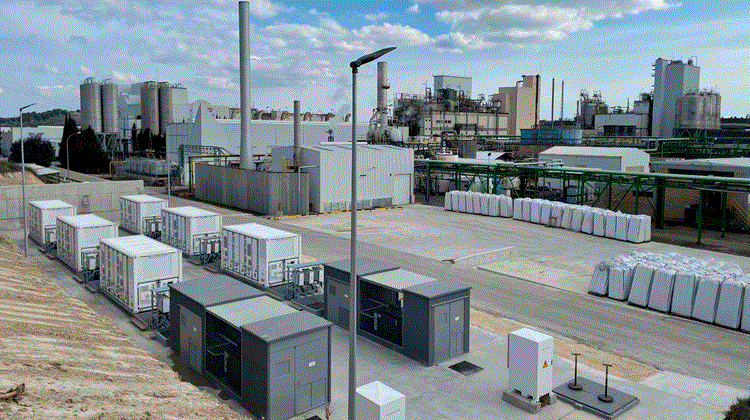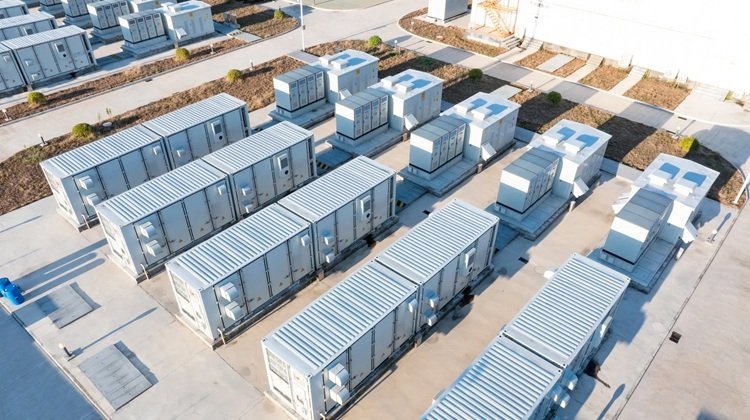








A recently issued regulation by the Dominican Republic’s Superintendencia de Electricidad (SIE) has introduced a new technical framework for integrating battery energy storage systems (BESS) into renewable energy projects connected to the National Interconnected Electricity System (SENI).
The new rule, Resolution SIE-178-2025-MEM, requires renewable projects between 20 MWac and 200 MWac to include storage equivalent to 50% of installed capacity, with a minimum duration of four hours. Projects larger than 200 MWac will be subject to case-by-case evaluation by the National Energy Commission.
According to Augusto Bello, a private energy advisor at A&A Business Intelligence Group, the core objective is to “mitigate the effects of the natural intermittency of renewable energy through batteries, enabling their efficient integration while providing reliability and fast-response services to the power system”.
The regulation introduces demanding operational standards for BESS, including the ability to operate in grid-forming mode, independently establishing voltage and frequency without an external reference. Systems must also be capable of damping oscillations, performing a black start, and responding to rapid weather-driven fluctuations.
Ramp-rate control limits have been set at 25% of nominal power per hour under scheduled operating conditions, and 10% per minute in the event of abrupt changes in renewable resource availability. In addition, storage systems must be able to deliver 100% of nominal power within five minutes, with response times of up to 200 milliseconds.
While industry players broadly acknowledge the technical necessity of these requirements, the strongest criticism has focused on the economic dimension of the new framework.
Senior consultant Rafael Velazco Espaillat argues that, although these capabilities are essential from a physical and system-operation perspective, their economic treatment remains unresolved.
“Electric power systems are governed by the laws of physics,” he said, “but the mechanisms to cover costs and ensure adequate remuneration — so that projects remain viable — are governed by market rules.”
Mandatory integration of battery systems will significantly increase both capital expenditure (CAPEX) and operational costs (OPEX) for renewable projects. However, the resolution does not establish remuneration schemes for services that are now compulsory.
“The main challenge is that the resolution demands all these capabilities, but does not define payment mechanisms for critical services such as black start, firm capacity, grid-forming equipment, or the costs associated with fast voltage and frequency regulation,” Velazco warned.
This absence of clear price signals creates uncertainty for developers and investors, particularly in a market that is still building its regulatory framework for large-scale energy storage.
In parallel, the SIE has issued Resolution SIE-164-2025-MEM, which sets out the authorisation procedure for installing BESS. This regulation defines the technical and legal requirements for agents in the Wholesale Electricity Market, aiming to streamline the administrative and operational integration of storage.
Both resolutions are part of a broader regulatory adaptation process in response to the growing penetration of renewable energy, particularly solar PV and wind power, in the Dominican power system.
Regional comparison and remaining challenges
From a technical standpoint, the new framework brings the Dominican Republic closer to other Latin American markets that have already advanced in energy storage integration. The key difference, however, lies in the economic treatment.
In countries such as Guatemala, Panama and Colombia, specific mechanisms exist to remunerate capacity, energy and ancillary services provided by storage systems, offering greater financial predictability for investors.
Against this backdrop, industry consensus is that Resolution SIE-178-2025-MEM represents a meaningful but incomplete step forward. Without economic recognition for the services batteries provide to grid stability, large-scale deployment of energy storage could slow.
For battery storage to become a structural pillar of the electricity system, the pending challenge will be to align technical requirements with market-based remuneration schemes that properly reflect the real value these systems deliver to the grid.