










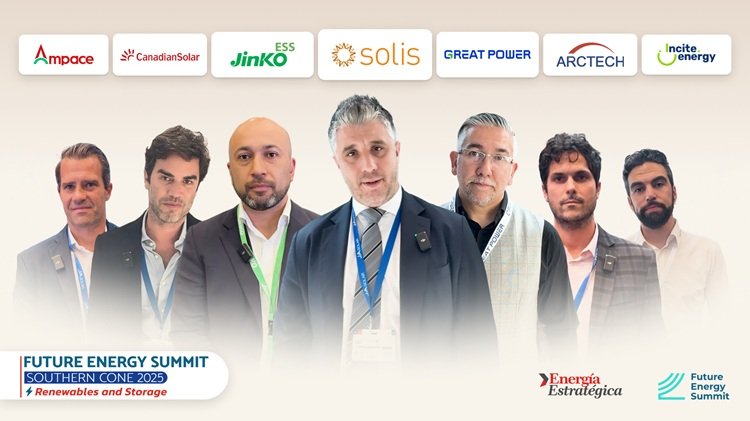
Brazil, Chile and Argentina are capturing the bulk of attention from leading international renewable energy players planning their Latin American strategies for 2026. This was the clear consensus among seven executives tracking national market developments, who spoke during the Future Energy Summit (FES) Southern Cone, one of the region’s flagship clean energy events.
According to Marco Ricci, LATAM Sales Manager at Solis, these three markets stand out as core hubs for distributed generation and mid-scale solar PV projects.
“Chile, Argentina and countries in Central America and the Caribbean have shown steady growth, each with its own specific dynamics,” he explained, while also highlighting Colombia as the most relevant emerging market.
From a regional perspective, Guido Gubinelli, Sales Manager at Arctech, sees Brazil as the most powerful market by far, given that it is Latin America’s largest energy system. At the same time, he identifies rising opportunities in Peru and Argentina.
That assessment is shared by Tiago Rodrigues, Utility-Scale Sales Manager at Canadian Solar, who describes the Southern Cone markets as “very strong”, while noting that Peru and Colombia are advancing at a more gradual pace.
“The countries that are truly ready are Chile, Argentina and Brazil, mainly due to project volumes and the maturity of their renewable energy mix,” added Pablo Millar Scott, LATAM ESS Sales Manager at Jinko Solar.
Marcel Peralta, Head of LATAM at AMPACE, reinforced this view: “Chile, Brazil and Mexico show the strongest structural need to transform their existing energy matrices.”
In Brazil, momentum is supported by scale. During 2025 alone, the country commissioned 63 new solar plants totalling 2,816 MW and 43 wind farms adding 1,826 MW. Looking ahead, Brazil’s power regulator, ANEEL, forecasts an additional 9,142 MW of installed capacity in 2026.
Chile reached 38.6 GW of installed capacity in 2025, with 50% coming from non-conventional renewable energy. Solar PV accounts for 30.4% (11.7 GW) and wind power for 15.5%, both now surpassing natural gas generation.
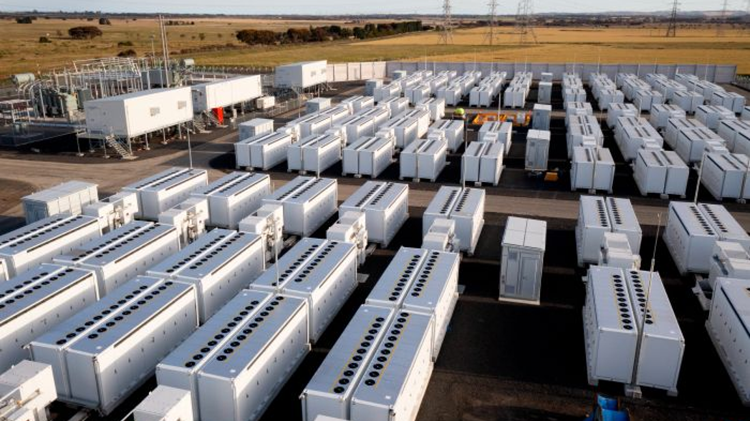
Chile has also become a regional benchmark in energy storage. It already has 1.6 GW of battery energy storage systems (BESS) in operation, 6.8 GW under construction and 0.7 GW in testing, with a further 27 GW at different stages of development.
Argentina stands out for the return of investor appetite. The country now has 7,798 MW of operational renewable capacity, led by wind power (4,496 MW) and solar PV (2,465 MW). A key driver has been the MATER forward market, where long-term power purchase agreements (PPAs) between private parties have enabled the allocation of 136 projects totalling more than 6,000 MW with priority grid access.
In storage, Argentina also marked a turning point with the AlmaGBA tender, which awarded 713 MW of BESS capacity in the Buenos Aires Metropolitan Area. The scheme is expected to be replicated in other regions.
Beyond the regional frontrunners, several other countries are positioning themselves as attractive destinations. Jan Masferrer Trius, Executive Director of Incite Energy Chile, highlighted “Colombia, Peru, Chile and Argentina as the most promising markets in the short term”.
In Colombia, around 2,000 MW of new capacity were added by December 2025, mainly utility-scale projects. However, the outlook for 2026 remains uncertain, even for developments with a grid connection already assigned. Industry expectations are now focused on capacity payments under the reliability charge mechanism scheduled for 2027.
Peru, despite being at an early stage of market development, is generating growing interest. The sector is awaiting auctions that allow new projects to compete, while companies such as Canadian Solar and Arctech are already active. The country currently has more than 13 GW of solar PV projects undergoing environmental permitting.
Mexico is also back on investors’ radar. The federal government announced that a second public auction for clean generation and storage projects will be launched in January, following an initial round that awarded 3,300 MW of renewable capacity and 1,200 MW of BESS, with construction set to begin this year.
Central America and the Caribbean are emerging as a bloc undergoing rapid energy restructuring. German Rotter, LATAM BESS Sales Manager at Great Power, stated: “We see Peru, Argentina, Mexico and Central America as outstanding markets. And when Brazil fully awakens on storage, it will be a gigantic market on its own.”
Competitive auctions are setting a new regional pace. Guatemala received bids exceeding 1,000 MW against demand for just 235 MW and is preparing to award an additional 1,400 MW in January 2026. Honduras plans successive rounds to contract 1,500 MW, while the Dominican Republic is advancing a tender that attracted 32 solar and wind projects with storage, with awards expected by May 2026.
Each country presents its own challenges and dynamics, but the signals are clear. With evolving regulatory frameworks, defined financial incentives and a robust project pipeline, Latin America is consolidating its position as a global hotspot for renewable energy investment in 2026.