











The bankability of renewable energy projects in Argentina depends on a combination of technical, regulatory and financial factors that must be aligned from the earliest stages of development.
This was one of the main conclusions shared by Angie Salom, Energy Manager for Latin America and the Caribbean (LAC) at FMO, during an exclusive interview at FES Argentina 2026, where she analysed current market conditions from a development banking perspective.
From this standpoint, project evaluation begins well before financial close, integrating financing structure, contractual quality and demand robustness.
“We begin with the financial structure, whether it is project finance or corporate financing, and who our clients’ clients are,” Salom explained, highlighting that revenue visibility and the profile of off-takers are decisive.
Watch the full interview: https://youtu.be/jWpOBt-k0Ls?si=PTp-X9ezSGAiDrvg
In recent years, the evolution of power purchase agreements (PPAs) and incentive schemes has improved the financial quality of projects, bringing them closer to international standards.
However, the consolidation of this process still depends on the stability of the rules and the system’s ability to support growth.
Within this framework, electricity infrastructure has emerged as a structural constraint directly affecting the expansion of the sector. The availability of transmission capacity not only determines technical feasibility but also impacts contract structuring and revenue predictability.
This limitation becomes critical within the Sistema Argentino de Interconexión (SADI), where congestion at several nodes restricts the integration of new generation.
In this context, recent regulatory developments aim to organise market operations and provide new investment signals. On one hand, Resolution SE No. 400/2025 establishes the foundations of a new electricity market model, redefining the functioning of the forward market, with a stronger role for private contracts between generators and large consumers, and clearer rules for energy commercialisation.
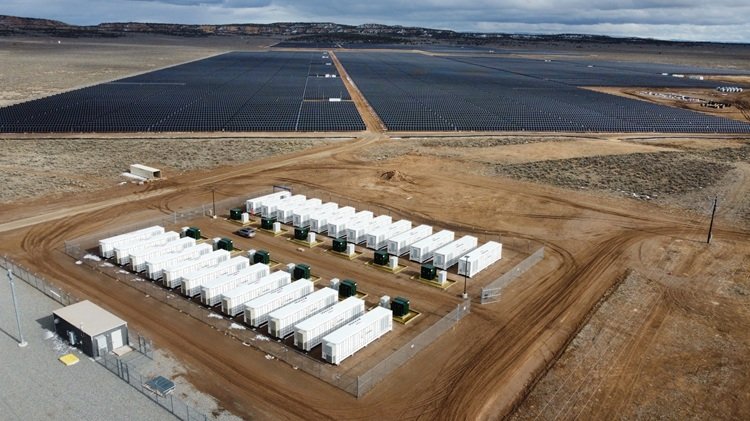
On the other hand, the introduction of schemes such as the already awarded AlmaGBA tender (713 MW allocated) and the ongoing AlmaSADI call (targeting 700 MW of battery energy storage systems – BESS) introduces new tools to manage system capacity and promote investment in energy storage, with long-term contracts of up to 15 years for projects that provide system flexibility.
For financiers, these instruments are critical as they reduce operational uncertainty and improve revenue predictability—two key variables in risk assessment.
Despite these challenges, Argentina continues to position itself as a market with significant opportunities within the region, driven by the quality of its natural resources and the development achieved over the past decade.
“Many projects are becoming financeable, delivering returns and offering regulatory and sector certainty,” Salom noted, highlighting the progress made in consolidating a more robust project base.
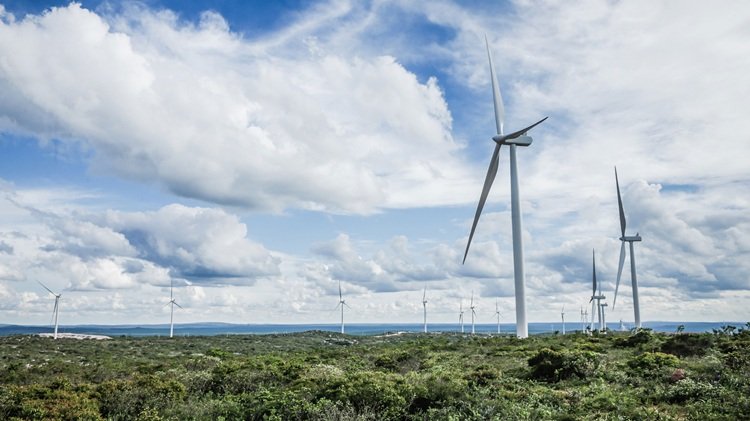
This growth has been supported by the active participation of international institutions such as FMO, which has maintained a presence in the country for more than ten years, mainly supporting wind power and solar PV projects alongside key market players.
The role of these banks goes beyond financing, encompassing the structuring of solutions tailored to different risk profiles, combining instruments such as project finance, corporate financing and capital markets issuances.
In addition, collaboration with multilateral and European banks expands funding capacity and helps distribute risk, which is essential for large-scale projects.
Looking ahead to the sector’s expected growth, the main challenge lies in mobilising the volume of capital required to support the project pipeline. The scale of investment needed requires activating all available sources of financing.
“All options will be necessary given the large volume of projects and financing needs,” Salom stated.
This implies not only attracting international capital, but also strengthening the local market, developing financial instruments and creating conditions that allow financing to scale sustainably.
In this scenario, the evolution of Argentina’s renewable energy sector will be defined by its ability to consolidate bankability conditions, resolve transmission constraints and maintain a regulatory framework that supports growth. The alignment of these factors will be decisive in enabling the country to turn its potential into effective development.