











With just days to go before the general elections, former U.S. President Donald Trump’s public support for candidate Nasry Asfura is reshaping the political landscape in Honduras and adding pressure to a process closely watched by the energy sector.
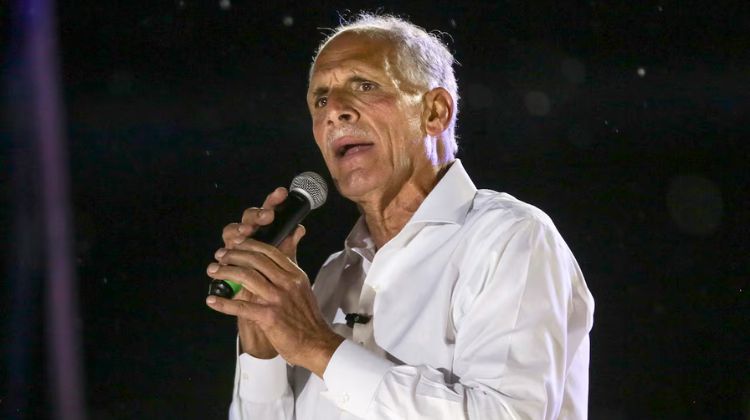
Through his Truth Social network, Trump urged Hondurans to vote for the former mayor of Tegucigalpa, whom he described as “the only true friend of freedom.” He also disqualified Rixi Moncada for her closeness to communism and Salvador Nasralla for dividing the opposition vote. He recalled Asfura’s tenure as mayor and warned: “I cannot work with Moncada and the communists, and Nasralla is not a reliable ally for freedom.”
Asfura, a candidate of the National Party (PN), expressed his gratitude for the U.S. leader’s support and reaffirmed his position in defence of democracy and freedoms. On social media, he stated: “Firm in defending our democracy, our freedom and the values that make our country great. Honduras, we are going to be fine!”
An election with direct impact on the energy sector
Although five figures are competing for the presidency, polls identify three candidates with real chances of winning. They are Rixi Moncada, of the ruling Liberty and Refoundation Party (Libre), aligned with the political continuity of Xiomara Castro; Salvador Nasralla, of the Liberal Party (PL), former vice president of the current government, with a liberal profile and proposals for economic openness; and Nasry “Tito” Asfura, of the National Party (PN), a businessman and former mayor of Tegucigalpa, with a conservative, pro-market and investment-oriented approach.
Beyond campaign rhetoric, none of the three has yet defined how they would reorganise the institutional architecture of the energy sector. Doubts persist regarding the future of the Ministry of Energy, the National Electric Energy Company (ENEE), the Electricity Regulatory Commission (CREE) or the National Energy Council (CND).
According to sources close to Energía Estratégica, “none of the candidates has yet defined how the Ministry of Energy, the National Electric Energy Company (ENEE), the CREE or the CND will be structured.” This lack of clarity generates market uncertainty and limits the planning of long-term projects.
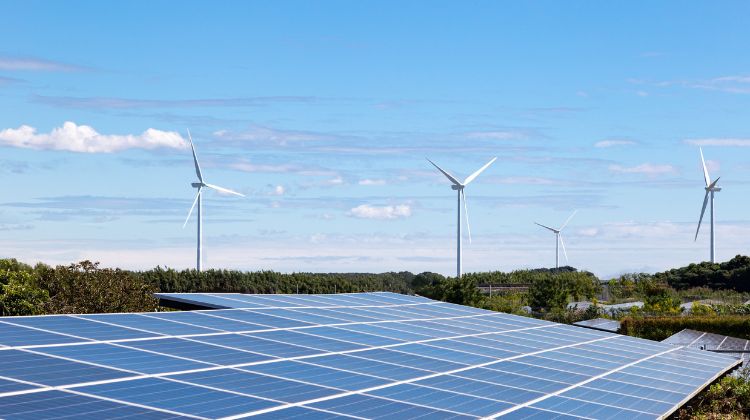
Meanwhile, the government of Xiomara Castro maintains an active tender for 1,500 MW of renewable generation, which includes solar, wind and biomass projects. Its continuity will be one of the first signals the new government must send to the market, in a context in which the country seeks to reduce its dependence on thermal sources.
Regarding their positioning, the three candidates address the energy issue from different perspectives. Nasralla promotes a competitive model with greater market openness, better access to credit and public-private cooperation. Asfura emphasises institutional stability, decentralisation and regulatory predictability as the basis for attracting investment. Moncada proposes strengthening the state’s role, prioritising transparency and spending control, although technical sectors acknowledge that her leadership could contribute to institutionalisation if dialogue and stable regulatory frameworks are ensured.
Sector representatives stress that “the fundamental thing is for Honduras to consolidate key principles such as free markets, legal certainty and regulatory stability.” Consensus on these pillars would allow renewable energies—hydropower, solar, wind, biomass or energy storage—to become the basis of a more resilient and competitive economy.
This Sunday’s election will not only define who governs Honduras.
It will define how the energy sector is governed in the next decade.