






With a strategy focused on gradual and selective expansion, TCL Solar is seeking to consolidate its position across Latin America over the coming years. Rather than pursuing uniform growth across the entire region, the company is prioritising a calibrated approach, aligned with each country’s market maturity, regulatory framework and local development potential.
At the heart of this roadmap is the goal of positioning TCL Solar as a reliable technology partner, offering market-specific solutions, a robust value proposition and a clear strategic outlook.
“We are pursuing structured growth aligned with the realities of each market, supporting development through high-quality technology and long-term partnerships,” said María Urrea, Country Manager for the Southern Cone, LATAM, in an interview with Energía Estratégica.
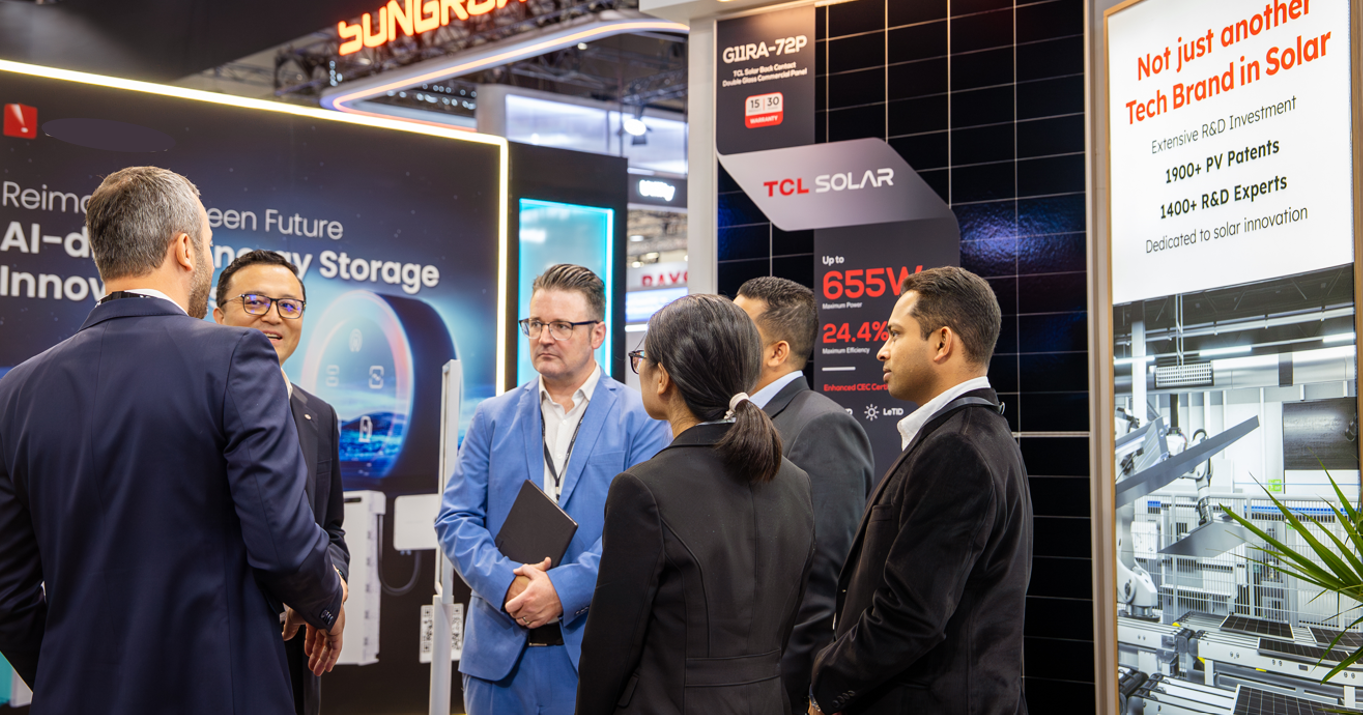
TCL Solar’s current portfolio includes advanced solar PV technologies such as Back-Contact (BC) modules, N-type half-cell modules, and a proprietary shingle-based solution. These technologies are designed to enhance energy yield and improve the levelised cost of energy (LCOE), a critical metric for project developers and investors.
According to the company, these solutions are well-suited to the diverse demands of Latin American markets, where high efficiency, operational reliability and competitive costs are essential amid challenging climatic conditions and increasing pressure for robust project performance.
Urrea explained that these technologies enable TCL Solar to “optimise performance under different operating conditions, reduce technical risks and contribute to a lower LCOE”, a combination that is particularly attractive for utility-scale, commercial and industrial (C&I) solar projects.
Latin America has gained increasing relevance within TCL Solar’s global strategy. Strong electricity demand growth, diverse regulatory environments and the need for sustainable energy solutions position the region as a key market for deeper partnerships and tailored business models.
Instead of applying a one-size-fits-all approach, TCL Solar assesses opportunities on a country-by-country basis, taking into account factors such as project bankability, active public tenders, installed technical capacity and macroeconomic conditions.
Under this framework, the company expects Latin America to play a more prominent role by 2026, not only in terms of project volumes but also as a strategic platform for the development of hybrid solutions and long-term operational models.
Energy storage as a turning point for solar projects
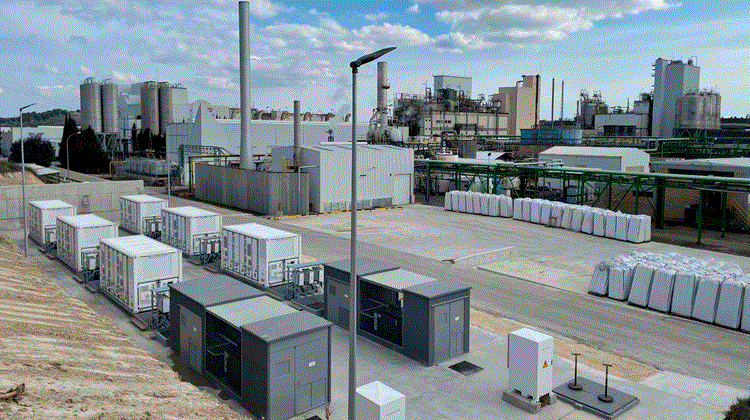
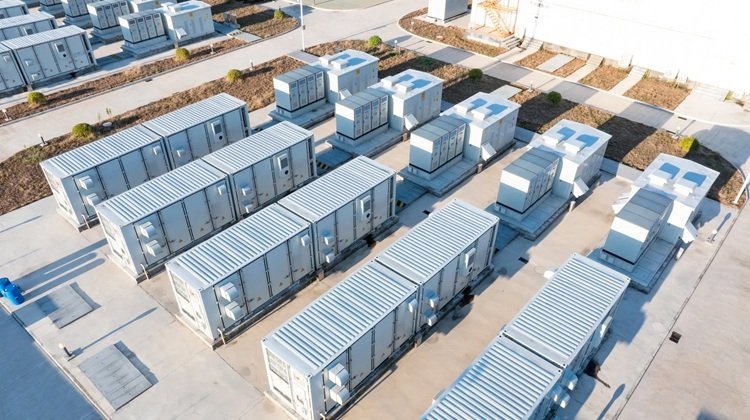
Within this roadmap, energy storage emerges as a transformative pillar. The integration of battery energy storage systems (BESS) into solar projects responds to a structural need for greater flexibility, grid stability and operational efficiency.
“All indications suggest that 2026 could mark a turning point for the incorporation of storage into solar projects,” Urrea noted. TCL Solar is already preparing integrated solutions, anticipating that hybrid solar-plus-storage models will gain importance in public tenders and power purchase agreements (PPAs).
However, the scalability of these solutions will depend heavily on regulatory progress. Urrea stressed that “clear and predictable long-term rules are essential, particularly regarding contracting schemes, grid access and the recognition of storage”. Policy consistency and institutional strength will be decisive in attracting investment, reducing risk and improving project bankability.
Competing beyond price in regional tenders
Alongside regulatory challenges, Latin America continues to face constraints related to access to finance and infrastructure limitations. TCL Solar addresses this environment through a strategy centred on product quality, technical support from design through to operation, and strong corporate backing that provides long-term confidence.
In competitive tenders, the company positions itself as a strategic partner with a deep understanding of both technical and financial requirements. Its value proposition combines reliable technology, specialised local support and financial solidity—factors that are increasingly critical as price alone is no longer the sole differentiator.
Through this roadmap, TCL Solar is reinforcing its commitment to Latin America as a core axis of expansion. By 2026, the company aims to consolidate a tailored regional presence, focused on high-efficiency solar PV solutions and long-term partnerships that support the energy transition across key markets.