










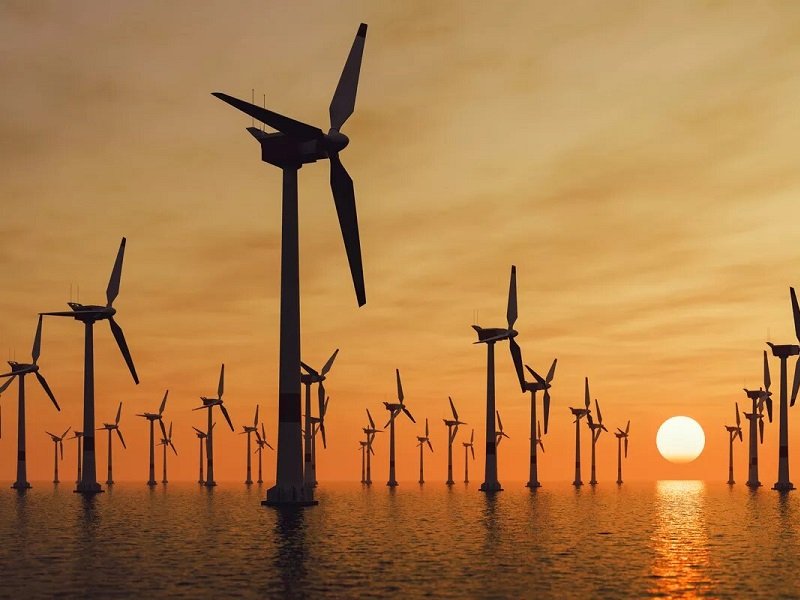
APPA Marina has supported the proposal by Spain’s Third Deputy Prime Minister and Minister for the Ecological Transition and Demographic Challenge, Sara Aagesen, that the country’s first offshore wind auction could take place this year.
The association believes this first tender will be decisive in shaping the development model for offshore wind in Spain over the next decade. It therefore advocates an auction design that incorporates an industrial policy perspective, realistic execution criteria and a balanced territorial approach capable of simultaneously activating different renewable energy supply chains across the country.
To achieve this, APPA Marina proposes selecting at least three high-potential areas (ZAPER) identified in the Maritime Spatial Planning (POEM) framework. These would host medium-scale offshore wind projects of 200–300 MW, allowing several industrial hubs to develop simultaneously while distributing sectoral learning.
The association suggests prioritising areas with:
-
Existing industrial bases or strong potential for rapid industrial expansion
-
Adequate port and logistics infrastructure
-
Sufficient grid connection capacity, consistent with the nodes planned in Spain’s Transmission Network Development Plan 2025–2030
“The objective should not be limited to awarding capacity, but to establish a framework that ensures deliverable projects, tangible industrial impact and a stable pipeline that provides medium- and long-term certainty,” the association stated.
In this context, APPA Marina emphasises that the design of the auction and its territorial distribution will influence the attraction of renewable energy investment, industrial planning and Spain’s ability to build a competitive offshore wind supply chain.
The association also considers regional political commitment and administrative conditions enabling efficient permitting and project execution to be crucial, avoiding a scenario in which awarded projects ultimately fail to materialise.
In this regard, APPA Marina warns about the risks of over-reliance on fragile consortia or corporate structures lacking sufficient financial or industrial strength, particularly in a technology that requires long-term planning, strong investment capacity and a coordinated supply chain.
Industrial policy and national value chain
APPA Marina stresses that this first auction should explicitly incorporate a territorial industrial policy approach.
Activating several regions simultaneously would enable the mobilisation of multiple supply chains, stimulate new industrial investments, reduce risks associated with geographic concentration and build a stable offshore wind project pipeline that provides visibility for the entire sector.
“Offshore wind is not only about energy generation: it is also industry, skilled employment and technological leadership. The design of this first call must send a clear and stable signal to the value chain and activate several industrial hubs simultaneously, with criteria that reward real project execution and the country’s industrial capabilities,” said Pedro Mayorga, president of the association.
Mayorga also highlighted the need to incorporate demonstration projects:
“Including the possibility of innovative demonstration-scale wind farms would accelerate technological learning, validate solutions under real operating conditions and strengthen Spain’s industrial positioning in offshore wind before large-scale commercial deployment.”
Avoiding environmental duplication and unnecessary regulatory burdens
APPA Marina also considers it important that the design of the auction does not excessively restrict zoning or introduce additional burdens on aspects already regulated.
In particular, the association notes that projects must comply strictly with existing environmental legislation, and that the maritime spatial planning process carried out through the POEM framework has already incorporated strategic environmental criteria to define the ZAPER areas.
The association adds that the individual environmental permitting process for each project, including the Environmental Impact Assessment (EIA), may take approximately two years. Therefore, attempting to evaluate all specific environmental factors during the competitive auction phase would create duplication, legal uncertainty and delays.
Similarly, regarding the compatibility of different maritime uses, APPA Marina recalls that this issue was already addressed during the maritime spatial planning process approved through Royal Decree 150/2023.
For this reason, any additional criteria in this area should be transparent, objectively measurable and consistent with the provisions already established in the POEM framework.