











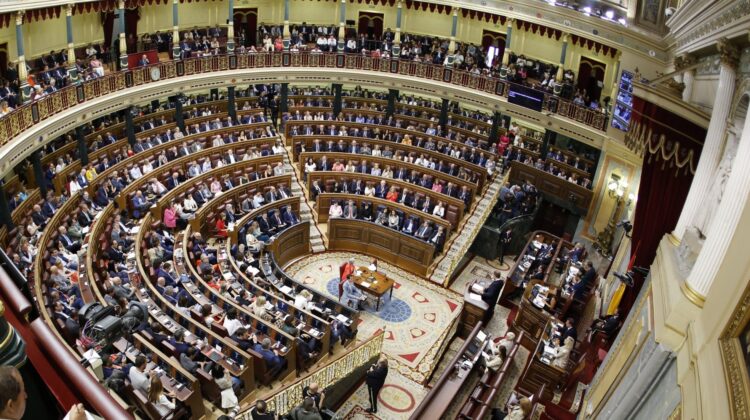
Spain’s Congress of Deputies will vote today on the ratification of Royal Decree-Law 7/2026, the regulation through which the government seeks to respond to the energy impact triggered by the war in the Middle East while accelerating the country’s energy transition. The package forms part of the Comprehensive Response Plan to the Middle East Crisis, which aims to mobilise around €5 billion to protect consumers and companies from energy price volatility and reduce dependence on fossil fuels.
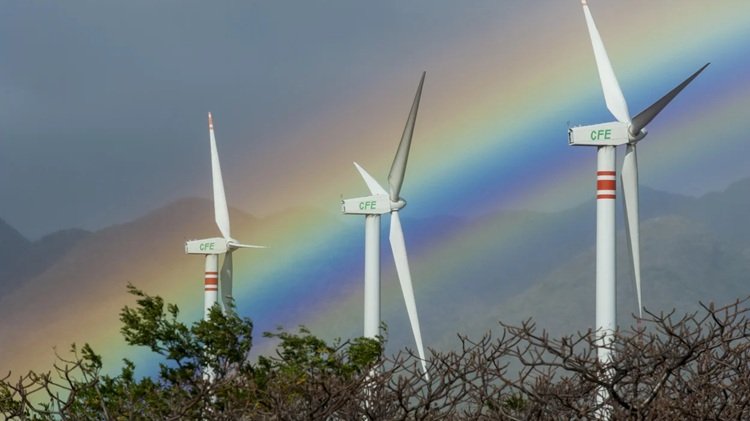
Among the most relevant changes included in the decree are new tools designed to accelerate energy deployment. The regulation establishes a national framework for Renewable Acceleration Zones (ZAR), areas that Spain’s regional governments must identify as priority locations for the development of renewable projects with streamlined permitting procedures. In addition, it introduces adjustments to the administrative milestones that energy projects must meet, extending certain deadlines and allowing their automatic suspension in the event of precautionary judicial measures.
“Adjustments are introduced to the administrative milestones regime applicable to renewable projects in order to adapt deadlines to the current supply-chain situation and to the complexity of certain developments, particularly in the case of pumped-hydro energy storage facilities,” the official document states.
The urgency of the decree is linked to the global geopolitical context. The escalation of the conflict involving Iran once again shook international energy markets, triggering sharp increases in gas and oil prices and reigniting the debate on energy security across Europe. During the first days of the conflict, the cost of electricity generation from gas in Europe rose by more than 50%, highlighting the sensitivity of the European energy system to geopolitical tensions.
In this context, the Spanish government argues that the structural response should focus on accelerating electrification, expanding renewable energy capacity and improving the efficiency of the electricity system, while reinforcing social measures to cushion the impact of rising energy prices.
At the industrial level, the decree also introduces measures aimed at preserving the competitiveness of the most energy-intensive sectors. Among them is an 80% reduction in electricity network access charges for electro-intensive consumers, a measure intended to ease the impact of high energy costs on industries exposed to international competition.
The plan also foresees the creation of an Industrial Decarbonisation Fund, accompanied by instruments such as carbon contracts for difference (CCfDs), designed to facilitate investments in low-emission production processes and accelerate the technological transformation of the industrial sector.
Beyond these economic measures, the decree introduces a series of regulatory reforms aimed at optimising the operation of the electricity system and facilitating new energy investments. Among them is the elimination of the dual regulatory classification of certain installations as both demand and generation, a change that simplifies the guarantee requirements for energy projects and reduces administrative complexity.
The regulation also establishes a new approach based on flexible access to electricity grids, aligned with a more dynamic use of the system’s available capacity. This mechanism will improve grid management in congested connection nodes, enabling schemes in which electricity injection or consumption can be adjusted according to the actual availability of network infrastructure.
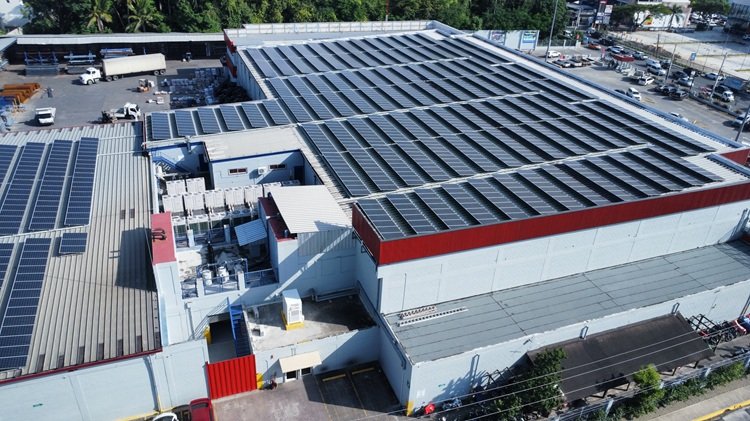
At the same time, the decree promotes hybrid configurations combining solar photovoltaic generation and battery energy storage, a model that helps reduce renewable energy curtailment and increases the utilisation of clean generation.
Energy storage is, in fact, another central pillar of the regulation. The text introduces regulatory changes to facilitate the integration of these technologies into the electricity system, including flexible grid access permits for storage facilities and the promotion of pumped-hydro storage projects, considered strategic for system stability.
The decree also redefines certain aspects of electricity grid access rules with the aim of freeing up capacity currently blocked by projects that ultimately fail to materialise — a situation the government identifies as a barrier to the development of new industrial and energy investments.
In parallel, it establishes a biennial review of electricity grid planning, allowing network development to adapt more closely to the ongoing electrification of the economy.
The decree also includes measures aimed at expanding the participation of consumers and communities in the energy system. Among them is the extension of the maximum distance between generation and consumption in collective self-consumption projects to five kilometres, enabling new shared energy supply models in neighbourhoods, municipalities and industrial parks.
It also sets regulatory foundations for the development of energy communities, with the aim of increasing the participation of citizens and local authorities in renewable generation projects.
Another regulatory development is the introduction of sustainability criteria for data centres, infrastructure whose electricity demand has grown significantly in recent years due to the expansion of digital services and artificial intelligence applications.
On the social front, the package maintains the extraordinary discounts of the electricity social tariff (“bono social”) throughout 2026 and extends the ban on cutting off energy supply to vulnerable consumers. For companies, it also introduces flexibility in electricity contracts, allowing contracted volumes to be adjusted without penalties if production activity declines.
All these measures form part of the government’s strategy to reduce the exposure of the Spanish economy to international energy volatility, a risk that has once again become evident following the escalation of the conflict involving Iran. The war in the Middle East has affected global energy markets due to the region’s strategic role in the supply of oil and natural gas.
Today’s vote in the Congress of Deputies will determine whether Royal Decree-Law 7/2026 is definitively ratified and allowed to continue its parliamentary process, at a time marked by global energy uncertainty linked to the conflict in the Middle East.