










Spain has advanced 2,155.8 MW of new renewable energy capacity into the environmental permitting phase over December 2025 and January 2026, according to an Energía Estratégica analysis based on official publications from the Boletín Oficial del Estado (BOE) of the Ministry for the Ecological Transition and the Demographic Challenge (MITECO).
A total of 35 projects were identified, all corresponding to solar photovoltaic (PV) and onshore wind technologies. The figures confirm the sustained momentum of Spain’s renewable pipeline, characterised by the strong presence of large international developers and a high degree of technological and regional concentration.
-
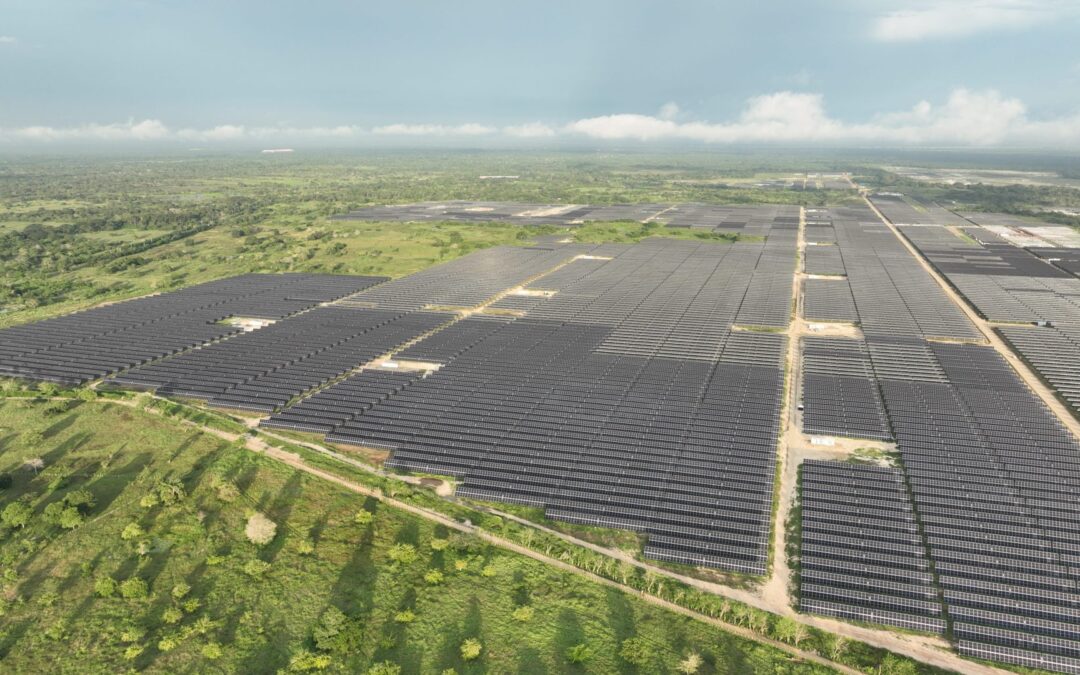
26 solar PV plants totalling 1,698.5 MW
-
9 wind farms adding 457.3 MW
As a result, solar PV represents 79% of the new renewable capacity entering the permitting process during the period, reinforcing its dominant role within Spain’s national energy planning.
Individual solar projects tend to be larger in scale, in several cases exceeding 150 MW, while wind developments show broader geographic dispersion, albeit with a lower average capacity per project.
The review highlights a growing participation of international energy groups and major utilities:
-
EDP stands out with multiple solar PV initiatives totalling 244.3 MW
-
Forestalia: 99 MW
-
Masdar: 156.5 MW of wind power
-
Naturgy: a 29 MW solar project
-
Jinko Power: 139.5 MW
-
X-Elio: 29 MW of solar PV
In the wind segment, Capital Energy is advancing two large projects—Canales Sur (Palencia) and Florín (Zaragoza)—together exceeding 225 MW.
Among the largest individual schemes are Tagus 2, a 224.5 MW solar plant in Toledo developed by Khons Sun Power, and a 219.5 MW PV project in Granada promoted by Ququima Energy.
From a territorial perspective, the Community of Madrid leads the ranking with 579.5 MW, followed closely by Castile and León (569.3 MW) and Andalusia (410 MW). Together, these three regions account for more than 70% of the capacity processed during the period.
They are followed by Cantabria, Extremadura and Aragon, each exceeding 150 MW. Additional projects are spread across the Valencian Community, Castile-La Mancha and Catalonia. Overall, the data reveal a clear concentration in areas offering land availability, strong solar irradiation or wind resources, and established institutional experience in renewable energy development.
The projects are at different stages of the administrative process. Some have already secured a favourable Environmental Impact Declaration (DIA), while others have obtained Preliminary Administrative Authorisation (AAP) or Construction Authorisation (AAC). Several initiatives have only recently entered public consultation or the public utility declaration phase.
This regulatory progress coincides with the closing of a record-breaking 2025. According to data from Red Eléctrica de España (REE), Spain added 8,852.7 MW of new renewable capacity last year, including 7,896.3 MW of solar PV and 956.4 MW of wind power.
Despite this growth, the sector remains watchful of key regulatory decisions that could shape 2026, such as the approval of a capacity mechanism, the launch of a new renewable auction, and the pending anti-blackout regulation. These debates unfold against a backdrop of volatile power prices and increasingly congested electricity grids.
Within this context, attention is turning to 12 February, when Madrid will host the Future Energy Summit (FES) Iberia – Renewables & Storage 2026. The event will focus on energy storage, renewable integration and critical infrastructure deployment, bringing together representatives from IDAE, MITECO, regional governments and CEOs from companies such as Saeta Yield, Iberdrola and EDP Renovables, among other key market players.