









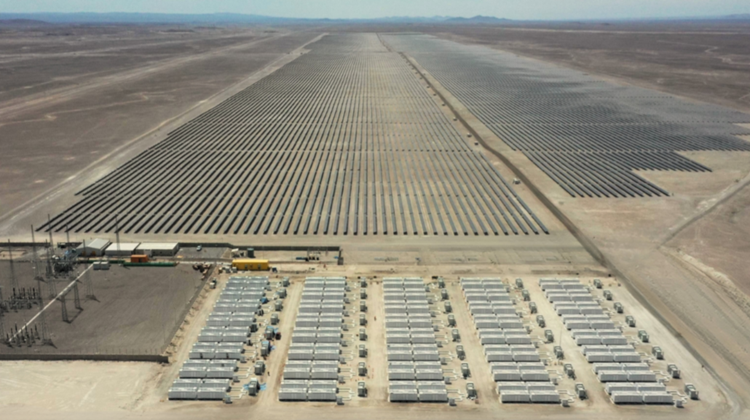
Hybrid energy storage continues to gain momentum in Spain. In just three weeks, administrative procedures were initiated for 571.96 MW of Battery Energy Storage Systems (BESS) designed to be integrated with photovoltaic plants, according to an Energía Estratégica review of the latest official gazettes published in the Boletín Oficial del Estado (BOE).
The pipeline comprises 19 projects at different stages of development, ranging from applications for preliminary administrative authorisation to environmental impact statements already issued. The main developers behind this new wave include Iberdrola, Galp, OPD Energy, Ignis, Grupo Cobra and Gestenia.
Iberdrola stands out with four BESS projects — Tagus I to IV — each with 35 MW of capacity, all located in Cáceres. These systems are planned to be hybridised with a portfolio of existing solar PV plants in the region.
Meanwhile, Galp is promoting four storage modules ranging between 16.5 MW and 18.5 MW for its Alcázar 1, Alcázar 2, Valdecarro and Valdivieso solar parks, all situated in Ciudad Real, Castilla-La Mancha.
OPD Energy is advancing three projects in Cuenca — Belinchón 1, 2 and 3 — each with 26.7 MW, while Ignis is developing a 68.6 MW BESS project in the Madrid region, the largest single installation identified in this review. Other notable initiatives include Monegros Solar with 45.5 MW in Badajoz and BESS Development 6, S.L., which has submitted an application for 49.7 MW in Solórzano, Cantabria.
Castilla-La Mancha leads the regional distribution with more than 200 MW of BESS capacity currently under administrative processing, followed by Extremadura, where Iberdrola’s and Monegros’ projects are concentrated. The remaining capacity is spread across Madrid, Cantabria, Castile and León, Andalusia and Catalonia.
Projects are at varying regulatory stages: some already have environmental impact reports approved, while others have only recently entered the public consultation phase.
All BESS projects processed during this period are designed to be hybridised with solar PV plants, confirming a structural trend in the Spanish market. Hybrid configurations improve renewable energy integration, reduce curtailment and enable more efficient grid management, particularly in regions with high solar penetration. They also optimise the use of existing grid connection infrastructure, aligning closely with Spain’s technical and regulatory priorities.
This surge comes at a pivotal moment for Spain’s energy storage sector. The IDAE (Institute for Energy Diversification and Saving) recently awarded support for more than 9.4 GW of storage capacity under a funding programme backed by EU FEDER funds, benefiting over 80 selected projects. As previously reported by Energía Estratégica, the scheme supports large utilities, investment funds and independent developers alike, reshaping the competitive landscape.
In parallel, the Spanish market is awaiting its first capacity market auction, expected either at the end of this year or in early 2027. This mechanism is set to provide long-term revenue signals for storage and other flexibility technologies.
These regulatory and investment signals are aligned with Spain’s PNIEC (National Energy and Climate Plan), which targets 22 GW of storage capacity by 2030, combining batteries, pumped hydro and other flexible solutions. With a robust project pipeline and a supportive incentive framework, hybrid storage is becoming a cornerstone of Spain’s energy transition.
The administrative progress of nearly 572 MW in such a short timeframe highlights the sector’s growing maturity — not only as a technical response to grid challenges, but also as a strategic investment opportunity that continues to scale in both size and sophistication.
A complementary Energía Estratégica report shows a clear pattern among developers: regulatory expertise, strong regional focus and advanced technological integration strategies. In total, 1,609.1 MW of wind and solar PV projects also moved forward administratively within the same three-week period, underlining the pace of growth in Spain’s renewable energy sector. Companies such as Forestalia, Galp and Iberdrola lead not only in volume, but also in execution capacity and technological diversification.
Against this backdrop, the Future Energy Summit Iberia Renewables & Storage will take place on 12 February in Madrid, marking the launch of FES’s 2026 international roadshow. The event will bring together hundreds of public and private sector leaders to discuss the accelerating energy transition in Iberia, evolving regulatory frameworks and emerging investment opportunities. Tickets are now available.