










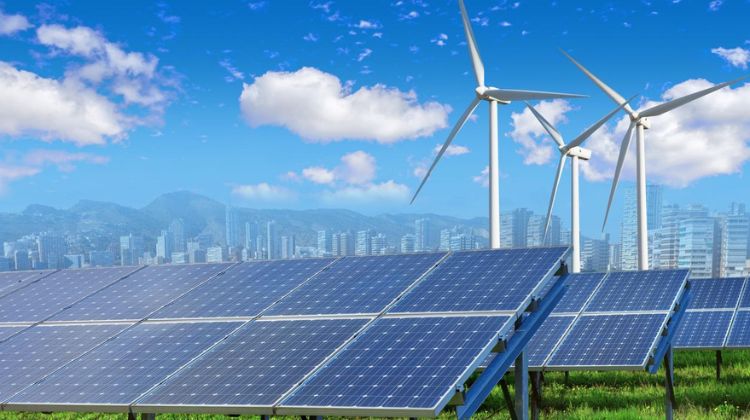
Spain strengthened its position as one of Europe’s most dynamic clean energy markets in 2025, adding 8,852.7 MW of new renewable capacity, according to official data from Red Eléctrica. Solar photovoltaic (PV) dominated additions with 7,896.3 MW, while 956.4 MW came from onshore wind.
The expansion confirms Spain’s leadership in renewable generation across the European Union. However, increasing grid congestion is beginning to constrain new connections—an issue that could shape market outcomes in 2026.
With last year’s additions, total installed solar PV reached 48,130.6 MW, while wind power closed 2025 at 33,150.3 MW.
Solar deployment remained highly concentrated. Five autonomous communities account for around 80% of installed PV capacity:
-
Andalucía: 11,350.7 MW (23.5%)
-
Castilla-La Mancha: 9,160.2 MW (19%)
-
Extremadura: 8,732.1 MW (18.1%)
-
Castilla y León: 5,277.1 MW (10.9%)
-
Aragon: 3,920.8 MW (8.15%)
In terms of annual growth, Castilla y León led additions with +2,031.7 MW, followed by Andalusia (+1,961.2 MW) and Castilla-La Mancha (+1,253.4 MW). Aragon (+636.4 MW), Extremadura (+582.2 MW) and Murcia (+270 MW) also posted strong gains.
Wind capacity is likewise concentrated, with Castilla y León leading at 7,708.1 MW (23.2%), followed by Aragon (5,973.7 MW; 18%), Castilla-La Mancha (4,978 MW; 15%) and Galicia (4,028.7 MW; 12.1%).
The sector’s medium-term ambition remains unchanged: 76 GW of solar by 2030—including 19 GW of distributed generation/self-consumption—and 62 GW of wind power.
Beyond record installations, grid access and connection capacity has become the sector’s main constraint. During 2025, developers requested 40 GW of grid access; only 4.5 GW was approved. Another 25 GW was rejected due to lack of capacity, while 8.5 GW remains under review.
Updated capacity maps published by Red Eléctrica show that 83.4% of grid nodes are saturated, limiting not only new renewable generation but also the connection of large industrial consumers. The bottleneck has raised concerns among investors and project developers.
Industry proposals include new capacity mechanisms, upgrading existing transmission infrastructure, and earlier, more coordinated grid expansion planning.
Spain’s wind industry is also calling for clearer rules, stronger legal certainty and a more competitive tax framework to sustain growth. In Galicia, a key wind region, more than 90 projects totaling around 2.5 GW are tied up in legal disputes, leading to prolonged delays and heightened investor uncertainty. Several cases have escalated to the Court of Justice of the European Union, underscoring the regulatory complexity facing onshore wind development.
At the same time, the sector sees offshore wind as a strategic lever for growth and industrial development. Yet high costs, logistical hurdles and the absence of detailed planning continue to delay large-scale deployment, prompting calls for clearer policy signals and regulatory stability.
Project pipeline and storage as a solution
Despite constraints, project development remains active. Data compiled by Energía Estratégica indicate that more than 5 GW of solar PV entered environmental permitting in the first eight months of 2025, led by Castilla-La Mancha (1,924 MW). Key developers include Zelestra—with the 887 MW REINA mega-project—alongside Naturgy, Ignis and Iberdrola. In parallel, over 33 GW of small-scale projects were submitted to regional authorities in the past 12 months.
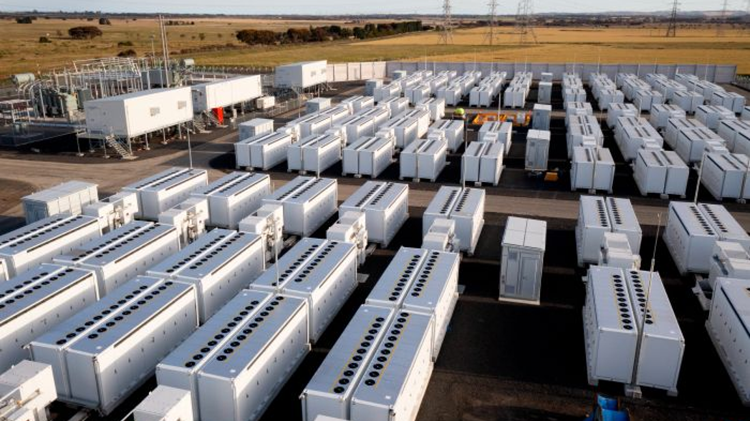
Amid grid saturation, energy storage is emerging as a critical enabler of renewable integration. The Institute for the Diversification and Saving of Energy (IDAE) recently awarded 10 GWh of storage capacity, with projects located in Andalusia, Castilla y León and Catalonia.
Spain enters 2026 with a robust renewable pipeline and clearly defined 2030 targets. At the same time, grid constraints, slow permitting and regulatory uncertainty threaten to curb the pace achieved in 2025. The challenge is no longer just installing more megawatts, but ensuring they can be connected, integrated and operated within a power system that urgently needs modernization.
Against this backdrop, Future Energy Summit Iberia – Renewables & Storage 2026 will bring together key energy stakeholders on 12 February in Madrid to debate storage, renewable integration and infrastructure challenges. Confirmed speakers include representatives from IDAE, Manuel Larrasa Rodríguez (Secretary General for Energy and Mining of the Regional Government of Andalusia), Rocío Sicre (CEO of EDP Spain), and executives from Wattkraft, Tera Batteries, Templus and Zelestra, represented by Enrique de Ramón, Global Head of Business Origination & BESS.