










As Argentina’s solar photovoltaic (PV) capacity continues to expand, a new challenge is emerging for the sector: ensuring the long-term operational efficiency of installed solar plants.
While the early phase of the country’s solar development focused primarily on building new projects, the industry is now increasingly turning its attention to operations and maintenance (O&M) as a key factor in preserving the economic performance of renewable energy assets.
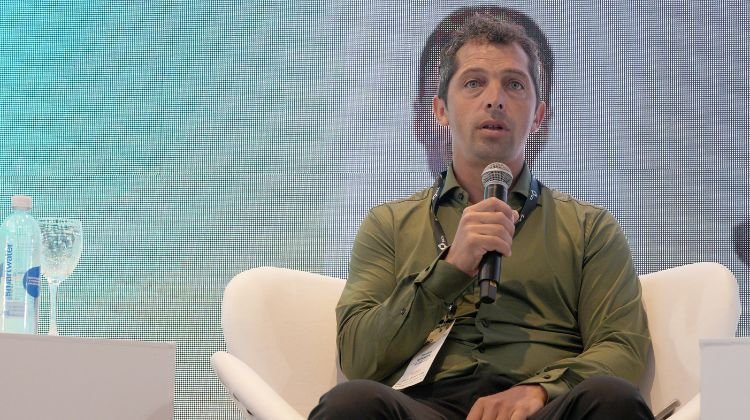
According to Francisco Bernardin, CEO of SolarCleano Argentina, inadequate maintenance of solar panels can significantly reduce plant performance.
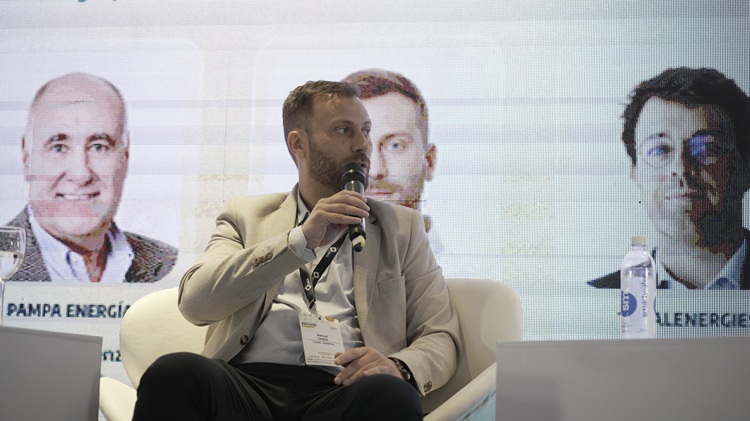
“A solar plant can lose up to 30% of its efficiency without proper maintenance,” Bernardin said during the Future Energy Summit (FES) Argentina, one of the region’s leading energy industry events.
Dust accumulation and soiling on photovoltaic modules are among the main causes of performance losses, affecting not only electricity generation but also the financial outcomes of projects.
For solar developers and asset owners, these losses can be particularly critical because project financing models rely heavily on expected energy production throughout the plant’s lifetime.
Even small deviations in generation levels can translate directly into lower revenues for power plants operating under long-term contracts or merchant market exposure.
For this reason, SolarCleano argues that maintenance strategies should be considered part of the project’s financial model rather than merely an operational expense.
To address these challenges, SolarCleano is promoting the use of advanced robotic technologies designed to automate the cleaning of solar panels, helping maintain generation levels closer to those expected during the project’s design phase.
The company has developed automated systems capable of cleaning large areas of photovoltaic modules in short periods of time, improving operational efficiency for utility-scale solar installations.
“This year we launched a new robot capable of cleaning up to 10 MW of solar capacity per day, enabling faster and more efficient maintenance,” Bernardin explained.
Some of these systems incorporate automation and artificial intelligence (AI) technologies that allow the equipment to operate autonomously within solar parks.
In certain configurations, the robots can even power themselves using electricity generated by the solar panels combined with battery systems, allowing them to operate efficiently in large-scale solar installations without additional infrastructure.
From the company’s perspective, operational performance plays a direct role in the revenue generation of solar power plants.
Every improvement in module efficiency translates into higher electricity production, which ultimately improves the financial performance and return on investment of renewable energy assets.
Solar plants typically operate for 20 to 25 years, making long-term maintenance strategies essential to preserving the performance levels originally projected during the design and financing stages.
“Our goal is to support solar plants throughout their entire operational life so they can generate the maximum potential that was envisioned when they were designed,” Bernardin said.
A growing market for solar O&M in Argentina
The expansion of solar capacity in Argentina is also creating new opportunities in the operations and maintenance segment of the renewable energy industry.
Over the past several years, numerous photovoltaic plants have been installed across different provinces, gradually shifting the sector’s focus toward improving the performance of the existing fleet.
In this context, companies such as SolarCleano are developing robotic cleaning and maintenance solutions aimed at improving the long-term productivity of solar PV plants while also reducing water consumption during cleaning processes.
As the solar market matures, these technologies are expected to play an increasingly important role in maximizing the efficiency and reliability of renewable energy assets across the country.