












Solar tracker manufacturers are increasingly turning to software and advanced algorithms to boost the output of photovoltaic plants. According to Oscar Aira, Managing Director for Europe and Latin America at GameChange Solar, software-driven solar tracking can optimise project performance by adapting tracker behaviour to terrain, solar irradiation and weather conditions.
“We have algorithms specifically designed to produce more energy,” Aira said, noting that these solutions can increase electricity generation by up to 1–1.5% in solar plants located on undulating or complex terrain.
One of the most widely used developments is a three-dimensional tracking algorithm known as Power Boost. The system adjusts tracker movement according to terrain variations, improving solar radiation capture across irregular layouts.
Another emerging solution is Split Cell, an algorithm designed to optimise system behaviour when using split-cell photovoltaic modules.
“When we work with split modules, we can generate more electricity by allowing certain modules to tolerate shading,” Aira explained. This approach improves the overall energy yield of the system, even under conditions that solar plant designs traditionally sought to avoid.
The company has also developed Weather Smart, an algorithm aimed at improving performance under diffuse radiation conditions, such as cloudy days.
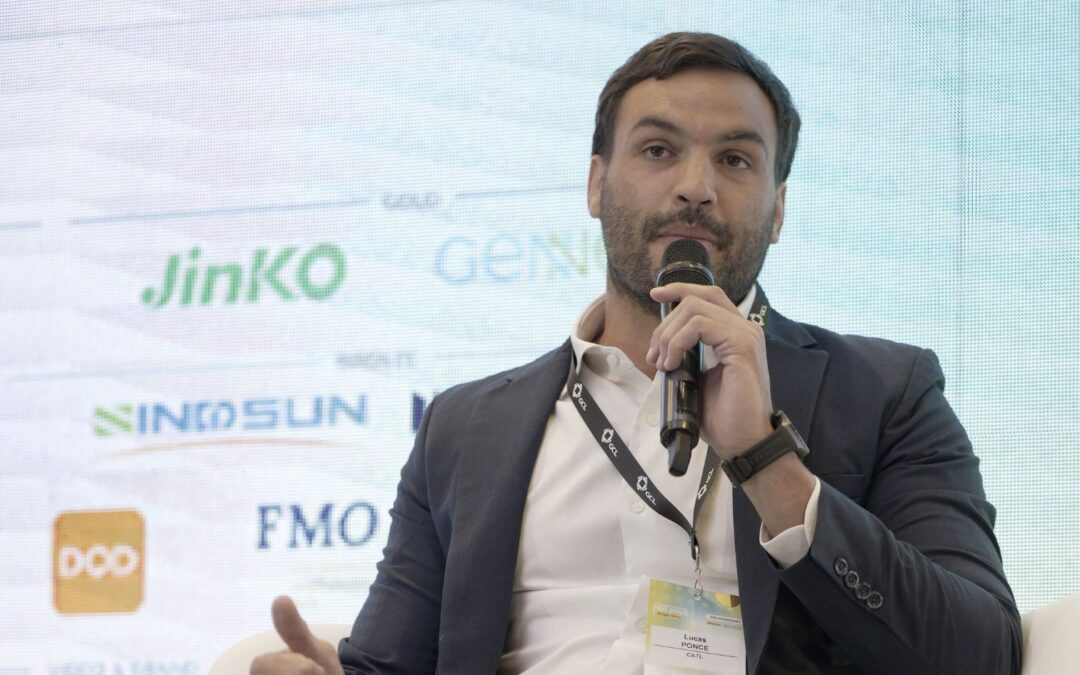
“When diffuse radiation is high, instead of positioning the tracker directly toward the sun to capture direct irradiation, the system can also generate energy by capturing radiation reflected from other parts of the plant or the ground,” Aira said during Future Energy Summit (FES) Iberia 2026, an event that brought together more than 400 energy sector executives.
Beyond improving energy capture, these technologies are also designed to respond to new requirements from power systems, where generation stability is becoming increasingly important.
“Energy injection into the grid cannot experience sharp and irregular drops,” Aira warned, noting that these algorithms help smooth abrupt variations in power output when solar irradiance changes rapidly.
The development of these solutions is also driven by the growing complexity of solar projects, particularly in mature markets such as Spain.
“The best locations — flat and easy to develop — are already largely occupied,” Aira said. As a result, many new photovoltaic developments are now being built on sites with steeper slopes, irregular layouts and stricter environmental constraints.
Developers must increasingly deal not only with continuous slopes but also with changing gradients along the length of the tracker, requiring more flexible structural solutions.
To address this challenge, the company has developed configurations that can adapt to both long and short trackers, including designs capable of accommodating up to five strings, as well as solutions aimed at reducing construction impacts.
“Developers are asking us to avoid earthworks,” Aira noted. One option is the use of longer piles, allowing structures to adapt to the terrain while minimising ground disturbance.
Project layout complexity also influences plant design. Ideally, manufacturers would prefer working with large, uniform surfaces.
“For us, it would be ideal to have a square layout covering a thousand hectares with 500 MW,” Aira admitted. However, in mature markets such as Spain, projects tend to feature far more irregular configurations.
This situation coincides with the rapid growth of solar energy within the Spanish electricity system. Spain began 2026 with more than 56% of its electricity generation coming from renewable sources and over 80 GW of installed capacity, consolidating its position as one of Europe’s most mature solar PV markets.
In this context, the challenge for developers is no longer limited to building new capacity, but also maximising the performance of existing assets.
One emerging trend is the hybridisation of photovoltaic projects with battery energy storage systems (BESS), which requires new operational capabilities within solar plants.
“Trackers need to be linked with what the battery will require in order to adapt to new grid criteria,” Aira explained. “These are projects where cybersecurity plays a very important role, so we must fully adapt to what is coming. The tracker needs to learn to read the other components of the plant during the operational phase — the inverter and other systems.”
The company’s strategy is also part of a broader international expansion process. After consolidating its presence in the United States, GameChange Solar has entered a second growth phase targeting markets such as Europe, Latin America, Australia and Asia, with Spain positioned as a strategic hub.
Within this framework, Aira emphasised that the company aims to position itself as a long-term technology partner for solar developers.
“We are talking about projects with a lifespan of 35 or even 40 years,” he said, while acknowledging that the pace of technological innovation is creating new dynamics across the sector.
Looking ahead, Aira concluded that the most successful assets will be those capable not only of generating electricity but also of providing services to the power grid.