










The rapid growth of data centres driven by artificial intelligence and the digital economy is creating a new energy challenge for Chile and Latin America. In this context, Siemens anticipates that integrating renewable energy with battery energy storage systems (BESS) will be decisive in ensuring a reliable and sustainable electricity supply over the next decade.
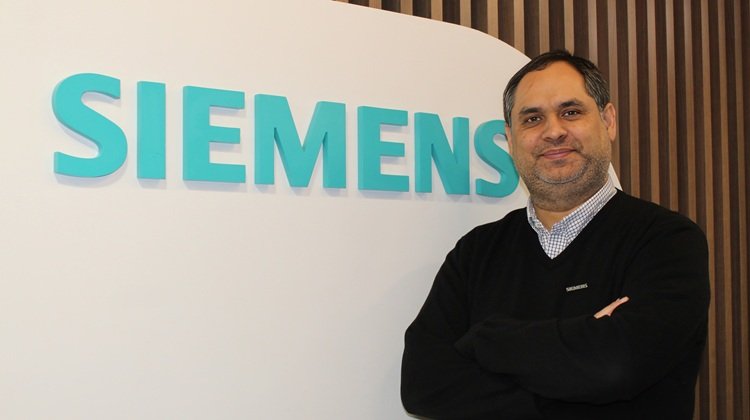
Felipe Lizama, Electrification and Automation Manager at Siemens Chile, explains that the expansion of this technological infrastructure is linked to a structural transformation in global electricity demand.
“By November 2025, Chile had 59 data centres, positioning it as the third country with the largest installed data centre capacity in Latin America. In this context, we estimate that over the next five years installed capacity could double, consolidating this industry as one of the fastest-growing sectors in the country,” he said in an interview with Energía Estratégica.
The phenomenon is not limited to Chile. Latin America is experiencing a substantial increase in investment in digital infrastructure, driven by its strategic proximity to the United States, the rapid adoption of cloud services and emerging regulatory frameworks related to data sovereignty.
Energy projections reflect the scale of the challenge. Chile expects electricity demand from data centres to reach 1,360 MW by 2032, while Brazil projects a fifteen-fold increase in consumption, rising from approximately 826 MW to more than 13 GW by 2035.
Currently, a significant share of this infrastructure is concentrated in Chile’s Metropolitan Region, which places additional pressure on the electricity grid and highlights the need to diversify project locations. Such diversification could help meet growing demand while also optimising energy costs.
To address this new energy demand, Siemens believes that integrating renewable energy sources together with battery energy storage systems (BESS) will be essential to guarantee the operational continuity required by data centres.
“Both technologies can play a central role in supplying data centres by allowing them to drastically reduce their carbon footprint, improve the continuity of electricity supply and decrease reliance on conventional fossil fuel-based generators,” Lizama said.
This combination makes it possible to supply critical loads without interruptions and optimise the use of available renewable energy, a fundamental condition for data centre operations.
At the same time, Siemens is strengthening its technological offering to support this growth. “We offer a comprehensive portfolio of solutions and services for data centre projects, designed to cover their entire lifecycle, from planning and design to operation and expansion,” Lizama explained.
The solutions include medium- and low-voltage electrical distribution systems, energy automation platforms, infrastructure management tools and intelligent systems capable of monitoring in real time energy consumption, capacity, cooling systems and critical assets.
“We are strengthening our technology portfolio with solutions that combine electrical equipment, control systems and advanced digital operation platforms such as SCADA (Supervisory Control and Data Acquisition), EMS (Energy Management Systems) and BMS (Building Management Systems), supported by digitalisation and artificial intelligence capabilities to optimise the management of energy flows,” the executive added.
Finally, Siemens is also promoting collaboration with stakeholders across the energy and digital ecosystem, including public institutions, data centre operators and renewable energy developers.
Among these initiatives, the company highlights its active participation in the Chilean Data Centre Association, where it contributes its global experience to support the sector’s development.
“Through this platform, we share global knowledge and local expertise to contribute to the definition of standards, exchange technological trends and adapt innovative solutions implemented in other markets to Chile’s reality,” Lizama concluded.