











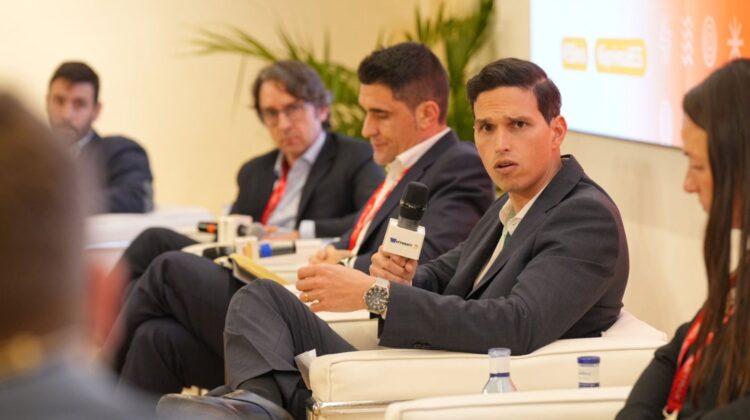
Spain’s solar PV market is entering a phase of slowdown after several years of rapid expansion, a scenario that is redefining developers’ priorities and raising the technical requirements for power plant components. During his participation at Future Energy Summit (FES) Iberia, Ángel Alegría, Head of Commercial at Schletter, analyzed how this context is driving greater demand for mounting structures capable of providing predictability, reducing risks, and adapting to new operational models such as hybridization.
“We are in a moment of transformation, where we must find the balance between operating the assets that are already ready to produce —because they are highly competitive and very efficient— and the level of demand in the system,” Alegría said.
From the perspective of mounting system manufacturers, the executive believes the sector is currently experiencing a stabilization phase after the strong momentum of recent years. “We clearly see a market that is on a plateau,” he noted, referring to the current pace of new investments in solar projects.
In this context, Alegría acknowledged that there is a degree of caution across the industry. However, he stressed: “It is true that there is a lot of negativity, but it is precisely in these times that opportunities and development emerge.”
Despite this environment, the executive emphasized that the structural fundamentals of the sector remain strong, particularly due to the role solar energy plays in energy security strategies.
“The demand driver is still active because we know this is about energy independence,” he explained.
This context is also changing how developers evaluate the different components of a photovoltaic plant. According to Alegría, mounting systems are no longer viewed simply as a line item within the capital expenditure (CAPEX) budget.
“Developers are no longer seeing mounting systems merely as a CAPEX line they need to meet, but as a system that must help reduce project risks,” he said.
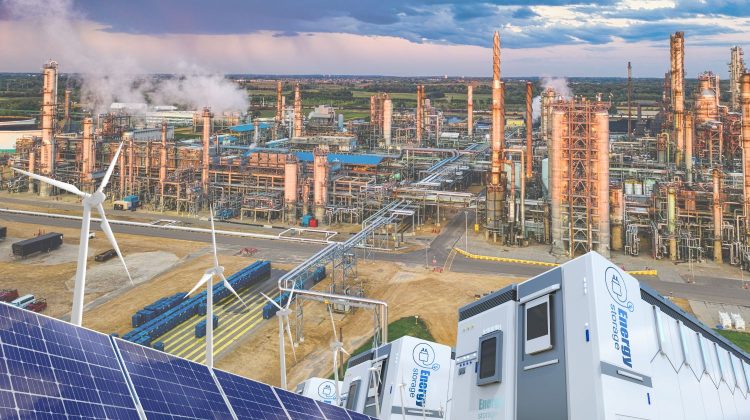
At the same time, the evolution of Spain’s electricity market is also driving new project configurations. In particular, the integration of hybrid schemes in solar plants is beginning to gain prominence —a strategy aimed at reducing energy curtailment, optimizing production, and improving asset profitability through energy storage.
According to research conducted by Energía Estratégica, Spain processed more than 570 MW of battery energy storage systems (BESS) for hybridization with solar plants in just three weeks, reflecting the sector’s growing interest in combining generation and storage within the same asset.
In this regard, the Schletter representative noted: “Mounting systems are being sought that can integrate into hybrid systems or hybrid plants without increasing project risks.”
Another growing challenge for developers is the complexity of the land available for new solar plants and the need to adapt designs to avoid extensive earthworks.
On this point, Alegría explained that the choice between solar trackers and fixed-tilt structures also largely depends on terrain characteristics and market conditions. In Spain’s case, he noted that the sector continues to be clearly dominated by solar trackers, as they allow operators to maximize generation outside the central hours of the day, when electricity prices are typically lower.
However, he clarified that this logic does not apply in every country. As an example, he mentioned the Dominican Republic, where climatic conditions influence technology choices. “It is mainly a fixed-tilt market because wind speeds are very strong, and that is the option customers tend to choose,” he said.
Currently, Schletter has accumulated more than 60 GWp of installed systems worldwide and operates in more than 100 countries, allowing the company to adapt its solutions to different market and geographic conditions.
Finally, the executive stressed that in the current environment many investments are being directed toward optimizing the performance of existing assets.
“I believe resources will increasingly focus on making these assets more effective, splitting them and adding batteries to achieve better performance,” he concluded.