











RWE Renewables Iberia considers energy storage a central pillar of its strategy in Spain through to 2030, aiming to ensure energy availability beyond the intermittency of renewable energy sources such as solar PV and wind power.
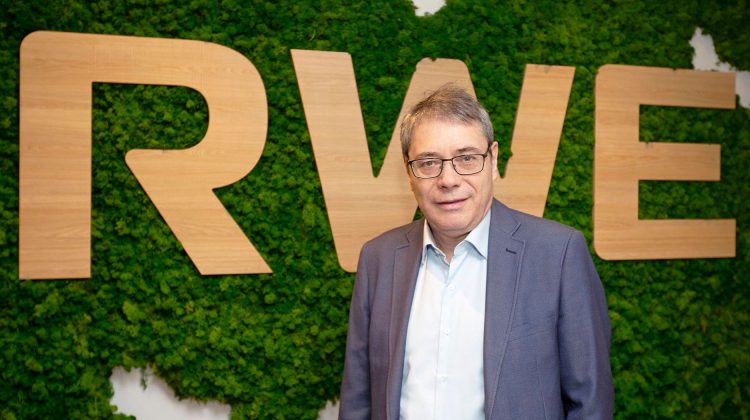
“In the current, increasingly dynamic environment, storage plays a fundamental role,” said Robert Navarro, Managing Director of RWE Renewables Iberia, in an interview.
The German company already develops, builds and operates battery energy storage systems (BESS) in the United States, Europe and Australia. Navarro confirmed: “We plan to do so in Spain as well,” in line with its global strategy of supporting clean generation with flexibility and back-up technologies.
“The wholesale market price spread in Spain is currently one of the highest in Europe, which is highly attractive in the short and medium term for energy arbitrage strategies,” the executive underlined.
However, RWE remains cautious about future profitability. “This activity will eventually cannibalise itself as new storage projects come online and the price curve flattens,” Navarro warned. The assessment also extends to balancing markets, where opportunities may exist but with a similar risk of saturation.
Against this backdrop, the company is closely monitoring additional factors affecting project viability. “The recent decline in battery costs is very positive, but the uncertainties mentioned mean that, in practice, it is difficult to secure sufficient returns for projects without aid or subsidies,” Navarro stated.
Among these support mechanisms, he explicitly cited Spain’s Recovery Plan and the European Regional Development Fund (FEDER), which are considered crucial to boosting short-term investment in renewables and storage. One of the projects in which RWE is already participating is a FEDER-backed storage initiative in Catalonia, involving a 28 MWh battery system.
This project forms part of a broader scheme under which €674 million was awarded to 81 projects across Spain, representing more than 9.4 GWh of distributed energy storage capacity.
In the longer term, the company identifies a new potential revenue stream. “Capacity markets could also represent a good opportunity,” Navarro noted. These platforms may provide payments for firm capacity availability, helping to stabilise battery business models and support grid integration.
It should be recalled that Spain’s capacity mechanism is currently in the regulatory phase and awaiting approval from the European Commission.
RWE’s strategy in Spain for the 2026–2030 period does not aim for accelerated growth, but rather for smart, value-driven expansion. “We will focus on projects that we consider highly attractive and value-generating. We are not looking to grow significantly, but to grow well,” the executive emphasised.
The company currently operates 493 MW of onshore wind and 249 MW of solar photovoltaic capacity in Spain, along with a minority stake in a 50 MW concentrated solar power (CSP) plant. Its development portfolio includes projects at different stages, with 86 MW under public consultation and 6.2 MW having secured environmental approval. RWE has also recently completed the repowering of the Muel wind farm, increasing its capacity to 19.8 MW.
In the immediate horizon, RWE sees significant potential in the repowering of ageing wind farms, in a country where more than 10 GW of capacity will reach 25 years of operation.
“This represents enormous potential, with the well-known advantages of reducing the number of turbines and achieving a very significant increase in production,” Navarro highlighted.
Regarding future technologies, the executive projects that “onshore wind and solar photovoltaic will undoubtedly continue to be the main protagonists.”
Although Spain’s National Energy and Climate Plan (PNIEC) sets out the roadmap, he considers that its full implementation by 2030 appears rather challenging.
In this way, RWE combines financial prudence with technological ambition, positioning energy storage as a cross-cutting and strategic solution. According to its vision, the key will be to advance projects that combine strong technical fundamentals, an adequate regulatory framework and public support, in order to build a resilient and competitive model over the medium and long term.