






The Peruvian conglomerate Romero Group has completed the acquisition of Orygen, a power generation company previously owned by global infrastructure investment fund Actis, in a move that significantly strengthens its footprint in Peru’s energy sector.
The transaction was carried out through Infracorp, Romero Group’s infrastructure investment arm, positioning the conglomerate as one of the key players in the country’s electricity market.
Following the deal, the business group will control around 14% of Peru’s power generation mix and become the owner of the second-largest power generation platform in the country, with 2.3 GW of installed capacity. The financial value of the transaction was not disclosed by the parties.
According to information released by Actis, Orygen operates the largest renewable energy portfolio in Peru, with generation capacity distributed across several technologies.
The current generation mix includes:
| Technology | Share of capacity |
|---|---|
| Wind and solar | 28% |
| Hydropower | 34% |
| Gas-fired thermal generation | 38% |
This diversified portfolio provides a balanced generation mix within Peru’s national electricity system.
Origin of the platform and renewable expansion
Orygen was launched by Actis in June 2024, following the acquisition of Enel’s stake in Enel Generación Perú along with 100% of Compañía Energética Veracruz.
At launch, the platform began operations with around 2.2 GW of installed capacity and a portfolio of 12 operating assets, which has since expanded to reach the current 2.3 GW.
During Actis’s ownership period, the company accelerated its expansion in renewable energy, particularly wind power and solar PV.
Among the most notable milestones are:
-
The start of operations of Wayra Extensión, a 177 MW wind farm
-
The construction of Wayra Solar, a 100 MWp solar PV project (equivalent to 94.22 MW AC)
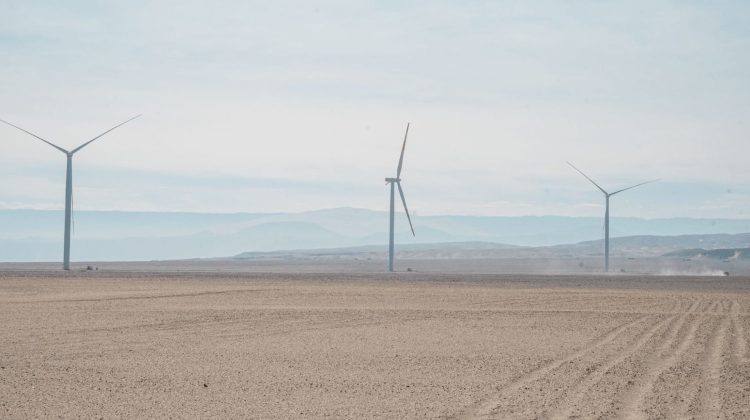
The solar project forms part of an integrated energy complex alongside Wayra I and Wayra Extensión, which together exceed 400 MW of installed capacity and are considered by the company to be Peru’s largest hybrid wind–solar complex.
Orygen’s renewable portfolio also includes:
-
Rubí solar plant – 144.48 MW
-
Clemesí solar plant – 114.93 MW
Both assets are part of the company’s strategy to diversify technologies within its renewable generation portfolio.
In parallel, Orygen has expanded its energy supply offering through power purchase agreements (PPAs) with third-party renewable generators.
Over the past 12 months, the company incorporated more than 1.7 TWh of clean electricity sourced from other producers, primarily to supply commercial and industrial customers.
Investment strategy through 2030
The corporate restructuring that led to the creation of Orygen also included the launch of a new corporate identity and a growth strategy focused on renewable energy.
As part of this strategy, the company is pursuing an investment plan of approximately USD 3 billion, aimed at:
-
Expanding installed generation capacity
-
Developing new wind power and solar PV projects
-
Strengthening its role in Peru’s energy transition and renewable power market
The investment programme targets 2030 as the main horizon for new project development.
Romero Group began its expansion into Peru’s energy sector in 2023, when it acquired the Puerto Bravo (Samay) thermal power plant from Inkia Energy.
The facility, located in Mollendo, has 724 MW of installed capacity and operates under a “cold reserve” scheme. This means the plant is designed to be dispatched only in emergency situations or during periods of peak demand, rather than operating continuously within the daily generation system.