











Brazil’s state-controlled oil and gas company Petrobras has selected Fugro to carry out a geotechnical survey campaign for its Rio de Janeiro Offshore Wind Pilot Project, a pioneering initiative in South America’s emerging offshore wind sector.
The project, with an installed capacity of 18 MW, represents the first offshore wind development in the region to advance under a formal environmental licensing process. It comes at a time when several Latin American countries are beginning to design regulatory frameworks to unlock investment in offshore wind power.
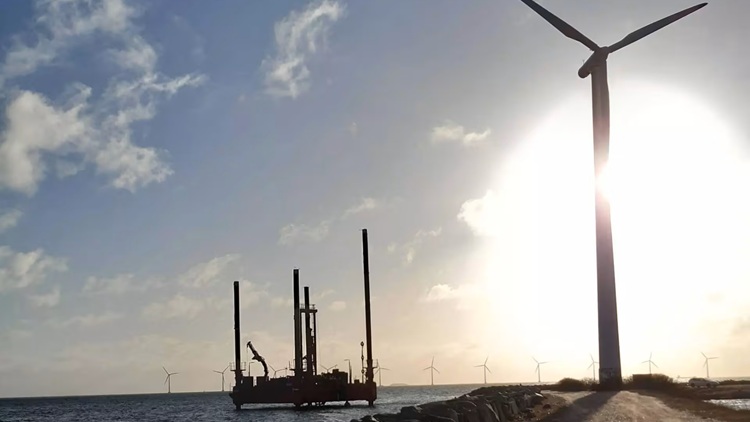
The scope of work includes soil sampling, in situ testing, and laboratory analysis across four nearshore and shallow-water locations. Onshore investigations will also be conducted to support cable landfall and routing, a key component for grid integration.
Field operations and data analysis are scheduled to begin in April and continue through the third quarter of 2026, with the final geotechnical report expected in 2027.
“As South America progresses with its offshore wind ambitions, early-stage geological data is one of the most critical tools to reduce uncertainty and ensure long-term project success,” said Céline Gerson, Group President for the Americas at Fugro.
“By partnering with Petrobras at this early stage, we are helping establish the technical foundation needed to develop offshore wind responsibly and expand future energy options in Brazil and across the region,” she added.
The initiative aligns with the broader strategy of Brazil’s president, Luiz Inácio Lula da Silva, who has proposed transforming Petrobras into a fully integrated energy company. This includes renewed investments in fertilizers, biofuels, and renewable energy technologies.
In recent years, Petrobras has also initiated environmental licensing procedures with the Brazilian Institute of Environment and Renewable Natural Resources (IBAMA) for ten offshore wind projects totaling nearly 23 GW of installed capacity. These projects are distributed across multiple coastal states, including Rio Grande do Norte, Ceará, Maranhão, Rio de Janeiro, Espírito Santo, and Rio Grande do Sul.
Additionally, Petrobras has partnered with WEG to develop what is expected to be the largest wind turbine in Brazil. The turbine will have a capacity of 7 MW, a height of 220 meters—roughly equivalent to six Christ the Redeemer statues—and a total weight of approximately 1,830 tons.