











A few days ahead of the 12 April presidential elections, Peru faces a highly fragmented political landscape with 36 candidates in the race and an electorate that remains undecided. Meanwhile, the renewable energy sector continues along its roadmap with limited dependence on the election outcome, as noted by Edmundo Farge, CEO of Batech Energy, in remarks to Energía Estratégica.
In this context, the various candidates have presented energy proposals that, broadly speaking, aim to accelerate the diversification of the energy mix through the promotion of natural gas, hydrogen and electrification based on renewable energy sources.
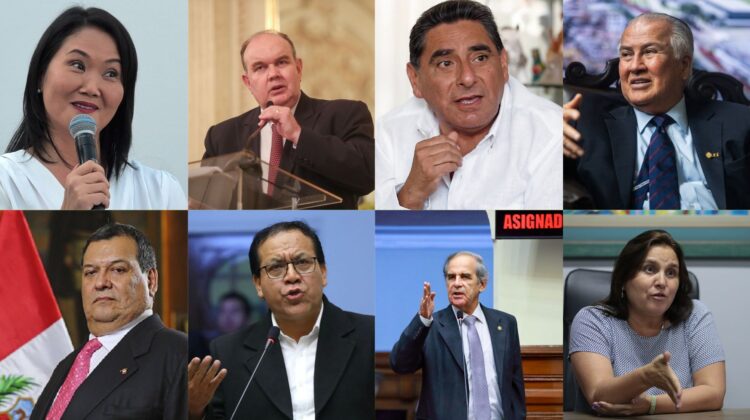
However, the political landscape is coupled with significant uncertainty in voter behaviour, with polls indicating that nearly one-third of Peruvians have yet to decide their vote. According to a Datum survey, Keiko Fujimori (Fuerza Popular) leads with 13%, followed by Rafael López Aliaga (Renovación Popular) with 11.7%, while Carlos Álvarez, Alfonso López Chau, Jorge Nieto and Roberto Sánchez trail behind in a race with no decisive gaps.
Rafael López Aliaga proposes prioritising the development of renewable energy—particularly hydropower, solar and wind—alongside the creation of green hydrogen hubs in the south of the country, especially in Arequipa and Moquegua, aimed at export markets. At the same time, he also seeks to increase natural gas consumption.
For her part, Keiko Fujimori promotes the development of non-conventional renewable energy and the expansion of rural electrification, particularly in the jungle and remote areas where coverage remains limited. She also proposes advancing a National Green Hydrogen Agenda in coordination with state bodies and international cooperation.
She will encourage the exploration of energy resources (hydrocarbons), promoting new blocks in the jungle and the northern coast under stable rules that foster private investment and increase domestic supply. She also plans to create a Northern Energy Hub, aimed at turning the country’s northern macro-region into a strategic centre for energy generation, processing and distribution.
At this point, the proposal of Roberto Chiabra also emerges, focusing on optimising the energy system by leveraging the country’s geographical diversity, with solar energy on the coast and hydropower in the highlands. He also proposes expanding electrification programmes such as “Sol para Todos” in rural areas and promoting energy integration in South America through electricity exports. He will push for the mass adoption of natural gas, exploration activities and the construction of the Southern Petrochemical Complex, as well as consolidating, if confirmed, the existence of gas and oil reserves off the northern coast near Lambayeque and La Libertad.
Roberto Sánchez, meanwhile, proposes that the state directly manage strategic resources—such as gas, oil, water and energy—alongside the creation of a national innovation centre focused on developing initiatives in construction, sanitation and renewables. Carlos Álvarez, on the other hand, suggests boosting the global integration of sectors with potential such as agribusiness, sustainable mining, energy, digital services and sustainable tourism, although without detailing specific measures for the energy sector.
Alfonso López Chau presents a more quantitative approach, with targets such as achieving 100% electricity access—from the current 94%—increasing the share of renewables to 30%, reducing energy costs in rural areas by 20%, and delivering “10 solar parks and 5 wind farms already built”. His plan also includes promoting pilot green hydrogen projects and developing a national roadmap for this energy vector.
However, industry stakeholders warn that these proposals do not reflect the current state of the market or the projects already under development, both in renewables and hydrogen. “There are already more than 13 projects by 2028—they are not aware of them,” Farge questioned, adding that there is “a lack of greater vision regarding hydrogen megaprojects”, referring to large-scale initiatives already underway in the country.
Despite the electoral context, Peru’s energy sector shows particular resilience to political changes, setting it apart from other markets in the region. “The impacts of Peruvian politics on the economic sector… are minimal or almost non-existent,” the CEO stated.
“This is due to monetary strength and inflation control, combined with rising metal prices in the mining sector, which drives demand for renewable electricity,” he added.
This is reflected in the fact that Peru has gone through more than eight presidents in recent years without altering its economic or energy trajectory.
Law 32249 and the sector’s real benchmark
Beyond the electoral process, one of the main focal points for the energy sector is the regulation of Law 32249, aimed at promoting more efficient electricity generation development and improving market competition.
Currently, the regulation is under discussion within the Ministry of Energy and Mines amid institutional changes. “The regulation will be approved with the new minister of the next government,” Farge projected.
At the same time, Peru has a significant pipeline of renewable energy projects. There is a commitment to incorporate 13 solar plants totalling 2,243 MW by 2028, in addition to 105 approved projects reaching 23,077 MW. However, only 15 of these projects have secured a Definitive Generation Concession.
At present, the power system records 1,021.3 MW of wind capacity and 734.2 MW of solar capacity, and renewable installed capacity is expected to nearly triple by 2030, reaching 2,861.5 MW of solar PV and 1,641.6 MW of wind power.
Within this framework, regulatory tensions are also emerging, particularly due to concerns over the design of time blocks that could favour solar generation over other technologies.
“There are objections from thermal power plants regarding the scheme associated with time blocks, which would allow only solar plants to operate in block 8 (from 8 a.m. to 4 p.m.), arguing that it does not respect a basic principle—technological neutrality. The law does not go in that direction, but the proposed regulation does,” the executive stated.