by Strategic Energy | Sep 23, 2025
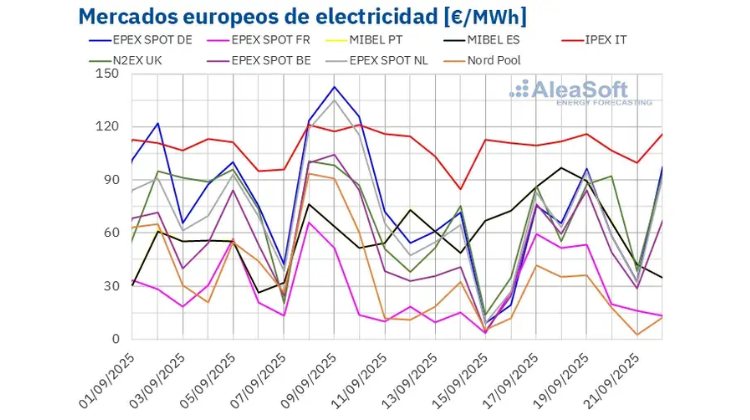
In the third week of September, most of the main European electricity markets registered decreases in their weekly prices, which in many cases fell below €60/MWh, favored by the increase in solar energy production, the recovery of wind energy in Germany and Italy, and the slight decline in gas prices. However, Spain, Portugal, and France bucked the trend with increases, while Italy remained above €100/MWh for most of the week.

by Strategic Energy | Sep 23, 2025
Renewable energy sources grew the most: 6.2% in the primary energy matrix and 11.9% in electricity. MITECO’s official energy statistics include the country’s self-consumption capacity for the first time, which reached 8,256 MW by the end of 2024. The weight of natural gas and coal in the national energy mix has decreased, and for the third consecutive year there is an export-oriented electricity balance.

by Milena Giorgi | Sep 23, 2025
At the Global Renewables Summit in New York, Ursula von der Leyen highlighted that Europe already generates 50% of its electricity from clean sources. The EU will allocate €300 billion until 2027 for global energy transition projects.

by Milena Giorgi | Sep 22, 2025
La propuesta de la Comisión Europea para cortar las importaciones de gas natural licuado ruso el 1 de enero de 2027 despierta críticas por su alcance limitado y el riesgo de que Rusia tenga tiempo de adaptarse.

by Strategic Energy | Sep 22, 2025
The company drives photovoltaic innovation with solutions for generation and BESS projects, applied in real regional success stories and showcased through the international catalogue that brings together leading players in the solar sector.

by Energía Estratégica ES | Sep 22, 2025
La compañía impulsa la innovación fotovoltaica con soluciones para proyectos de generación y BESS, aplicados en casos de éxito reales de la región y difundidos a través del catálogo internacional que reúne a los principales referentes del sector solar.
by Milena Giorgi | Sep 22, 2025
The European Commission’s proposal to cut Russian liquefied natural gas (LNG) imports as of 1 January 2027 is drawing criticism for its limited scope and the risk that Russia will have time to adapt.

by Strategic Energy | Sep 22, 2025
The possibility that RFNBOs used in industry could count towards transport targets breaches the Renewable Energy Directive. Allowing full avoidance of the 2030 advanced biofuels target contradicts the Directive’s recommendation. The transfer of renewable fuel certificates between transport sub-sectors should be removed or capped at 20%.
by Strategic Energy | Sep 22, 2025
La posibilidad de que los CRONB utilizados en la industria computen para los objetivos en el transporte infringe la Directiva de Renovables. La opción de eludir completamente el objetivo de biocombustibles avanzados en 2030 incumple la recomendación de la Directiva. El traspaso de certificados de combustibles renovables entre subsectores del transporte debería eliminarse o limitarse al 20%.
by Milena Giorgi | Sep 19, 2025
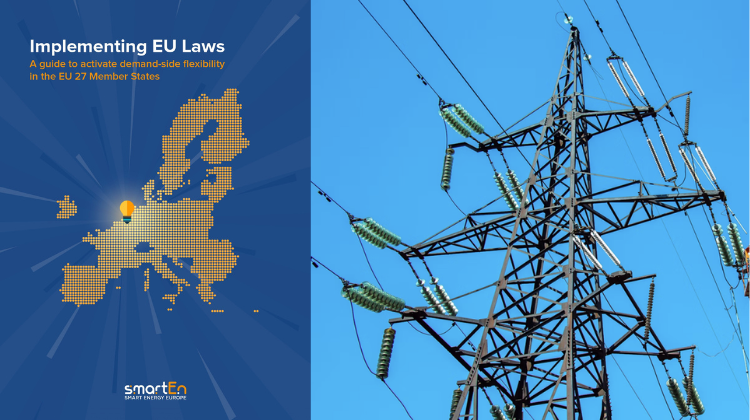
A report by the SmartEN association warns that the full activation of demand-side flexibility could drastically reduce grid reinforcement costs, avoid renewable energy curtailment, and eliminate the need to build 137 gas power plants by 2030.






 September 23, 2025Prices fell below €60/MWh in most European electricity markets in the third week of September
