











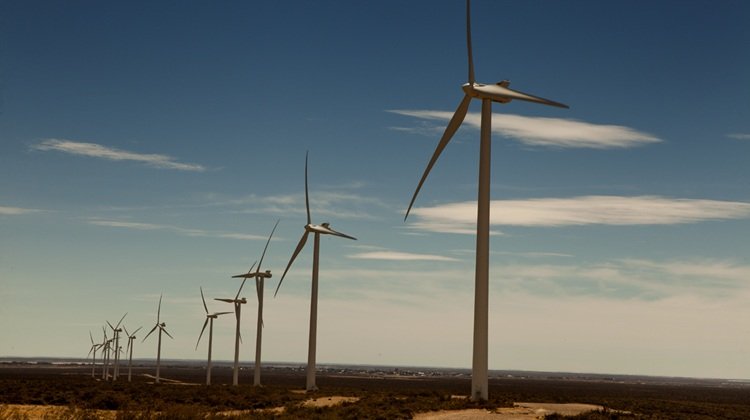
Wind power development in Peru is gaining strong momentum. The country currently has 49 wind projects under development, totalling 10,754 MW of planned installed capacity, according to the official compendium published by OSINERGMIN, the national energy and mining regulator.
The wave of projects ranges from initiatives at the grid connection request stage to plants that have already secured pre-operational studies approved by the COES, Peru’s electricity system operator. Consolidated data from the regulator shows unprecedented growth in wind generation, even surpassing solar PV in terms of projected capacity.
This expansion is mainly concentrated in the regions of Lambayeque, Ica, Piura and Arequipa, where wind resources are more stable and predictable.
Despite the scale of the pipeline, only five projects have obtained definitive concessions, representing a combined 988.2 MW, less than 10% of the total capacity under development. These projects are: Guarango (330 MW), promoted by SL Energy; Emma (72 MW), developed by GR Bayóvar; Mórope (224 MW), promoted by Orygen Perú; Muyú (142.6 MW), also developed by Orygen; and Caravelí (218.3 MW), promoted by IberEólica.
Orygen Perú stands out as the country’s leading wind developer, with seven projects that together exceed 1 GW of installed capacity. Most of its initiatives are concentrated in the Ica region, although the company also has projects in Lambayeque, Piura and Arequipa. Its wind farms include: IKA Sur (241.8 MW), IKA Norte (148.8 MW), Salinar Sur (148.8 MW), Salinar Norte (117.8 MW), Taita (61.6 MW), Mórope (224 MW) and Muyú (142.6 MW).
Kallpa Generación is also advancing strongly, with four projects: Algarrobo (180.6 MW), Cherrepe (142.5 MW), Los Vientos (364.8 MW) and Pacífico (306 MW). It is followed by Engie Energía Perú, which is developing wind plants such as Twister (129.6 MW), Urani (122.4 MW), Sariri (122.4 MW) and the expansion of Punta Lomitas (192.2 MW), all located in the Ica region.
For its part, Engie Energía Perú is promoting four projects in Ica: the Punta Lomitas expansion (192.2 MW), Twister (129.6 MW), Urani (122.4 MW) and Sariri (122.4 MW), which together account for more than 560 MW.
Fenix Power, with a presence in Piura, Lambayeque and Ica, also ranks among the sector’s leading players. Its portfolio includes the Bayóvar wind farm (250.8 MW), Naylamp (237.6 MW) and Piletas (250 MW), all in advanced stages of processing with the COES. Meanwhile, Statkraft Perú is developing the 217 MW Flug project in Lambayeque, which is currently undergoing grid approval procedures.
In terms of project size, the five wind farms with the largest projected installed capacity are: La Espinoza (474.6 MW, Sechín Generación Eléctrica), Quercus (452 MW, Quercus S.A.C.), Violeta Eólica (452 MW, Violeta S.A.C.), Cerro Chocán (422.4 MW, NORWIND S.A.C.) and Rosa (404 MW, Rosa S.A.C.). All of these projects are still in the permitting phase, without definitive concessions, and are mainly located in Lambayeque and Piura.
Other relevant developers contributing to Peru’s new wind power map include Cordillera Solar, Shougang Generación Eléctrica, Oryx Power, Bow Power and Norwind, among others. Many of these players have regional operations or partnerships with international groups, reinforcing the global nature of investor interest in Peru’s wind resources.
Most projects have estimated commercial operation dates between 2026 and 2028, depending on regulatory and environmental progress. However, only a small portion has secured definitive concessions, meaning that the bulk of the pipeline remains subject to key administrative processes at the Ministry of Energy and Mines.
This wind boom is unfolding in a challenging regulatory context. The approval of Law 32249 in January 2025 introduced a modernisation of Peru’s electricity market, but its implementing regulations have not yet been published. This has created uncertainty among developers, who are calling for greater clarity to plan investments and structure power purchase agreements (PPAs).
During the public consultation process for the regulation, the renewable energy sector submitted more than 1,000 comments, yet no updated version of the regulatory text has been released so far. One of the most critical issues for wind developers is the definition of time-of-use contracting blocks, which are essential to ensure competitiveness for variable renewable technologies such as wind power.
“It is important that the process is clear and that industry observations are considered within an institutional dialogue,” private sector representatives have stated in relation to the process led by the Ministry of Energy and Mines.
Meanwhile, the wind pipeline continues to grow, along with expectations of a profound transformation of the national power mix. The 10.7 GW currently under development is ten times greater than Peru’s existing wind capacity, which stands at 1,021.3 MW. According to OSINERGMIN, this capacity is distributed across ten wind farms already integrated into the national interconnected system.
With favourable natural conditions, strong investor appetite and a power market with significant expansion potential, Peru has all the elements needed to consolidate its position as a wind power leader in the region. For this to happen, however, the State will need to define clear and predictable rules of the game, enabling this ambitious pipeline to be converted into tangible infrastructure.