











Costa Rica’s presidential election on 1 February will not only usher in a new political cycle. It will also determine the model of energy transition the country adopts over the coming years, at a time when the debate has shifted from power generation to the decarbonisation of the entire energy system.
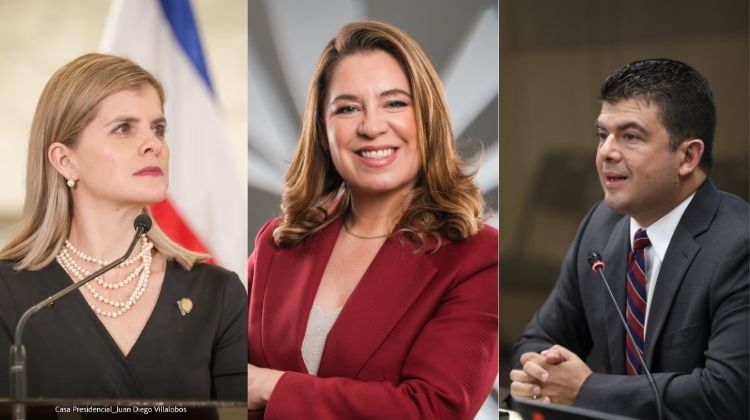
Sources close to Energía Estratégica indicate that three candidates currently hold the strongest electoral positions: Claudia Dobles, representing the Coalition Agenda Ciudadana; Álvaro Ramos, from the Partido Liberación Nacional (PLN); and Laura Fernández, the candidate of the ruling Partido Pueblo Soberano.
Differences between the three camps are evident not only in their government platforms but also in how energy sector stakeholders assess the feasibility and depth of each proposal.
For Laura Fernández, the ruling party’s candidate, the priority is to open up the energy market, expand private sector participation and reduce electricity tariffs through increased competition.
Her platform includes allowing private companies to develop geothermal projects, reforming the National Electricity System so that the state-owned utility ICE competes on equal terms with private generators, reviewing tariffs to eliminate cost overruns, and strengthening Central American regional interconnection. It also promotes biogas and biomethane production from organic waste, under a circular economy approach.
However, political and energy analysts warn that the current administration has yet to present a robust, forward-looking strategy. In their view, the proposal largely follows existing policy lines and lacks a clear roadmap to accelerate the energy transition, raising doubts about the ruling party’s ability to move beyond efficiency and price signals towards a structural transformation of the system.
A markedly different approach is put forward by the Partido Liberación Nacional, led by Álvaro Ramos. Its programme calls for a “second generation” of energy policies focused on advanced technologies, institutional flexibility and sustainable financing.
Key measures include the development of green hydrogen, advanced geothermal projects and marine energy, alongside a modernisation of ICE to allow it to enter into Public–Private Partnerships (PPPs) and contract generation and energy storage capacity more swiftly.
The plan also proposes a Sustainable Finance Law to establish a National Green Transition Fund and enable the issuance of sovereign green bonds. In addition, it seeks to strengthen the role of the Ministry of Environment and Energy (MINAE) by separating planning from operations, while promoting distributed generation and grid modernisation through smart grids.
Industry sources value the fact that PLN explicitly recognises structural gaps in the transition towards a fully low-carbon system. Importantly, the party argues that renewable energy deployment must extend beyond the power sector to cover total energy consumption, including transport, industry and end uses—one of Costa Rica’s main outstanding challenges.
The most far-reaching proposal comes from the Coalition Agenda Ciudadana, led by Claudia Dobles, who advocates a “Just Energy Transition” with strong state leadership.
Her plan would transform RECOPE—currently the national fuel importer—into a public clean energy company focused on green hydrogen, biomethane, energy storage and sustainable mobility.
ICE would retain its leadership role in generation, transmission and distribution, while undergoing modernisation to expand geothermal capacity and allow private participation in solar PV and wind power under a regulated, solidarity-based model.
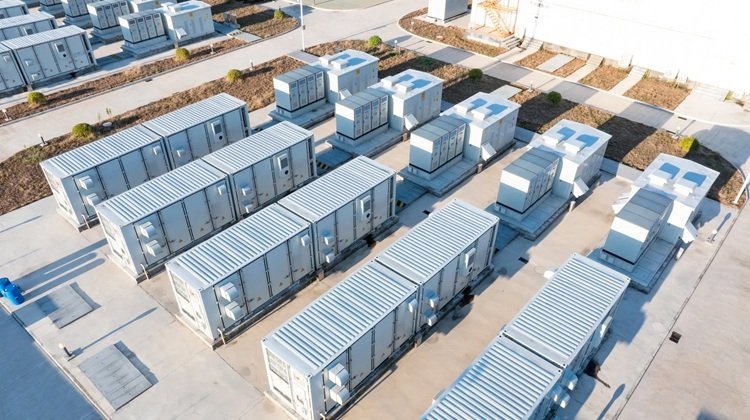
Central pillars of the proposal include a law permanently banning hydrocarbon exploration and production, the creation of Energy Eco-Parks integrating multiple renewable sources with large-scale storage, and a dedicated regulatory framework for batteries to stabilise the grid. The platform also strongly promotes distributed generation, with affordable tariffs and access to credit so households and communities can act as prosumers.
Off-the-record analysis highlights that the Coalition’s agenda is explicitly aimed at economy-wide decarbonisation, prioritising environmental sustainability, renewable energy and energy efficiency. This approach aligns with progressive climate action policies implemented under previous administrations of the Partido Acción Ciudadana (PAC), from which the Coalition inherits much of its ideological and technical framework.
Taken together, the election presents three clearly differentiated energy models:
-
Continuity with market opening, focused on competition and tariff reduction.
-
Structural adjustment, centred on technology, institutional reform and green finance.
-
Deep transformation, with strong state leadership and a just transition narrative.
In a country that has already consolidated a largely renewable electricity matrix, the debate is no longer limited to how power is generated. The next phase will be defined by transport electrification, industrial energy use, energy storage, smart grids and institutional governance.
On 1 February, Costa Ricans will choose more than a president. They will also decide the speed, depth and governance model of the country’s energy transition in the years ahead.
| Issue | Claudia Dobles | Laura Fernández | Álvaro Ramos |
|---|---|---|---|
| Role of ICE | Strategic leader and guarantor of a solidarity-based system | Competes on equal terms with private companies | Flexible utility able to form PPPs |
| Private sector opening | Focused on wind and solar under strong state regulation | Opening of geothermal resources and the broader power market | Strategic partnerships and dynamic contracting |
| Fuels and new vectors | Transform RECOPE into a clean energy company; ban oil exploration | Biogas and biomethane; cleaner fuels | Green hydrogen and next-generation energies |
| Core focus | Just transition, decarbonisation and community prosumers | Tariff reduction and market competitiveness | Technological modernisation and green finance |