









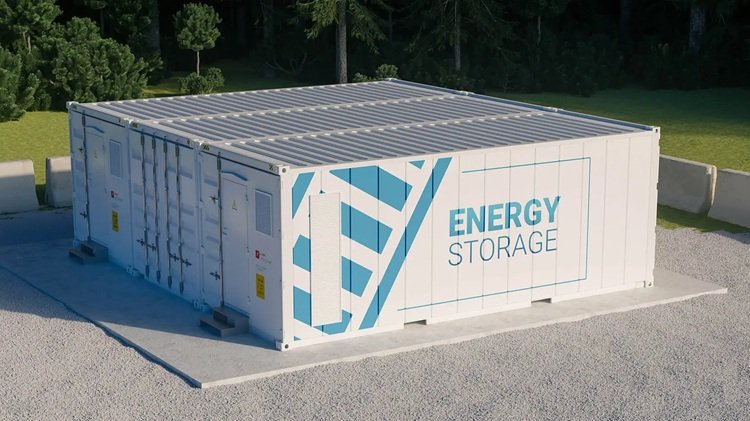
Mexico will accelerate the deployment of 1.3 GW of battery energy storage systems as a structural pillar to safeguard power system reliability amid an expected 25 GW increase in peak integrated demand by 2039. The expansion, scheduled between 2027 and 2030, forms part of the new binding energy planning framework driven by the State.
The projected increase represents around 43% growth in peak integrated demand by 2039 under the planning scenario, fuelled by medium-sized enterprises, data centres and electromobility. In this context, Ana María Gómez Solares, Director General of Renewable Energies, stated: “Reliability and firm capacity become critical for competitiveness,” during her presentation at the Clean Firm Power LATAM Summit.
“Energy storage enhances system flexibility, resilience and reliability,” she said. Under this premise, the expansion foresees 574 MW in the first phase, with approximately 30% corresponding to storage systems integrated into renewable power plants, consolidating the concept of clean firm capacity, and a further 741 MW of standalone batteries expected to enter operation between 2027 and 2030.
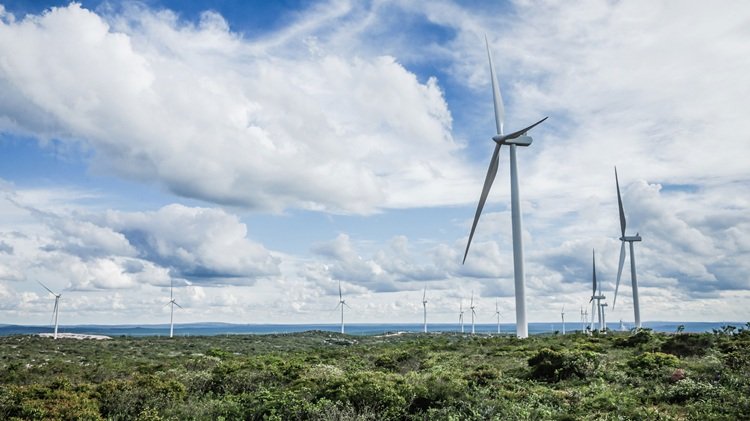
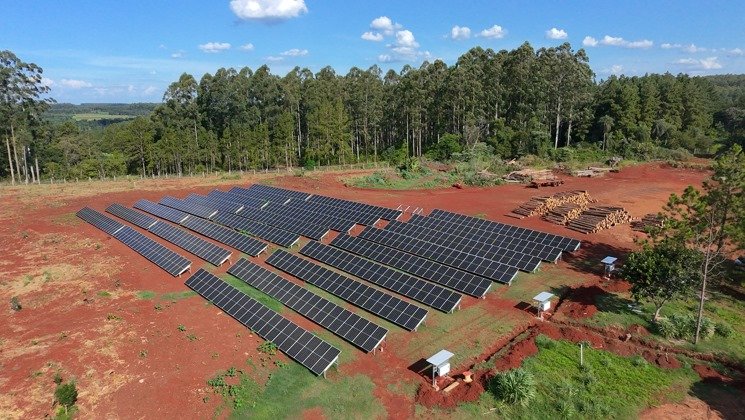
The expansion plan also includes 2,216 MW of batteries associated with intermittent renewable energy, alongside 4,673 MW of solar PV and 2,470 MW of wind power, strengthening the balance between intermittency and firm capacity.
Alongside the capacity rollout, the Government introduced a new storage-specific regulatory framework requiring a mandatory Social Impact Assessment (MISSE) and differentiated technical criteria based on installed MWh. The objective is to streamline the segment’s growth, provide regulatory certainty and ensure consistent standards for grid integration.
The strategy is framed within the 2025 energy reform, which “institutionalises binding energy planning, with the State as the sector’s guiding authority”. The redesign introduces new operational criteria.
“Reliability and security of the National Electric System (SEN) are incorporated as central criteria,” the Director General emphasised. Furthermore, “the State’s predominance is established with at least 54% of injected energy”, reshaping the public–private balance.
It is worth recalling that, in the first priority call for projects, 2,565.106 MW of solar PV, 910.5 MW of wind power and 1,258.16 MW of battery storage were authorised. The sector is now awaiting the second round of the private call, which had been scheduled for January.
Regarding the permitting process for new projects, more than 2,300 MW entered environmental assessment within just two months, according to a survey conducted by Energía Estratégica.
In parallel, the Government enabled a mixed scheme to develop up to 7,500 MW of renewable energy with private participation through long-term contracts, complementing the 5,970 MW of capacity offered to private power generation projects.
Mexico starts from a solid base of clean firm capacity, historically built on dispatchable technologies. Hydropower accounts for 13.93% of interconnected installed capacity and 37.71% of total clean energy generation in 2024, positioning itself as the system’s main renewable backbone. Nuclear, geothermal, efficient cogeneration and bioenergy further contribute operational stability and back-up during peak demand hours. This energy mix has sustained structural reliability over the past decade.