








Mexico has redefined the implementation framework for battery energy storage systems (BESS) with the publication of the Administrative Provisions of a General Nature on the Social Impact Assessment for the Energy Sector (MISSE 2026) on 16 February in the Official Gazette.
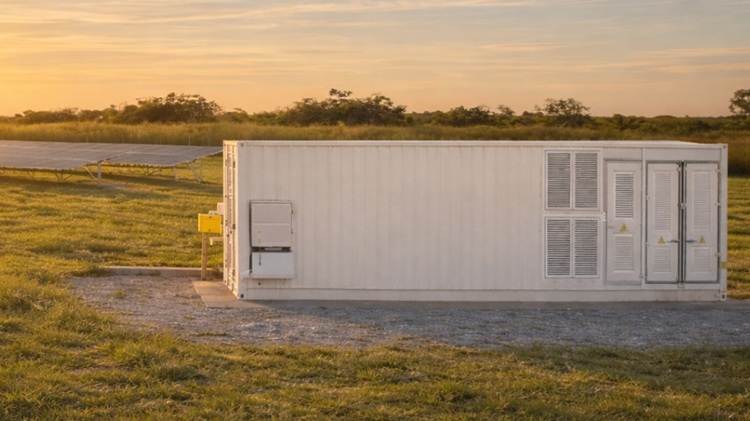
For the first time, electricity storage is explicitly recognised as an activity subject to a mandatory Social Impact Assessment (Manifestación de Impacto Social, MIS). This removes any previous interpretation that could have treated batteries as secondary infrastructure within broader renewable energy projects.
A central feature of the new regulation is the classification of projects according to installed capacity (MWh), under Formats A, B and C.
Projects exceeding 250 MWh are now subject to the highest level of regulatory scrutiny. They are placed on par with large-scale power generation plants in terms of social and documentary requirements, directly affecting the planning of utility-scale storage projects.
Crucially, final social impact authorisation becomes a prerequisite for commencing infrastructure works. In a market where energy storage is strategic due to its rapid deployment capabilities—particularly for congestion management, grid integration and enhancing the reliability of the National Electric System—the social variable will now directly influence technical and financial timelines.
The regulation formalises the obligation to submit a Social Management Plan, including:
-
Annual investment estimates
-
Shared social benefits
-
Verifiable monitoring indicators
This requirement introduces a structural social dimension into the project’s economic model, affecting both capital expenditure (CAPEX) and operational expenditure (OPEX). The social component is no longer ancillary; it becomes embedded in the financial architecture from the engineering phase.
Site selection also gains new complexity. In territories with indigenous or Afro-Mexican communities, a prior consultation process may be triggered. This could lead to conditional approvals or, in certain cases, rejection.
As a result, project location becomes a strategic decision linked to territorial governance and regulatory risk management.
The regulation also establishes explicit grounds for suspension and revocation in cases of non-compliance. For BESS projects providing frequency stability, grid back-up or ancillary services, any interruption could carry systemic implications, increasing the operational sensitivity of storage within Mexico’s power matrix.
Market context: storage expansion accelerates
The announcement comes amid the rapid expansion of the storage sector.
Mexico has already awarded 1.2 GW of battery systems associated with 3.3 GW of renewable energy projects, consolidating storage as key infrastructure for integrating variable renewable generation such as solar PV and wind power.
In parallel, the state-owned utility Comisión Federal de Electricidad has announced an investment plan of nearly USD 29 billion, including more than 1,500 MW of renewable energy and storage capacity. This reinforces the strategic role of energy storage in strengthening system reliability.
Furthermore, the government’s National Electric System Development Plan (PLADESE) 2025–2039 outlines the addition of 24,954 MW of new clean capacity by the end of the decade:
| Technology | Planned Capacity (MW) |
|---|---|
| Renewable generation (solar PV, wind, others) | 19,954 MW |
| Energy storage systems | 5,000 MW |
| Total clean capacity | 24,954 MW |
This roadmap confirms energy storage as a pillar of Mexico’s long-term renewable energy strategy and grid integration agenda.
Industry sources estimate the Levelised Cost of Storage (LCOE) in Mexico at around USD 120 per MWh, depending on duration, configuration and the services provided.
This cost benchmark underscores the need for stable revenue mechanisms and harmonised market rules to allow BESS projects to capture the full value of the services they provide—ranging from capacity and back-up to ancillary services and frequency regulation.
In this context, MISSE 2026 reshapes the development conditions for energy storage in Mexico.
Project viability will no longer depend solely on technological efficiency or economic competitiveness. Instead, success will hinge on the ability to integrate social governance, financial structuring and regulatory compliance from the design stage onwards—marking a new phase for investment in renewables and energy storage in the country.