







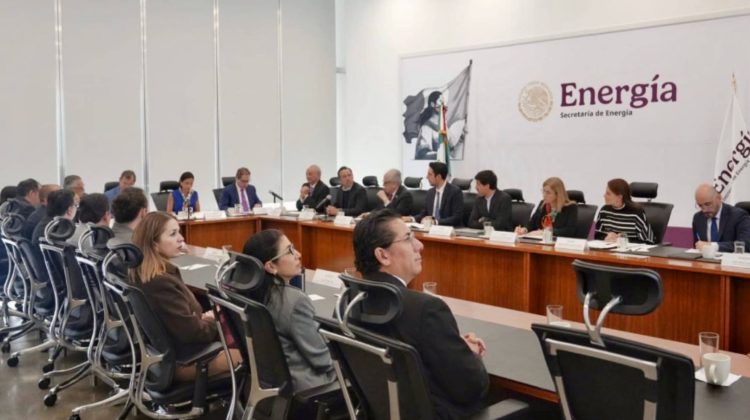
On 16 December, the Government of Mexico published the Operating Guidelines of the Energy Planning Council, formalising a new institutional arrangement aimed at consolidating energy planning as a binding, articulated process with a long-term vision. This collegiate body will not exercise regulatory or standard-setting functions, but will operate as the key forum where national energy policy is aligned and its implementation monitored.
The guidelines, issued by the Ministry of Energy (SENER), position the Council as a technical and strategic tool to organise the sector’s various planning instruments: the National Energy Transition Strategy, the Sustainable Energy Use Plan, the Electricity Sector Development Plan and the Hydrocarbons Sector Development Plan, among others. As set out in the document, the Council is responsible for coordinating and monitoring all these instruments, as well as for the continuous improvement of national energy information.
“The Energy Planning Council is the permanent collegiate body that supports the Ministry of Energy in coordinating and monitoring national energy planning,” the guidelines state, as published in the Official Gazette. Through this structure, the aim is to strengthen energy governance and provide continuity to the State’s strategic decisions.
The Council will be chaired by the Minister of Energy, who will hold a casting vote. Voting members include the heads of the subsecretariats for Planning and Energy Transition, Electricity and Hydrocarbons, as well as representatives from sector-related entities such as the state-owned oil company Pemex, the federal electricity utility CFE, the National Natural Gas Control Centre (Cenagas), the National Energy Control Centre (CENACE), the National Commission for the Efficient Use of Energy (CONUEE), LitioMX and other key organisations within Mexico’s energy ecosystem.
In parallel, a Technical Secretariat will be established, acting as the Council’s administrative coordinator. Its responsibilities will include preparing sessions, drafting minutes, following up on resolutions, producing annual reports and managing the Council’s Annual Work Programme. This role will also ensure institutional traceability and channel information between members and technical committees.
“All individuals participating in the Council’s activities are obliged to maintain strict confidentiality regarding any information to which they have access,” Article 7 of the document stipulates. It also establishes that both full members and alternates will have voice and vote, while invited participants may take part with voice only.
Regarding its operational functioning, the Council must meet at least twice a year in ordinary sessions, although extraordinary meetings may be convened at the request of any full member. Decisions will be adopted by simple majority, and in the event of a tie, the chair will exercise the casting vote. All sessions will be recorded in formal minutes, signed by participants and safeguarded by the Technical Secretariat.
One of the most significant developments is the creation of two permanent committees: the Energy Sector Planning Committee and the Energy Sector Information Committee. Both are designed to specialise technical analysis and provide diagnostics, studies and recommendations. These committees may in turn establish specific working groups, composed of officials with technical expertise in the sector’s various strategic areas.
“The Council may instruct sector-related bodies and public companies to submit periodic reports on the state of the energy sector, in order to integrate them into the Annual Report,” Article 32 of the guidelines notes. This will allow the Council to maintain an up-to-date view of progress on public policies and sectoral targets, including those set out in the National Development Plan.
It is also worth recalling that, in parallel, the National Energy Commission (CNE) has recently promoted new rules for generation and energy storage projects, seeking to align them with the evolution of Mexico’s energy system. As reported by Energía Estratégica, these provisions define more clearly the technical and operational characteristics of installations, as well as their interaction with economic dispatch and battery storage schemes. Such technical reforms underscore the need for a body like the Council, capable of ensuring coherence, monitoring and continuous evaluation of sectoral change.
Furthermore, the new regulatory framework highlights the principle of binding planning, an approach that enables the Ministry of Energy to coordinate more effectively with the various institutions and operators within the national energy system. Far from being a consultative or declarative body, the Council will have direct influence over the follow-up of strategic decisions, without displacing the regulatory functions assigned to other authorities.
The entry into force of these guidelines marks a turning point in the institutionalisation of energy planning in Mexico, moving towards more coordinated, permanent and transition-oriented models. By formalising this high-level body, Mexico aligns itself with international practices aimed at ensuring long-term coherence in energy policy, particularly in the face of decarbonisation, energy security challenges and the large-scale deployment of new technologies.