





Huawei Digital Power has launched a new suite of energy solutions in Argentina, designed to enhance efficiency, reliability, and sustainability in a power system increasingly shaped by renewable energy integration and cost pressures.
The announcement reflects the company’s broader strategy to combine digital technologies and power electronics to advance clean energy systems and support the digitalization of the energy sector, a key trend in global energy transition efforts.
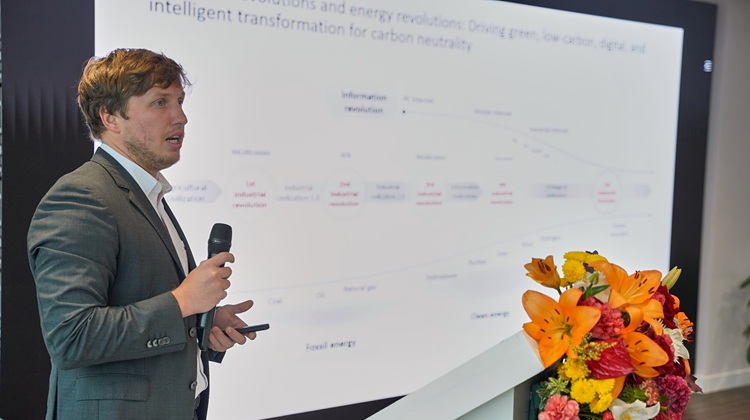
According to Ignacio Dapena, the company’s portfolio has evolved to cover the full spectrum of applications—from residential systems to large-scale utility projects—focused on solar PV, energy storage, and smart energy management.
A central highlight of the launch is the HUAWEI SUN2000-506KTL-H1, a next-generation high-power inverter designed to reduce project costs while improving grid performance in systems with high penetration of renewable energy. The unit reaches 99% efficiency, operates across a wide temperature range (from -25°C to 60°C), and delivers up to 40% higher power density, enabling greater photovoltaic capacity per installation.
Crucially, the inverter incorporates grid-forming capabilities, allowing it to actively support grid stability—an increasingly important feature in markets like Argentina, where renewable penetration is rising and system flexibility is becoming critical.
In a global context marked by rising costs of raw materials and electronic components—impacting renewable CAPEX—Huawei is positioning advanced technology as a way to offset these pressures through improved performance and efficiency.
Energy storage also plays a central role in the company’s strategy. Huawei presented a new generation of battery energy storage systems (BESS) with enhancements aimed at boosting system performance and reducing overall costs. These include up to a 20% increase in capacity for 20-foot containerized systems, optimized designs for large-scale projects of up to 11 MW, and new medium-voltage measurement features that simplify system architecture and lower installation costs.
These storage solutions enable energy shifting during peak demand, enhance grid stability, and support black start capabilities, reinforcing their role in modern power systems with high shares of intermittent renewable energy.
Huawei’s competitive edge lies in its ability to integrate proprietary power electronics with storage solutions, allowing greater flexibility to adapt to different business models, from utility-scale projects to distributed generation.
The company is also advancing the integration of solar generation with storage, enabling solar PV to become a primary energy source across residential, commercial, and industrial segments. In parallel, it is promoting the development of smart EV charging infrastructure, aimed at building scalable and efficient electric mobility networks.
Its portfolio addresses multiple market segments:
- Residential: solar-plus-storage systems that can significantly reduce grid consumption and, in some cases, enable partial energy independence
- Commercial & industrial (C&I): solutions for energy optimization, backup power, and cost reduction
- Utility scale: large-scale infrastructure for generation, storage, and grid stabilization
With more than 25 years of presence in Argentina and over 500 employees, Huawei has established a strong footprint in the country, participating in projects spanning renewable generation, hybrid systems for mining, industrial applications, and even remote developments such as in Antarctica.
The company is observing sustained growth across both large-scale and distributed energy projects, reinforcing Argentina’s potential as a key market for renewable energy, energy storage, and digital grid solutions in Latin America.