










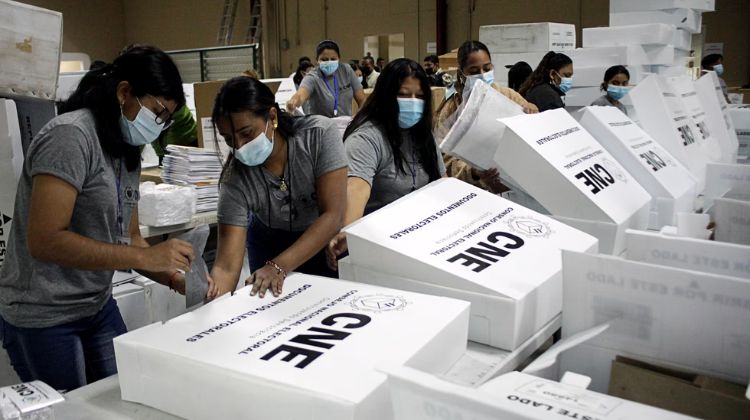
Honduras’ electoral process has entered a critical phase, with direct implications for the country’s energy sector. According to sources consulted by Energía Estratégica, the vote count from the general elections has been completed, showing a lead of approximately 40,000 votes for Nasry Asfura, candidate of the National Party, over Salvador Nasralla of the Liberal Party.
However, the process has not yet been formally concluded. The Liberal Party has requested a review of approximately 19,000 polling station records before the National Electoral Council (CNE, by its Spanish acronym), a process that is currently underway. Under Honduran law, the official proclamation of the new president must take place no later than 30 December.
This lack of institutional clarity is a major concern for the energy sector, where stakeholders warn that prolonged uncertainty directly undermines technical continuity, capital inflows and the execution of strategic projects.
Renewable potential tied to institutional stability
Actors across the renewable energy ecosystem argue that Honduras has a genuine opportunity to develop a modern, competitive and sustainable power system. However, they stress that turning this potential into tangible outcomes requires a rapid reduction in institutional uncertainty, particularly regarding who will lead the country’s key energy bodies.
These include the state-owned utility “Empresa Nacional de Energía Eléctrica” (ENEE), the Ministry of Energy (SEN), the Electricity Regulatory Commission (CREE), the National Energy Council (CND), the Ministry of Finance (SEFIN), the Ministry of Natural Resources and Environment (SERNA) and the Forest Conservation Institute (ICF). All of these institutions play a central role in ensuring technical continuity, regulatory certainty and financial stability across the power system.
The timely appointment of technically qualified authorities is not a minor political issue, sector sources emphasise. It is a prerequisite for restoring investor confidence, securing payment compliance and enabling the rollout of long-term projects, particularly those linked to renewable energy generation.
The situation is further complicated by the absence of defined technical teams to support the electricity system during the transition. Once a winner is officially confirmed, sources stress that it will be essential for incoming teams to rapidly gain a detailed understanding of the system’s real condition to prioritise urgent measures.
Among these priorities is the reduction of technical and non-technical losses, widely identified as a structural problem threatening ENEE’s liquidity. Without addressing these losses, any expansion plan or service improvement — including the integration of additional renewable capacity — will face severe constraints.
Industry voices also underline the need for the National Congress to support the sector with a clear legislative agenda, aimed at strengthening regulatory certainty and encouraging responsible private investment.
Within this context, a tender for 1.5 GW of new generation capacity was scheduled to be awarded in the first quarter of 2026. However, the current institutional deadlock puts that timeline at risk. Without appointed authorities in the Executive, Congress and technical bodies, it is not possible to advance with guarantees in the evaluation, negotiation and approval of long-term power purchase agreements (PPAs).
A fragile political environment
Local media and international observers have described the electoral contest as one of the closest and most tense in Honduras’ recent history. On election night, the CNE temporarily suspended the vote count amid a technical tie, fuelling public mistrust. This was exacerbated by failures in biometric identification and data transmission systems, as well as public accusations of fraud among members of the electoral authority itself.
In this climate, Salvador Nasralla — who has previously alleged irregularities in past elections — is now calling for a manual, vote-by-vote recount. At the same time, sectors of the current government have floated the possibility of annulling the electoral process and remaining in office, despite having secured just 19% of the vote.
The risk of institutional ungovernability is high, and its impact on the electricity sector could be immediate. Without clearly defined authorities, Honduras cannot move forward with tenders, payments, system diagnostics or technical planning, leaving the country’s energy transition effectively on pause.