







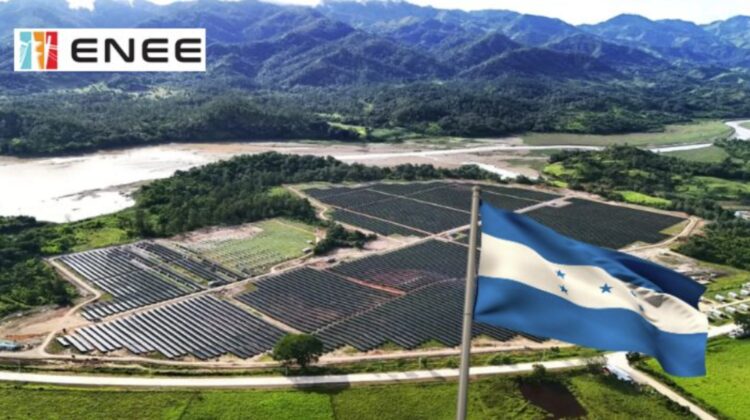
Over 46 months of its current administration, the National Electric Energy Company (ENEE) has consolidated an unprecedented expansion of state-owned renewable generation: 54 MW of public solar power are now operating across three regions of Honduras, directly benefiting communities that have historically been excluded from energy development.
The rollout combines medium- and large-scale solar projects:
-
Brus Laguna (1.1 MW), in the heart of La Mosquitia, connected the community to stable electricity supply for the first time.
-
Guanaja (2.92 MW), in the Bay Islands, structurally resolved the island’s energy deficit, improving service quality and lowering operational costs.
-
Patuca (50 MW), in the Olancho department, provides a solar complement to the Patuca III Hydroelectric Plant, which already feeds the National Interconnected System.
The total investment amounted to 1.588 billion lempiras, fully financed with public funds and directed toward both hybrid solar infrastructure and centralized photovoltaic generation. The integration of these three projects into the National Interconnected System strengthens the country’s operational resilience, increases renewable capacity and improves system efficiency.
Honduras’ Minister of Energy, Erick Tejada, emphasized that these initiatives “represent a decisive step toward the modernization and energy autonomy of the country.” He added that “solar expansion has been essential to reducing dependence on fossil fuels and moving toward a cleaner, more sovereign energy matrix.”
Renewables on the Agenda Amid Electoral Context
The progress of these three projects is part of a broader national energy roadmap. Honduras aims to add more than 3,000 MW of new renewable capacity by 2030, according to technical data from Energía Estratégica. The country has an estimated daily solar potential of 4.5 to 6.5 kWh/m², enabling both centralized and decentralized deployment across rural areas.
This is complemented by 5,000 MW of theoretical hydropower potential and up to 46,600 MW of estimated wind resources, creating a favorable technical environment for diversifying the national energy mix. A key component of this strategy is a 1,500 MW renewable auction, backed by USD 300 million in international financing, aimed at expanding coverage and securing new installed capacity.
This energy-development momentum unfolds in parallel with the country’s political calendar: Honduras will hold presidential elections on 30 November. Energy policy has become part of the public conversation, especially regarding infrastructure expansion, nationwide coverage and the future generation mix.
For sector stakeholders, this rollout provides concrete elements for technical and strategic analysis: the role of the State in renewable-generation projects, direct public financing, and the deployment of new infrastructure in regions where access to electricity has historically been limited.