







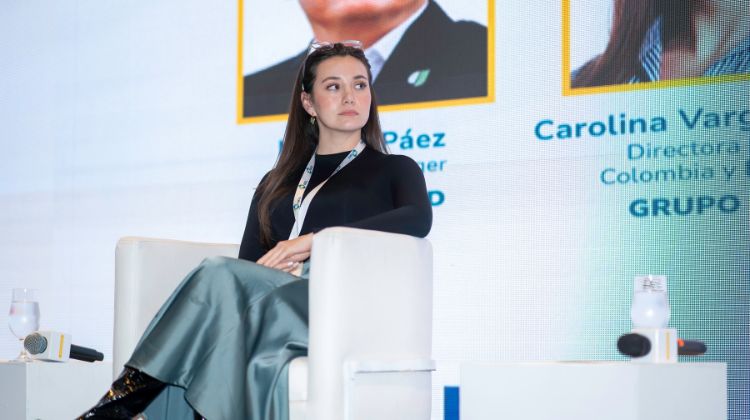
At the closing session of the Future Energy Summit Colombia, the discussion centred on the urgent need to integrate Latin America’s electricity markets. Despite their asymmetric but highly complementary energy matrices, Grupo Cox presented a vision that extends beyond national borders: creating cross-country opportunities through aligned regulatory frameworks and technical cooperation.
Drawing on the company’s experience across multiple jurisdictions, Carolina Vargas Torres, Legal Director for Colombia and Ecuador at the regional energy firm Grupo Cox, argued that differences between countries can become competitive advantages—provided that regulatory structures and investment schemes are designed coherently. For example, a country with superior solar PV resources could supply another facing peak demand, taking advantage of hourly and seasonal complementarities.
A central pillar of this vision is the development of remote self-generation models—mechanisms that allow generation assets and consumption points to be located in different jurisdictions. “A solar plant in Colombia powering a demand centre in Ecuador should not be considered science fiction,” Vargas noted, stressing that regional coordination is essential to enable such cross-border schemes.
Grupo Cox’s recent acquisition of renewable energy assets in Mexico has strengthened its regional footprint and deepened its understanding of the shared challenges facing project developers—ranging from permitting processes to commercialisation pathways. While construction and operational phases tend to be technically similar across countries, Vargas explained, the real differentiator lies in how energy is regulated and marketed.
One emerging risk is curtailment, increasingly present in markets with high renewable penetration. Vargas underscored the need to anticipate such risks at the contract-design stage, recommending the inclusion of specific clauses that protect stakeholders from oversupply events or grid-integration constraints.
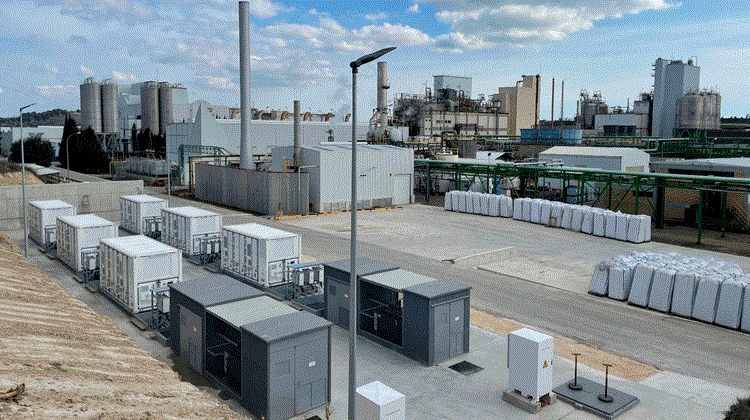
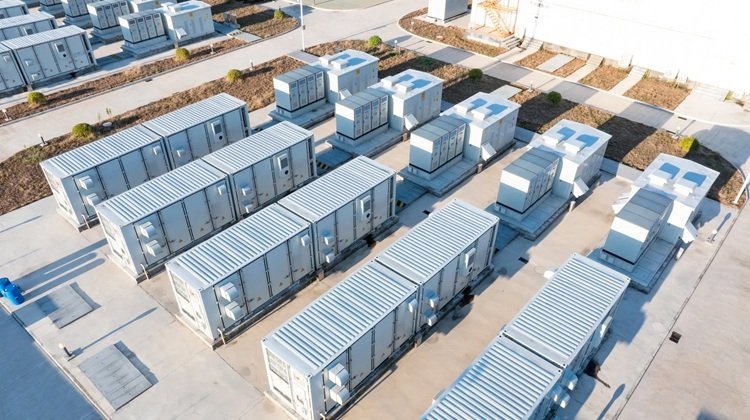
Beyond regulatory alignment, Grupo Cox is placing strategic emphasis on structural technological solutions, notably artificial intelligence (AI) and energy storage systems (ESS). AI can forecast surpluses, optimise consumption profiles, and support dispatch decisions, while battery storage helps manage imbalances and absorb peaks in renewable energy generation.
“These tools will not only enable the interconnection of systems; they will also strengthen relationships with local communities,” Vargas added, pointing to a step-change in how the sector can operate and integrate going forward.
With this approach, Grupo Cox positions itself as a regional player capable of converting opportunities into bankable investment structures, while underlining the need for clear, long-term, and sustainable energy policies. For the company, Latin American energy-market integration is not just desirable—it is essential for building a cleaner, more stable, and more efficient power system.