











Genux Power is advancing in Mexico with one of its most relevant renewable energy projects after being awarded capacity in the December energy tender. The initiative, located in the state of Yucatán, is positioned as part of the new pipeline of renewable generation and energy storage aimed at strengthening the country’s electricity system.
The company’s CEO, Patricia Tatto, presented details of the development and its importance within the firm’s regional strategy.
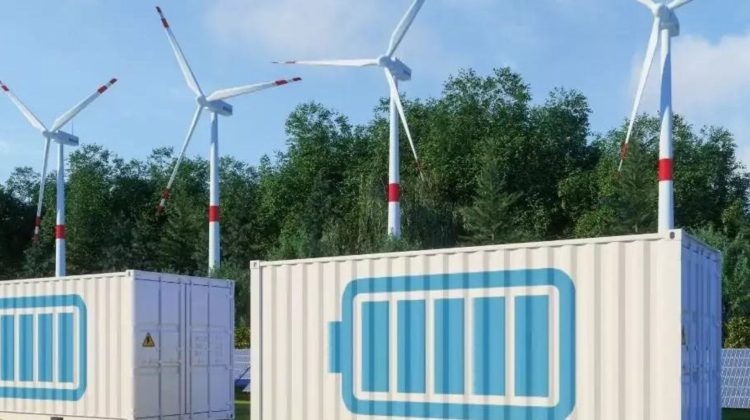
“Our Panabá project is one of the most relevant renewable developments we are promoting at Genux. It includes around 252 MW of wind power capacity and a battery energy storage system of approximately 420 MWh, equivalent to four hours of energy,” the executive explained.
“That area is quite important for the country and currently faces supply deficits, so with this project we expect to help relieve congestion and support what is coming next,” Tatto said when referring to the impact the initiative could have on the regional electricity grid.
According to her, the initiative forms part of a hybrid portfolio of more than 5 GW under development, integrating wind power, solar PV and energy storage across Peru, Mexico, Argentina and Colombia.
For Genux Power, the objective is to bring the project up to the ready-to-build stage.
“Our business model is to develop projects until they reach ready-to-build and support their financing,” Tatto explained. The company focuses on structuring projects until they reach that stage, later facilitating their financing and execution.
The development was selected within the energy call launched in December, a process designed to incorporate new capacity into Mexico’s national electricity system.
Within this framework, several developers and energy companies were awarded renewable and energy storage projects that together represent more than 3.3 GW of renewable generation and around 1.2 GW of battery storage distributed across different regions of the country.
Currently, the company is progressing with the commercial and financial structuring of the project.
“We are already in the process of signing a power purchase agreement (PPA) with our offtaker Glencore, and the idea is to bring the project to ready-to-build and then proceed with construction,” the executive explained.
Beyond this specific development, the CEO highlights that the context of the Mexican energy market is opening new opportunities for developers.
“The truth is that the sector in Mexico is more interesting than ever. It is a sector where those of us who have been here for some time see it as more mature and far more strategic,” Tatto said.
“Energy planning is also changing within the sector and in the way the market is structured in Mexico. It is definitely a market for large players and for those who see the market in the long term,” the CEO added.
In this sense, the company is analysing participation in new processes that aim to drive the expansion of the electricity system.
The company is also evaluating other opportunities within the Mexican energy market, including renewable generation, energy storage and potential developments linked to the expansion of industrial demand.
“There is a lot of appetite in Mexico right now, both for data centres and industrial parks, as well as industries that require bankable power purchase agreements (PPAs) with the lowest possible market risk,” the executive pointed out.
She also noted that the growth of the country’s energy sector will be closely linked to the development of electrical infrastructure and the needs of the industrial sector.
“There is significant industrial demand and also major transmission needs that not all companies will be able to leverage,” she warned.
This growth context is part of the company’s regional expansion strategy. Genux Power operates as a joint venture between Glencore and Exus Partners and develops energy projects in several Latin American markets.
The firm currently has assets and pipeline projects in countries such as Argentina, Peru, Colombia and Mexico, where it seeks to expand its renewable energy portfolio in the coming years.
At the same time, global factors such as energy price volatility and geopolitical developments are also influencing investment decisions in the region.
“The market itself, with gas prices and the volatility we are seeing worldwide due to geopolitics, is reshaping investment flows in Latin America,” Tatto explained.