









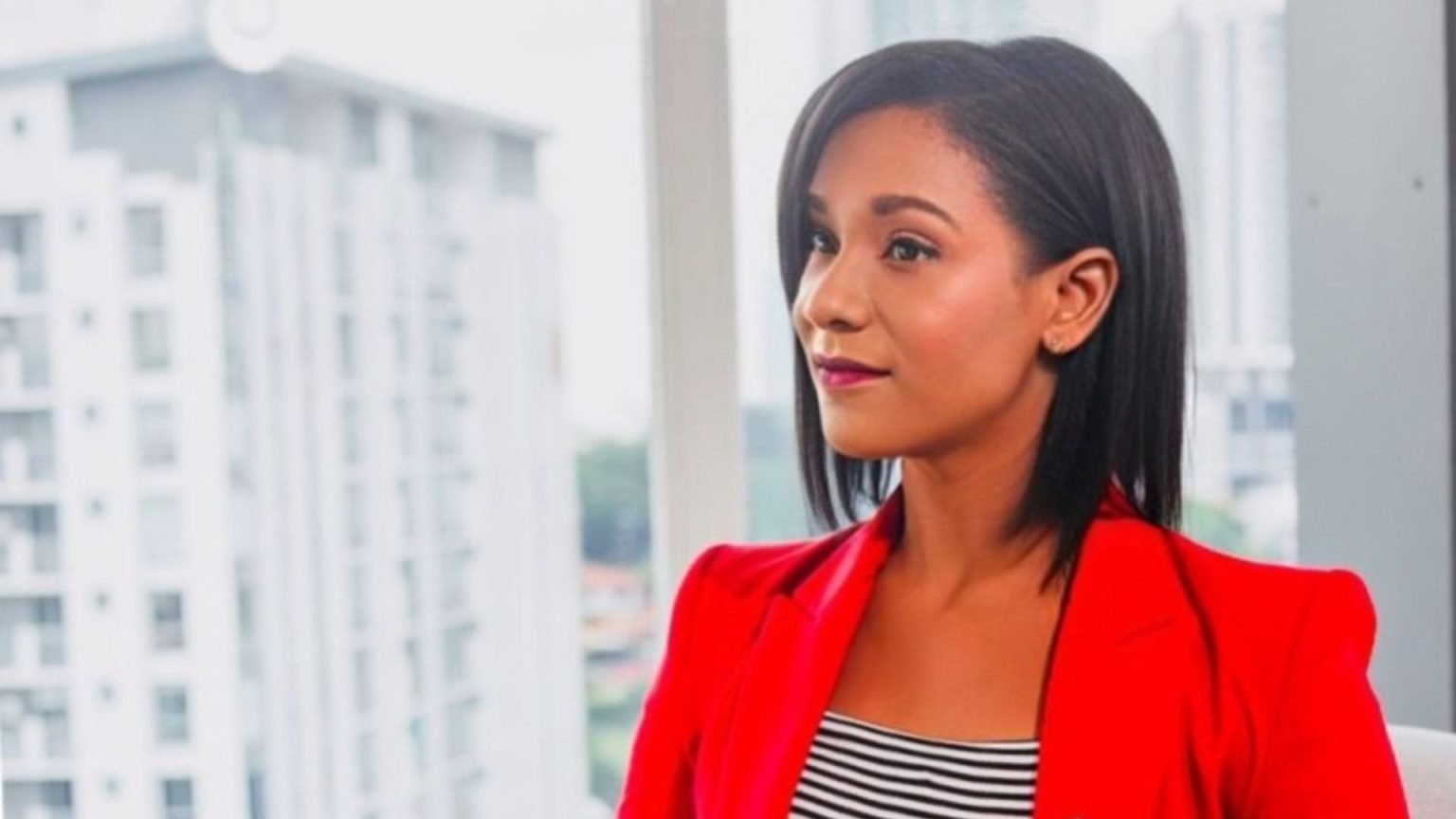
The personal story of Rosilena Lindo Riggs is shaped by a vision of public service, social justice and scientific vocation that led her to become one of the leading architects of Panama’s energy transition. Her career spans institutions such as the Panama Canal Authority, the Ministry of Environment of Panama, the United Nations Environment Programme (UNEP) and the National Secretariat of Energy of Panama, from where she promoted pioneering policies with an inclusive, technical and territorial approach.
In an interview with Energía Estratégica, the engineer and global adviser reviews her career path, challenges, lessons learned and vision for the future of the region.
— What motivated you to study engineering and later specialise in energy and environmental management? Was there a key moment in your life?
When I was eight years old, during a holiday, I told my grandmother that I wanted to design spaces to study and protect nature. I dreamed of working at the United Nations, speaking four languages, travelling the world and creating opportunities for women to lead. I thank God for allowing me to turn my childhood dreams into reality.
My father is a civil engineer, which influenced my decision to pursue that career. When a professor invited me to collaborate in the installation of a NASA node in Panama, I was introduced to the world of energy. My first task was to read the guidelines of the Intergovernmental Panel on Climate Change (IPCC) and compile data to calculate emissions from the energy sector. That was when I fell in love with energy, with its economic role, but also with its potential to transform a development model based on fossil fuels.
— How did your professional journey lead you to the National Secretariat of Energy?
After returning from my studies in Germany, I worked on the expansion of the Panama Canal, focusing on quality control of hydraulic surfaces. It was a valuable experience, both technically and personally, where I met a mentor who encouraged me to return to the energy sector.
I later took on the role of National Director of Climate Change at the former National Environmental Authority. Together with a team of 34 people, we developed Panama’s first Nationally Determined Contribution, transformed the authority into the Ministry of Environment and incorporated climate change into environmental law. We also negotiated the Paris Agreement on forest-related issues and gave international visibility to indigenous peoples.
Later, as a senior specialist at UNEP, I led the solar water heating project and contributed to the analysis of the energy transition in Latin America. We organised a meeting with representatives of the energy sector from presidential candidates to present the study Carbon Zero Latin America. One of them, later appointed as Secretary of Energy, invited me to join his team as Deputy Secretary.
— What challenges did you face as the first woman to serve as Panama’s Secretary of Energy?
It was a process full of challenges, but also of learning. National, regional and global solidarity among women played a key role. Thanks to that network, we were able to advance the energy agenda with a technical and inclusive perspective.
One of the main challenges was building a participatory methodology during the pandemic. We ensured that every person involved in the strategies could see their contributions reflected in the final documents. We designed policies such as the Universal Access to Energy Strategy, the Distributed Generation Strategy, the Energy Efficiency Strategy and the Innovation Strategy for the Interconnected System, among others. More than 16,500 person-hours were invested in the design of these instruments.
As Secretary, I had only seven months in office, in the middle of an electoral period. We were unable to submit the Energy Transition Law. One key lesson was that reforms of that scale must be launched from the first year. I also learned that, although the sector is male-dominated, the process of developing the Women and Energy Nexus Roadmap was the most participatory. In Panama, both men and women are willing to build an energy sector based on equality.
— What do you consider your greatest contribution in terms of energy public policy?
I am particularly proud of the National Distributed Generation Strategy, which I began shaping from the moment I joined the Secretariat. It was developed with technical support from the Inter-American Development Bank (IDB), and defining its scope took time. Today, Panama has moved from 30 MW to more than 200 MW of installed capacity, and if commitments are met, exponential growth is expected over the next two years.
I also consider the Georeferenced Rural Electrification Plan and the Universal Access Strategy to be transformative, as they state that it is not acceptable to move from having no energy to living in energy poverty. They defend the right to efficient and sufficient energy consumption, without second-class citizens.
— Is there any project you remember particularly for its social impact?
The Communication Strategy for the Energy Transition was unique in its approach. It was based on a World Bank study on energy perception in Panama, which revealed differentiated interests by gender and region. I decided to undertake a postgraduate diploma in communication and marketing in order to lead it effectively.
It is essential for the population to have access to clear and culturally representative information so that people can make informed decisions when adopting energy technologies. For example, a hair salon owner should know that an efficient air-conditioning system can reduce her electricity bill by up to 70%.
— Which professional experience had the greatest impact on you in the renewables sector?
Designing and implementing the solar photovoltaic training programme for women in the Ngäbe-Buglé Indigenous Region completely changed my life. Witnessing the growth of 85 rural women was inspiring.
I invited one of them, Lilibeth Jiménez, to an event in Brazil. There, she shared something that transformed my understanding of the energy transition: “The programme lacked psychological support to manage the cultural impact of becoming income-generating women.” I realised that the energy transition also transforms cultures and must be managed with sensitivity.
— What is the main energy challenge facing the region?
Latin America and the Caribbean must accelerate investment in renewable energy and regulatory design to electrify the economy, in a context of geopolitical fragmentation, cybersecurity risks and climate crisis.
We need to move away from regulations that favour a single technology. The richness of the transition lies in the diversity of sources and schemes. However, the bottleneck is clear: mobilising low-cost capital and expanding transmission infrastructure. Without this, it will not be possible to lift the 162 million people currently living in poverty in the region, according to the Economic Commission for Latin America and the Caribbean (ECLAC).
— What message would you give to young women starting out in this sector?
Gender equality is not a women’s issue; it is a global development imperative. We need special measures to compensate for structural inequalities and to defend social justice with clear data.
I would tell young women to expand their networks of collaboration with all stakeholders, regardless of gender. Talent has no ethnicity, face or gender. Sorority has proven to be key to women’s growth in the energy sector, and strategic communication must continue to counter voices that underestimate equality.
— What legacy would you like to leave in the energy and climate sector?
I want to continue building bridges between governments, the private sector, international cooperation, communities and young people. I dream of an economy powered by more than 80% renewable energy, with people breathing clean air.
I will continue working with determination so that young people have more opportunities than I did and so that women — of all ages and backgrounds — can find in the energy sector a space to fully develop their talents, while we collectively take care of our shared home.