











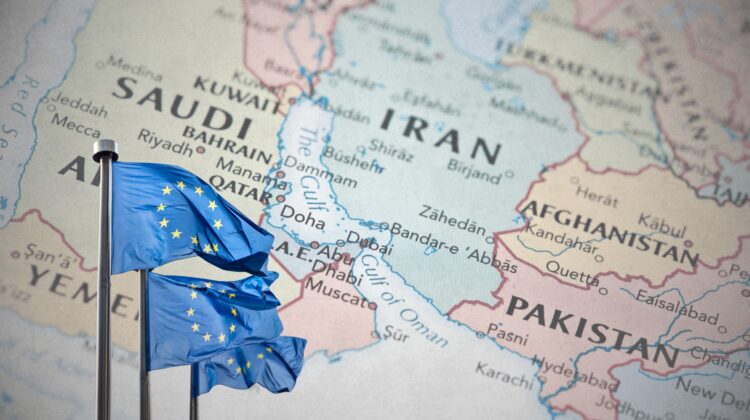
Five European Union countries are moving forward with a proposal to introduce a new tax on energy companies, in direct response to rising prices triggered by the conflict in Iran. The initiative—led by Spain alongside Germany, Italy, Austria and Portugal—aims to capture part of the sector’s windfall profits and redistribute them to cushion the economic impact on consumers and industry.
“The conflict in the Middle East has led to an increase in oil prices, placing a considerable burden on the European economy and on European citizens. It is important that this burden is shared fairly,” the ministers stated in a letter dated 3 April and addressed to Wopke Hoekstra, European Commissioner for Climate, Net Zero and Clean Growth.
The proposal comes amid heightened tension in global energy markets, where oil and natural gas prices have been rising steadily since the outbreak of the Middle East crisis. This trend is already feeding through to electricity costs, inflation and industrial competitiveness in Europe, reopening the debate on state intervention mechanisms.
In this context, the International Energy Agency (IEA) warns of an unprecedented energy crisis in recent history, driven by simultaneous pressure on oil, gas and supply systems. Its Executive Director, Fatih Birol, stated that it is “more severe than the crises of 1973, 1979 and 2022 combined,” underscoring the scale of the challenge facing global energy systems.
One of the critical issues is the disruption of strategic supply routes, particularly in the Middle East. Risks to hydrocarbon flows through the Strait of Hormuz—a key artery for global trade—are adding further uncertainty and upward pressure on prices, at a time when supply is already constrained.
Impact on Europe and regional differences
The crisis once again highlights Europe’s structural vulnerability to imported fossil fuels, particularly in markets where natural gas remains a key driver of electricity price formation.
However, the impact is not uniform across the bloc. Spain appears better positioned due to the higher penetration of renewable energy in its power mix. Wind and solar power accounted for close to 60% of electricity generation in March, significantly reducing the influence of gas on price-setting. This partial decoupling from fossil fuels translates into greater relative stability against external shocks.
Alongside its push for a European-wide tax, Spain is advancing a package of measures aimed at strengthening energy security, combining short-term responses with structural transformation.
The plan mobilises around €5 billion, focusing on accelerating renewable energy deployment, strengthening grid infrastructure, promoting energy storage and easing costs for energy-intensive industries.
Key measures include the creation of renewable acceleration zones, streamlined administrative processes and support for energy storage—critical elements for improving power system resilience and enabling further grid integration of renewables.
Industry warning: risks to investment
Despite these efforts, the proposal for a new windfall tax is raising concerns within the renewable energy sector, particularly in the wind industry.
Industry stakeholders warn that increasing the fiscal burden at a critical moment could negatively affect investment decisions, precisely when Europe needs to accelerate the deployment of clean energy capacity to reduce its dependence on imported fuels.
Spain’s Wind Energy Business Association (AEE) notes that electricity prices in March were below gas prices, reflecting a decoupling from international fossil fuel markets. The average electricity price in Spain’s wholesale market (OMIE) stood at €41.71/MWh, compared to €52.62/MWh for gas (MIBGAS).
“Had gas prices influenced electricity pricing with the same intensity seen in other European countries, prices would have exceeded €100/MWh—which has not occurred,” the association stated. “Electricity prices in the Iberian spot market are among the lowest in Europe and have remained low, with very limited growth prospects, even amid the crisis triggered by the war in Iran.”
They further warned: “Calling for new taxes that impact the power sector creates regulatory uncertainty and deters investors, precisely at a time when it is most necessary to scale up technologies such as wind power as a substitute for imported fossil energy. We need more wind—and faster. An additional, unjustified tax introduces further regulatory risk, exacerbating an already challenging environment marked by limited growth in new installations and structural bottlenecks in some regions.”
The sector’s position is clear: the energy transition requires regulatory stability and significant capital flows. Any signal that introduces uncertainty could slow down strategic renewable energy projects.
Against this backdrop, the debate emerging within the European Union combines short-term economic urgency with long-term strategic vision. While governments seek mechanisms to mitigate the immediate impact of the crisis, the industry insists on preserving the conditions necessary to accelerate the energy transition and build a system less exposed to external shocks.