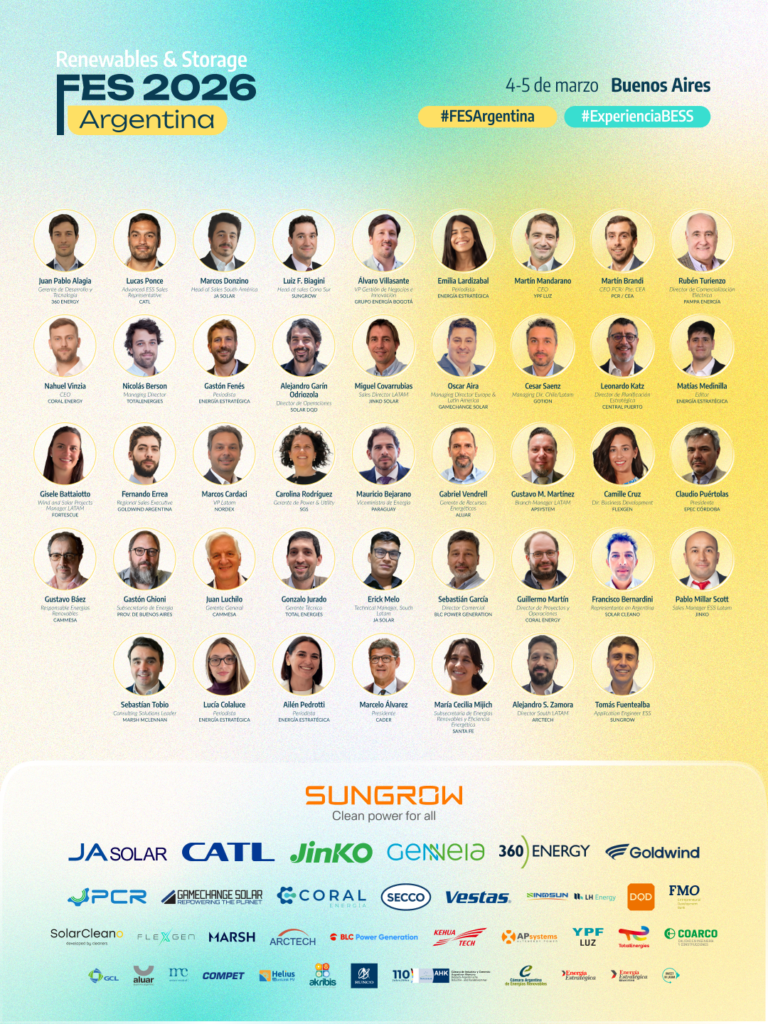








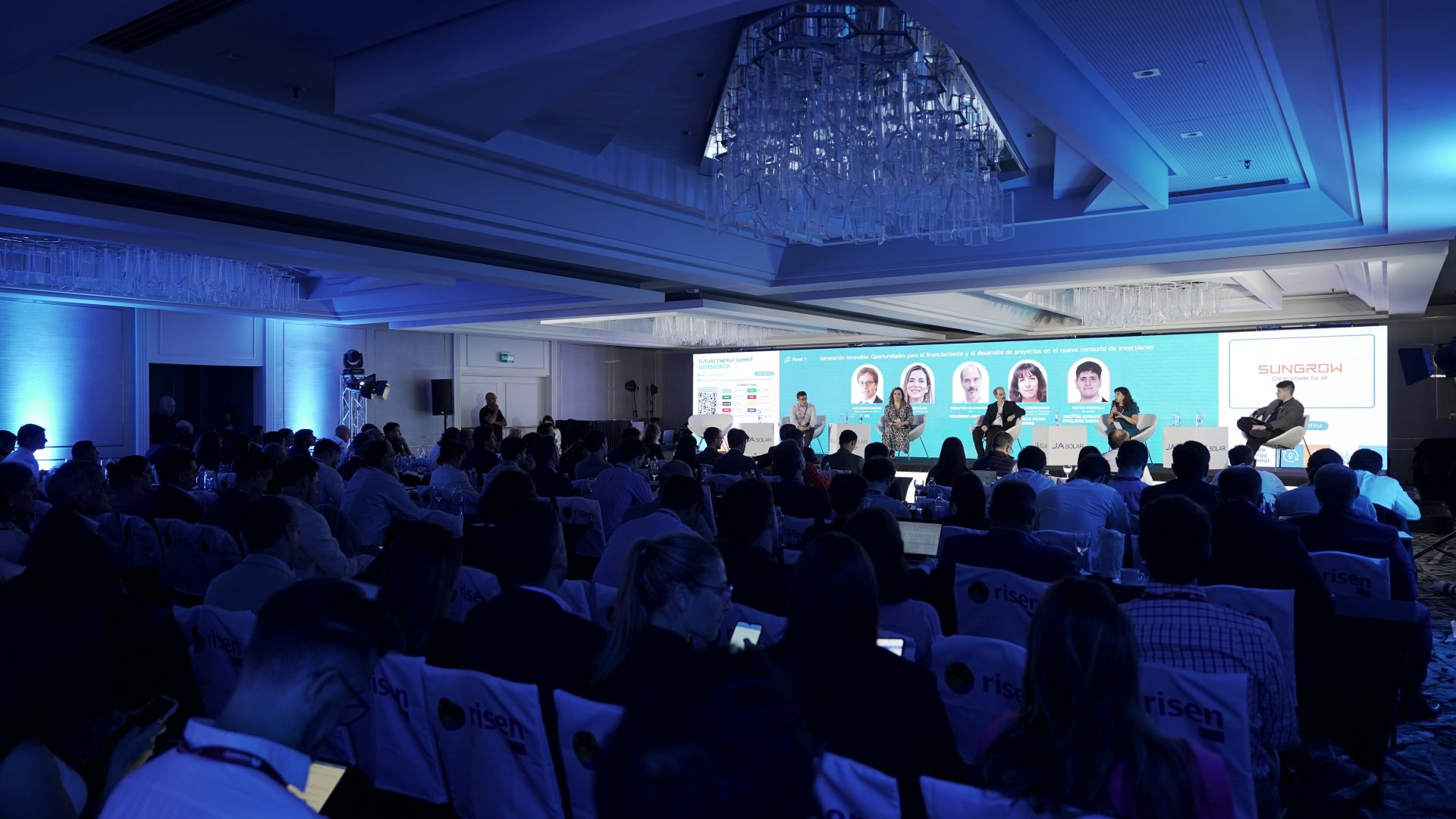
Future Energy Summit will hold a new edition of FES Argentina – Renewables & Storage on 4 and 5 March at the Hotel Emperador in the city of Buenos Aires, with live streaming available via its official YouTube channel.
The event will convene leading companies from the energy sector, senior government officials and hundreds of executives in a setting where market trends are debated, and strategic networking opportunities are created to facilitate deal-making.
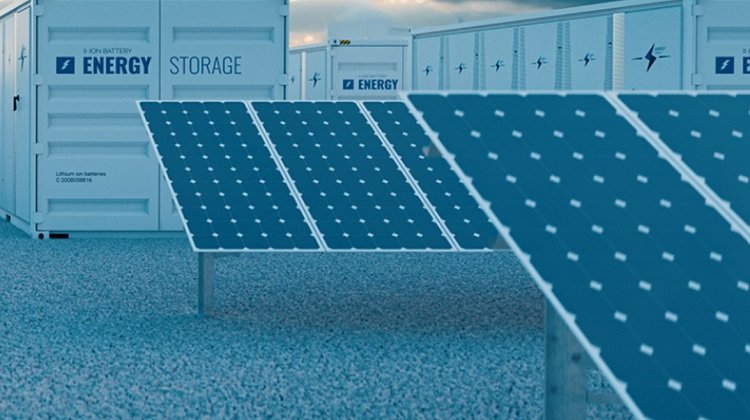
In this context, battery energy storage systems (BESS) are positioned as one of the central pillars of the agenda, as Argentina is going through a turning point marked by dedicated tenders, new remuneration rules and a growing participation of hybrid systems in the Mercado a Término (MAT) – the country’s private renewable power purchase agreement (PPA) market. These elements are redefining the role of storage within the power system.
A recent first milestone was the AlmaGBA tender, the first exclusive call for stand-alone BESS systems in the country’s history. The market response confirmed structural interest in this segment, with 14 companies submitting 27 projects totalling 1,346.9 MW of offered capacity.
Although 713 MW were ultimately awarded across 12 projects located at critical nodes of the Edenor and Edesur distribution networks in the Buenos Aires Metropolitan Area (AMBA), at an average price of USD 11,337 per MW-month, the process mobilised more than USD 540 million in investment. Commercial operation is expected within 12 to 18 months.
This precedent will not only help address constraints in AMBA but also establish a price and competitiveness benchmark that will influence future investment decisions. Following this experience, the national government is preparing a new call known as AlmaSADI, which would seek to incorporate between 600 and 700 MW of BESS at critical nodes nationwide.
Although key definitions are still pending — including the potential participation of CAMMESA, the wholesale electricity market administrator, as offtaker — the process is being closely monitored by developers and investors, as it could scale storage to a federal dimension within Argentina’s interconnected system (SADI).
At the same time, Resolution SE No. 400/2025 introduced, for the first time, a detailed remuneration framework for storage plants. The regulation enables facilities to operate as demand during charging and as generators during discharge, receiving payments based on hourly marginal costs adjusted by node. It also includes remuneration for Available Capacity, provided that at least four hours of validated storage are accredited.
The new scheme also allows participation in the Mercado a Término (MAT) both as buyers and sellers, integrating storage as a fully flexible asset coordinated by CAMMESA under economic dispatch.
In any case, the contractual market already reflects this evolution. During the second four-month period of 2025, the Catamarca II solar PV project, developed by Solar Energy S.A., was awarded 60 MW and incorporated a 54 MW / 108 MWh BESS in San José. Subsequently, in the third four-month period, hybrid schemes such as Catamarca II were consolidated under a 60 MW / 240 MWh configuration, together with the Sierras Renovables I, II and III projects, totalling 180 MW, developed by ARN Tech Partner S.A., linked to Córdoba’s provincial utility EPEC, integrating renewable generation and energy storage.
Likewise, the PS Tocota III project secured 46 MW in the 2026 award corresponding to the last quarter of 2025, including transmission infrastructure upgrades and the incorporation of a BESS. These precedents show that storage is already actively competing within the MATER framework and is no longer limited to stand-alone schemes.
The international context reinforces this dynamic. According to IRENA, storage prices fell by 89% between 2010 and 2023. The Levelised Cost of Storage (LCOS) currently stands between USD 140 and USD 300/MWh, according to the Latin American Energy Organisation. In 2025, the global average cost of lithium-ion cells reached USD 74/kWh and battery packs USD 34/kWh, totalling USD 108/kWh — an 85% reduction compared with 2014.
With one tender awarded, a new call in preparation, a dedicated regulatory framework, expanding hybrid projects and a sustained downward cost trend, energy storage is consolidating its position as one of the strategic pillars of Argentina’s electricity system.
In this scenario, FES Argentina · Renewables & Storage will once again bring together the most relevant companies in the sector, government authorities and financial stakeholders in a forum where key definitions are exchanged, and commercial relationships are strengthened, directly impacting the development of the energy transition.